
Power Amp article
The Complete Guide to Power Amp
A power amp is the amplifier's powerhouse, converting preamp signals into the wattage needed to drive speakers. Discover how to choose between tube and solid-state, match impedance, and build a complete amplification rig.
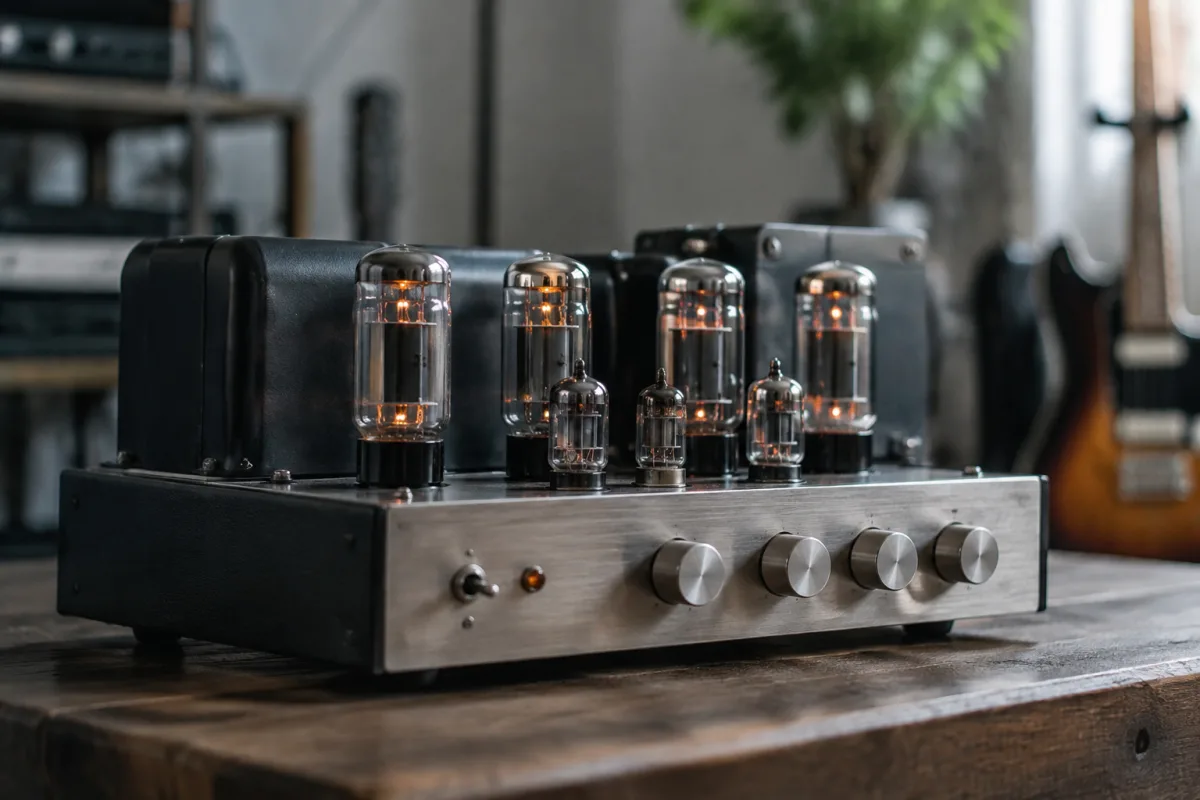
A power amp sits at the heart of any serious amplification setup, converting the subtle signal from your preamp or mixer into the raw wattage needed to drive speakers. Whether you're gigging in clubs, rehearsing in a studio, or building a custom rig, understanding how power amps work and what to look for makes the difference between a system that sings and one that struggles. This guide explores power amps—their role, varieties, and how to select one that matches your needs.
What Does a Power Amp Actually Do?
At its core, a power amp is a current amplifier. It takes the modest voltage signal from your preamp (typically around 1 volt) and increases it to hundreds of volts whilst drawing proportional current from your power supply. This massive increase in current is what moves speaker cones and creates the acoustic output you hear.
The distinction between preamp and power amp is crucial. A preamp shapes tone—it adds saturation, colouration, and character to your signal. A power amp is entirely transparent; its job is faithful amplification without adding colour or character. A good power amp disappears into the chain, letting your tone pass through untouched whilst providing the wattage needed to drive your speakers.
Power amps exist in numerous formats. Some live inside combo amplifiers (where they're built-in and fixed to your chosen preamp). Others are standalone rackmount or floor units, paired with an external preamp or pedalboard to build custom rigs. Understanding which type suits your setup is essential.
Tube vs. Solid-State Power Amps
The amplifier technology divide shapes the entire sonic character and maintenance demands of your setup:
| Technology | Advantages | Disadvantages |
|---|---|---|
| Tube (Valve) | Warm, organic distortion when pushed hard. Natural headroom perception. Legendary tone. Easy to repair. | Heavy and expensive. Tubes wear out and need replacement. Run hot and require ventilation. Power output decreases as tubes age. |
| Solid-State | Lightweight, compact, durable. Extremely reliable. Low maintenance. True rated power even after years of use. | Harsher distortion when overdriven. Less forgiving of poor signal quality. Harder to service (not user-replaceable parts). |
| Hybrid (Tube/Solid-State Mix) | Combines tube warmth with solid-state reliability. Often offers switchable output to drop wattage. | Compromise technology—neither fully tube nor fully solid-state. More complex troubleshooting. |
For guitar, tube power amps are traditionally preferred. The natural breakup they produce at high volumes is integral to classic rock and blues tones. Solid-state power amps dominate bass and keyboards, where transparency and reliability matter most. Hybrid designs appeal to players wanting tube character without the weight and hassle.
Wattage: More Power Than You Think
Wattage is often misunderstood. A 100-watt power amp is far louder than a 50-watt amp, but not twice as loud—acoustically, you need roughly four times the power to perceive twice the volume. This matters for your choice:
- Bedroom and small rehearsal space: 20–50 watts is plenty. At these volumes, headroom is less critical; tone and responsiveness matter more.
- Small to medium venues: 50–100 watts handles most club and mid-sized gigs without needing attenuation or deep volume reserves.
- Large venues and touring: 100+ watts ensures you can deliver full power even with marginal speaker efficiency or venue acoustics.
- Bass amplification: Bass players typically demand more wattage than guitarists—the low frequencies require more power to move air convincingly. 300+ watts is standard for touring bass rigs.
One critical insight: a smaller amp driven into saturation often sounds better than a huge amp held at polite volumes. The power amp contributes to tone through the way it responds to being pushed. A 50-watt tube amp driven hard can sound more impressive and musical than a 200-watt amp cruising at quarter throttle.
Impedance Matching
Every power amp has output impedance, and every speaker cabinet has input impedance. Matching them is non-negotiable—a mismatch causes poor tone, reduced power transfer, and possible damage to the amp or speakers.
Most guitar rigs run 4 or 8 ohms. A typical setup pairs a power amp's 4-ohm output with a 4-ohm cabinet, or an 8-ohm output with an 8-ohm cabinet. Some modern power amps offer variable output impedance, allowing flexibility in your cabinet choices.
Never connect a lower-impedance load than the amp is rated for—it draws excessive current and can destroy output transformers or solid-state output stages. Never load a speaker output with no cabinet attached; running 'open' (infinite impedance) is equally destructive.
Key Features and Specifications
Headroom: How much the amp can amplify your signal before distorting. More headroom means clean amplification at higher volumes. Crucial for keyboardists and bassists; less critical for rock guitarists who embrace some grit.
Fan cooling: Tube amps naturally dissipate heat through their chassis; solid-state amps often need fans. Fans add noise in quiet environments—a consideration if you record close to your amp or perform in intimate venues.
Balanced XLR input: Reduces noise on long cable runs from preamp to power amp. Standard in professional setups; less common on budget units.
Switchable impedance: Allows connecting different speaker configurations without impedance mismatch. Valuable for players using multiple cabinets.
Direct speaker output vs. transformer output: Direct solid-state outputs are transparent but unforgiving. Transformer outputs (common in tube amps) add character and forgive slight impedance mismatches.
Parallel inputs or bridged mode: Some power amps run two speakers in parallel or combine left/right channels for higher wattage in mono. Useful for complex rigs.
Placement and Ventilation
Power amps generate serious heat, particularly tube designs. Placement matters:
- Never enclose a power amp in a sealed rack without ventilation—it overheats and shuts down.
- Leave at least two inches of space above and below for airflow.
- Avoid stacking other hot gear directly on top.
- On tour, position amplifiers away from direct sunlight or stage lights.
- Tube amps especially need breathing room; their ventilation grilles shouldn't be covered.
Proper ventilation extends amp life significantly. Overheating causes capacitor failure and tube degradation, reducing reliability and tone quality.
New vs. Used Power Amps
The power amp market thrives on excellent used gear. Unlike preamps or effects units, power amps age gracefully—a 30-year-old tube power amp can sound as good as the day it left the factory, assuming basic maintenance and component replacement (like capacitors).
Buying used saves money substantially. Check for visual wear, ask about service history, and listen carefully for noise or distortion. Tube amps should have fresh tubes if they haven't been serviced in years—budgeting for a tube job is worth it for an otherwise solid amp.
Genres and Power Amp Choice
Classic rock and blues: Tube power amps with moderate wattage (50–100 watts). The natural breakup adds essential character to overdriven tones.
Metal and hard rock: Solid-state or tube power amps with substantial wattage (100+ watts). Clean headroom at volume is essential; tone is handled by the preamp and effects.
Bass: Solid-state power amps in the 300–500 watt range. Transparency and reliability matter more than warmth. Higher wattage compensates for low-frequency loss in speaker efficiency.
Keys and synth: Solid-state power amps with true, transparent amplification. Keyboards demand accuracy; any colouration from the power stage is unwelcome.
Jazz and acoustic amplification: Clean, transparent tube or high-quality solid-state power amps. Tone accuracy and headroom ensure natural reproduction of nuanced signals.
Building a Complete Rig
Once you've chosen your power amp, remember the full signal chain: instrument → preamp (or effects processor) → power amp → speaker cabinet. Each stage affects the final result. A cheap power amp can limit even a premium preamp; conversely, a mediocre preamp through an exceptional power amp still sounds mediocre.
The best practice is balancing investment across the chain. A moderate-quality power amp paired with a good preamp outperforms a budget preamp driving an expensive power amp. Aim for coherence rather than chasing one "perfect" component.
Conclusion
A power amp is neither glamorous nor subtle—it sits at the end of your signal chain, doing one job: amplification. But that job is fundamental. Choosing the right power amp for your needs, understanding impedance and tube vs. solid-state trade-offs, and treating it with basic care ensures your tone reaches the audience with full integrity and power. Whether building your first custom rig or upgrading an established setup, a thoughtful power amp choice pays dividends in reliability, tone, and versatility.


Comments