
Guitar Pedalboard with Pedals article
The Complete Guide to Guitar Pedalboard With Pedals
A guitar pedalboard with pedals is the hub of modern electric guitar tone, allowing musicians to access multiple effects, create distinctive sounds, and switch between presets during performance.
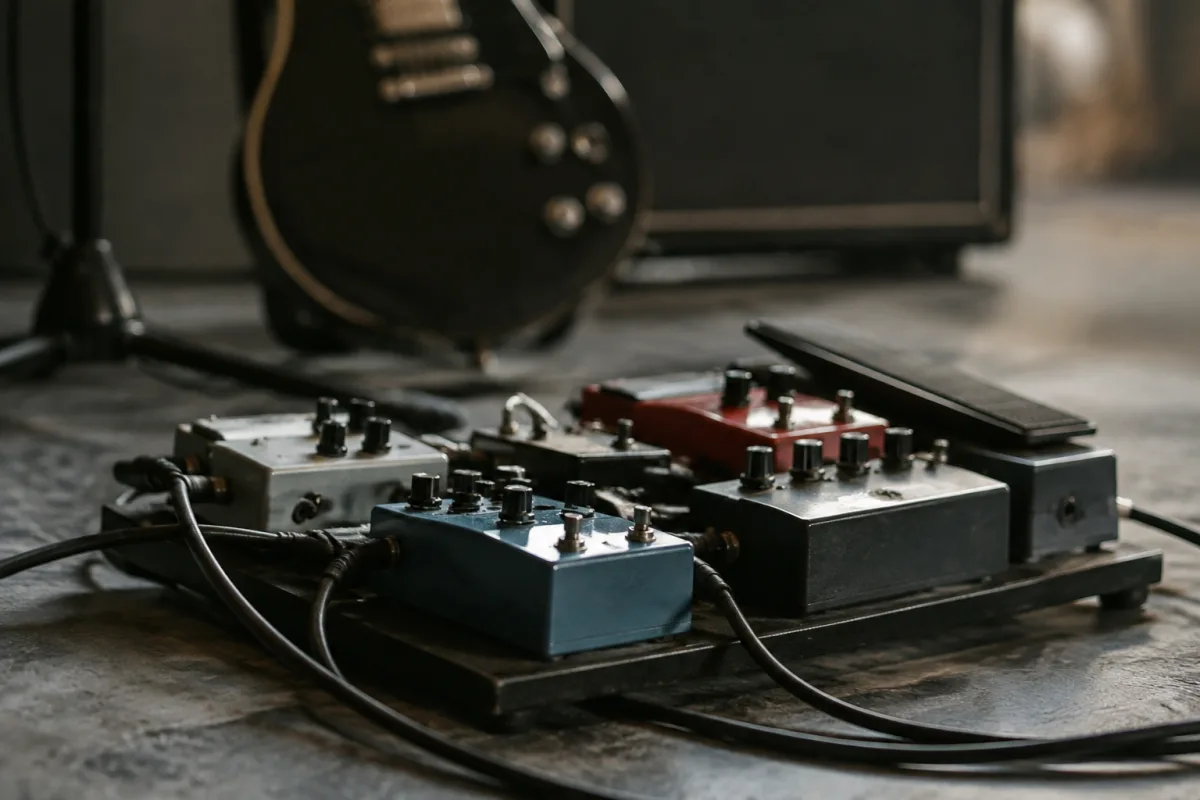
A guitar pedalboard with pedals represents the nerve centre of modern electric guitar tone, allowing musicians to customise their sound, access multiple effects simultaneously, and switch between tone presets instantaneously during performance. Whether you are playing in a recording studio, rehearsing with a band, or performing live, a well-organised guitar pedalboard with the right effect pedals enables creative sonic possibilities and streamlines your playing experience. This complete guide explores guitar pedalboards and their associated effect pedals, helping you design a pedalboard meeting your specific musical requirements.
What Is a Guitar Pedalboard?
A guitar pedalboard is a platform (typically wooden or metal) housing effect pedals, amplified by an arrangement that keeps cables organised and allows convenient access to all effects during performance. The pedalboard serves as a mobile effects processing centre, eliminating the need to reach down to individual pedals scattered on the floor or stage.
Effect pedals create or modify guitar sound through various processing methods—distortion, overdrive, compression, reverb, delay, modulation effects, and countless others. A typical guitar pedalboard combines multiple effects allowing guitarists to layer effects, access multiple sounds from a single footswitch, and perform complex sound design in real time.
Types of Guitar Pedalboards
Pedalboards vary significantly in size, complexity, and purpose:
Compact Pedalboards (Small)
Compact pedalboards (typically 12–18 inches wide) accommodate 3–6 pedals and are ideal for minimal, focused effects setups. Guitarists prioritising simplicity, portability, or budgets often prefer compact boards. Many compact pedalboards fit easily in guitar cases or gig bags for transport.
Mid-Size Pedalboards
Standard pedalboards (24–36 inches wide) accommodate 8–15 pedals and provide flexibility for varied musical situations. Mid-size boards balance accessibility, capacity, and portability—the "goldilocks" option for most serious guitarists.
Large Professional Pedalboards
Touring-grade pedalboards (48+ inches wide) accommodate 15–30+ pedals, allowing complex tone shaping and extensive effect libraries. Professional touring musicians often use large pedalboards hosting additional expression pedals, volume controls, and MIDI switchers. Large boards sacrifice portability for creative possibility.
Custom Pedalboards
Many guitarists build custom pedalboards using existing cases or wooden platforms, arranging pedals to their exact specifications. Custom builds allow optimisation for specific playing styles and provide unique character distinct from mass-produced boards.
Essential Components of a Guitar Pedalboard Setup
Beyond the pedalboard itself, several components create a functional effects setup:
Power Supply
A dedicated pedalboard power supply provides isolated power to all pedals, eliminating noise and ground loops common with individual battery-powered effects. Quality power supplies (£50–200) are essential for professional setups and prevent noise issues.
Cable Management
Organised cable routing keeps connections clear and allows quick pedal swaps without entanglement. Many pedalboards feature built-in cable channels or velcro straps managing cable routing and minimising clutter.
Expression Pedals and Controllers
Expression pedals provide real-time parameter control (modifying effect intensity during performance). Foot switches allow instant effect bypassing and tone-shape switching without manual pedal adjustment.
Common Effect Pedals for Guitar Pedalboards
Guitarists combine pedals creating distinctive tone flavours. Common effect types include:
Overdrive and Distortion Pedals
Overdrive pedals provide subtle tone colouration and sustain; distortion pedals offer aggressive, heavily processed guitar sound. Many guitarists combine both, using overdrives for subtle grit and distortions for extreme effects.
Modulation Effects
Chorus, flanger, phaser, and tremolo effects add movement and richness to guitar tone. These effects are essential for jangly indie guitar, spacious ambient tones, and creative sound design.
Reverb and Delay Pedals
Reverb simulates acoustic space (rooms, halls, cathedrals); delay repeats played notes rhythmically. These time-based effects add depth and ambience essential for most modern guitar music.
Compression Pedals
Compression evens out playing dynamics and adds sustain to notes. Professional guitarists often use compression as a foundation effect, applying it to all signals before other processing.
Fuzz and Distortion Variants
Fuzz produces thick, aggressive tone popular in garage rock and psychedelic music. Distortion variants from different manufacturers produce distinctive character suitable to various musical genres.
Designing Your Guitar Pedalboard
Creating an effective pedalboard requires thoughtful effect selection and signal-chain ordering:
Typical Signal Chain
Most guitarists arrange pedalboard effects in this order: Compression → Overdrive/Distortion → Modulation → Reverb/Delay. This arrangement places dynamic/tone-shaping effects early (where they affect subsequent effects) and places ambient effects last (where they don't interfere with preceding effects).
Effect Selection
Choose effects matching your musical style. Jazz guitarists might prioritise compression and subtle reverb; rock musicians often emphasise overdrive and distortion; ambient musicians build effects-heavy setups featuring layers of modulation and delay.
Pedalboard Size
Select pedalboard size accommodating your effect count with room for future expansion (typically 20–30% extra capacity). Undersized boards feel cramped; oversized boards are cumbersome and unnecessarily portable.
Maintaining Your Guitar Pedalboard
Proper pedalboard maintenance ensures reliable performance:
- Check cable connections regularly, securing any loose connections.
- Test all pedals before performances, ensuring footswitches respond and effects engage.
- Keep power supplies and batteries fresh; replace batteries regularly to avoid mid-performance power loss.
- Protect pedalboards during transport with padded boards or road cases.
- Clean pedals regularly, removing dust and moisture that compromise functionality.
Conclusion
A thoughtfully designed guitar pedalboard with carefully selected effect pedals transforms your playing possibilities and streamlines live performance. Whether you favour minimal, focused setups or complex tone-sculpting possibilities, the right guitar pedalboard combination enables creative expression and reliable performance. Start with essential effects (overdrive, reverb, delay), add additional effects matching your musical style, and refine your pedalboard as your playing develops. Your guitar pedalboard becomes a personal creative tool that defines your musical voice and artistic identity.


Comments