
Octave Effect Pedal article
The Complete Guide to Octave Effect Pedal
An octave effect pedal instantly transforms your guitar tone by generating pitches an octave or more above or below your playing. Learn what makes them tick and how to choose the right one.
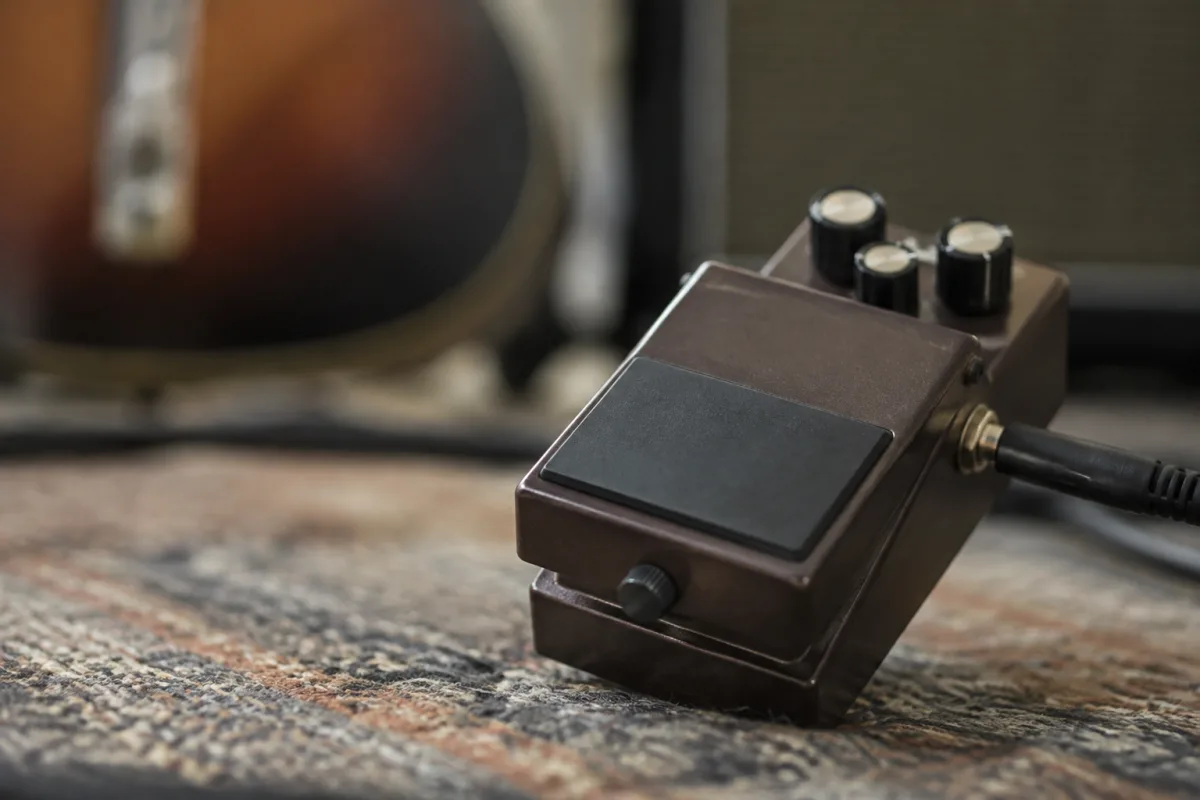
An octave effect pedal is a powerful tool for expanding your sonic palette, instantly transforming your guitar tone by generating pitches an octave or more above or below what you're actually playing. Whether you're chasing the heavy, synth-like textures of modern metal or the classic, slightly off-beat charm of vintage funk, understanding how octave pedals work and what distinguishes one from another will help you pick the right one for your playing style.
What Is an Octave Effect Pedal?
At its core, an octave effect pedal synthesises a pitch-shifted copy of your input signal and mixes it with your original tone. The most common configuration adds a note one octave higher, creating that characteristic shimmering, bell-like texture that sits beautifully alongside your clean signal. Some pedals stack multiple octaves, layering notes two or even three octaves above, whilst others blend a lower octave beneath your playing to thicken and darken your sound.
Unlike a simple pitch shifter, which attempts to match the frequency of your original note, true octave generators track the pitch of what you're playing and generate a harmonically related tone. This means they track your playing in real time, following bends, slides, and vibrato with surprising accuracy. The best octave pedals respond naturally to your playing dynamics, adding sustain and compression characteristics that make the effect feel less like an artificial processing trick and more like another instrument layered on top.
Types of Octave Effect Pedals
Octave pedals come in several flavours, each suited to different musical contexts and playing styles:
- Upper-octave pedals: Generate a note one or two octaves above your playing. These create bright, ethereal, almost synth-like tones. They work beautifully for lead work, creating bell tones and chime-like atmospheres that cut through a dense mix.
- Lower-octave pedals: Add a bass note below your playing. This thickens your tone significantly, giving single-note lines a fuller, almost chordal quality. Brilliant for both lead and rhythm work when you want that heavy, sub-bass rumble.
- Dual-octave pedals: Combine both upper and lower octaves (or multiples) in one box. These create the richest, most complex tones—useful for creating lush soundscapes, but also capable of overwhelming your signal if not dialled in carefully.
- Fuzz-octave pedals: Blend octave generation with fuzz distortion, often tracking the octave up through a fuzzy, aggressive texture. The Octave Fuzz design popularised by Boss and others is iconic here.
How Tracking Accuracy Affects Your Sound
One of the trickiest challenges of any octave pedal is pitch tracking. A pedal's ability to "listen" to what you're playing and respond instantly determines whether it sounds smooth and musical or glitchy and unreliable. High-end octave pedals employ sophisticated DSP (digital signal processing) algorithms that track pitch incredibly quickly, even on fast, complex passages and chords.
Tracking accuracy is crucial when playing chords or double-stops (two notes simultaneously). Some octave pedals track a blend of frequencies and produce a somewhat unpredictable result on chords, whilst better designs isolate the fundamental frequency and generate clean octaves that remain musically coherent even in dense harmonic territory. If you plan to play chords through your octave pedal, look for models with proven tracking of polyphonic content or consider stacking a monophonic octave over a single-string setup.
Key Settings and Controls
Most octave pedals offer a simple interface, though some high-end units provide extensive sonic shaping:
| Control | Effect | Notes |
|---|---|---|
| Dry/Wet mix | Balance between your original signal and the octave | Essential for keeping your tone grounded; most players favour 50–70% effect |
| Octave volume | Output level of the generated octave | Controls how prominent the effect sits in the mix |
| Tone/Filter | Shaping the brightness of the octave | Darker settings smooth artificial-sounding synth qualities; brighter settings enhance shimmer |
| Tracking | Speed of pitch detection | Faster settings catch quick phrases; slower settings are more stable on sustained notes |
Popular Octave Effect Pedals
Several classic designs have proven their worth in studios and on stages:
- Boss OC-5: The industry standard for upper-octave generation. Digital tracking is exemplary, and dual footswitches let you toggle between different octave settings mid-performance.
- EHX Octavix: A compact upper-octave pedal with warm, analogue-flavoured tracking. Great for vintage tones and players who prize character over raw accuracy.
- MXR Blue Box: The classic lower-octave fuzz-box, famous for its gritty, fat octave-down texture. Beloved by blues and rock players for nearly five decades.
- Empirical Labs Empirical: A polyphonic octave pedal with sophisticated algorithms for tracking chords accurately. Pricey but extraordinarily versatile.
Choosing the Right Octave Effect Pedal for Your Style
Your choice depends on your musical genre, the harmonic complexity of what you play, and how heavily you'll rely on the effect:
- If you play lead-focused styles (rock, metal, funk): A single upper-octave pedal is often the best starting point. It adds shimmer and aggression without overwhelming your core tone.
- If you play bass guitar or want thick rhythm textures: A lower-octave pedal thickens your fundamental pitch, giving single-note lines serious heft. Many bass players favour this for both practise and live work.
- If you're chasing synth-like, experimental tones: Dual-octave or polyphonic pedals unlock lush, orchestral possibilities, though they demand careful mixing to avoid mud.
- If you play simple, rhythmic parts: A basic, affordable octave pedal will serve you well. Splurge on tracking accuracy only if you're playing fast melodic lines or chords regularly.
Integration with Your Rig
An octave effect pedal sits comfortably in your effects chain, though placement matters. Most players insert it early in the chain—after overdrive or fuzz but before modulation and delay. This ensures the octave effect processes a relatively clean signal, allowing reverb and delay to enhance the octave effect naturally. Some players put it last in the chain to affect everything, creating a wall of octave-shifted sound, but this can muddy other effects.
Experiment with placement and settings, trusting your ear over conventions. An octave pedal's magic lies in its versatility: a little bit of subtle octave thickens your tone without anyone noticing the effect is there, whilst a pronounced, drenched-in-octave setting becomes a signature texture all its own.
Conclusion
An octave effect pedal is a remarkably fun and musically rewarding addition to any guitarist's toolkit. Whether you're after the bright, shimmering tones of classic funk, the heavy, modern textures of alternative metal, or simply thickening your everyday playing, a well-chosen octave pedal opens up endless sonic possibilities. Start by identifying whether you want upper or lower octaves, prioritise tracking accuracy if you'll be playing chords or fast passages, and don't be afraid to experiment with placement and mixing to find your signature sound. With so many excellent options available at various price points, finding an octave effect pedal that suits your style and budget has never been easier.


Comments