
Marshall Amplifiers article
The Complete Guide to Marshall Amplifiers
Marshall amplifiers are the gold standard of guitar amplification, iconic for their warm tone and association with rock music. Explore their history, models and technical characteristics.
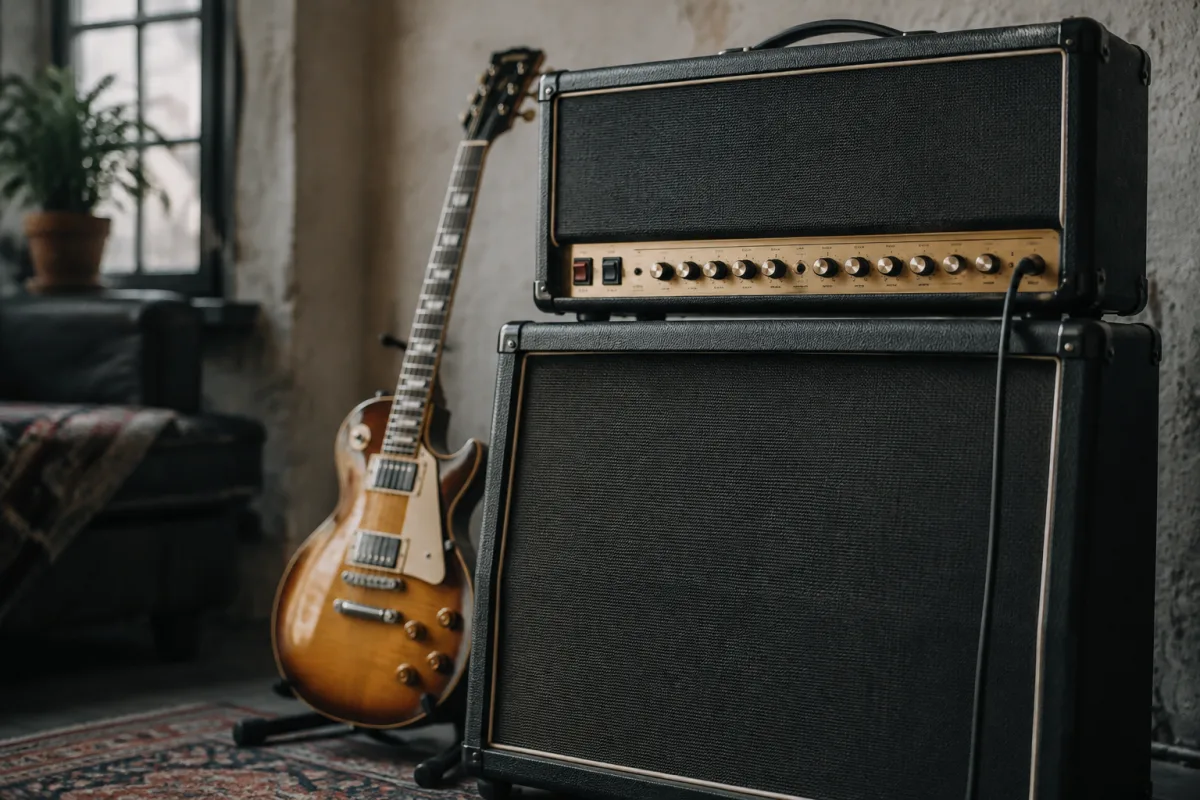
Marshall amplifiers represent one of the most iconic and recognisable guitar amplifier brands in music history. Since 1962, when Jim Marshall handcrafted the first amp in his London music shop, Marshall has defined the sound of rock music—from Jimi Hendrix's psychedelic walls of sound to modern metal's crushing tone. The distinctive Marshall stack (two large cabinets stacked atop an amplifier head) has become synonymous with rock guitar itself, instantly recognisable in photographs, films and live performances worldwide. Whether you're a professional touring musician, a serious amateur, or someone exploring amplifier options, understanding Marshall amplifiers reveals why they remain the benchmark against which all other guitar amplifiers are measured.
What Is a Marshall Amplifier?
A Marshall amplifier is an electronic device that takes the signal from an electric guitar and amplifies it through speakers, transforming the guitar's subtle electrical vibrations into the powerful acoustic sound heard by audiences. Marshall amplifiers are built around vacuum tubes (valves), which generate warm, touch-responsive tone that remains the signature sound of rock music. The amplifier's wattage (power output) determines how loud it can play; Marshall manufactures amplifiers ranging from small 1-watt practice amps to 200+ watt touring systems.
A complete Marshall amplifier system typically comprises a head (containing the amplifier circuitry) and one or more separate cabinets (containing speakers). The iconic "Marshall stack" consists of a 100-watt head and two 4x12 cabinets, each holding four 12-inch speakers. This combination delivers the maximum volume, presence and stage presence associated with Marshall's legend.
Marshall Amplifier History and Legacy
Marshall's history is intertwined with rock music itself. Jim Marshall began building amplifiers in 1962 to meet demand from players dissatisfied with existing options. His first amplifier, based on Fender designs but modified for greater gain and headroom, was born from a conversation with Pete Townshend of The Who. The amplifier's revolutionary sound—heavy, distorted, and capable of astonishing volume—quickly attracted rock's biggest names.
Jimi Hendrix famously used Marshall stacks, and in doing so, made them central to rock music's visual and sonic identity. The Who, Led Zeppelin, Black Sabbath and countless other legendary bands chose Marshall amplifiers. This association with rock's greatest moments cemented Marshall's reputation as the amplifier for serious musicians. Today, nearly 60 years later, Marshall remains the gold standard: touring professionals specify Marshall amplifiers, manufacturers copy Marshall's designs, and the distinctive logo is immediately recognisable to music lovers worldwide.
Key Characteristics of Marshall Amplifiers
Marshall amplifiers share several sonic and operational characteristics that define their identity:
- Warm, coloured tone: Vacuum tubes naturally warm and compress the signal, adding harmonic complexity. This warmth is the signature Marshall sound.
- Natural breakup and overdrive: Marshall amplifiers distort gradually as you turn up the volume; the distortion is musical and responsive to playing dynamics.
- Presence peak: Marshall amps emphasise midrange and presence frequencies, giving lead guitar remarkable cutting power—essential for being heard over a full band.
- Tube sensitivity: Marshall amps respond dramatically to subtle changes in playing dynamics and pick attack, rewarding technique and feel with expressive tone.
- Headroom at lower volumes: Even at bedroom volumes, a Marshall retains character; many players run Marshall amps at lower wattages specifically for this reason.
- Durability: Professional Marshall amps are built to withstand touring—road cases, repeated setup/teardown and years of nightly use.
Major Marshall Amplifier Series and Models
Marshall's lineup spans decades of designs, from vintage classic models to contemporary innovations. The major series include:
| Series | Wattage Range | Characteristics | Typical Use |
|---|---|---|---|
| JCM800 (classic) | 20W–100W | Legendary high-gain design; warm, thick overdrive | Professional touring, studios |
| JCM2000 | 50W–100W | Dual-channel, multiple modes, modern versatility | Professional gigging, varied styles |
| DSL (Digital Solid Logic) | 20W–100W | Hybrid tube/transistor, affordable, modern features | Intermediate to professional gigging |
| Code Series | 25W–100W | Solid-state with digital effects, ultra-compact | Gigging, recording, beginners |
| Origin Series | 20W–50W | All-tube, modern design, compact footprint | Professional touring, studios |
| Studio Jubilee | 20W | Compact, all-tube, studio and stage versatility | Recording, small venues, home |
| Practice/Combo Models | 1W–30W | Affordable entry-level, built-in speakers | Learning, practice, bedrooms |
Tube vs. Solid-State Marshall Amplifiers
Marshall manufactures both all-tube and solid-state amplifiers, each with distinct advantages:
- All-tube Marshall amps: Warmth, natural breakup, touch-responsive tone. Vacuum tubes generate the legendary Marshall sound. Require regular tube replacement and can generate significant heat. Preferred by professional musicians for tone.
- Solid-state and hybrid Marshall amps: More affordable, lower maintenance, compact, reliable. Modern solid-state designs can approximate tube tone convincingly but lack the organic warmth of true tube amplifiers. Ideal for gigging musicians on a budget.
For tone quality, all-tube Marshall amplifiers remain the gold standard. However, modern solid-state designs have improved significantly, and many gigging musicians accept the trade-off for reliability and affordability.
Marshall Amplifier Wattage and Practical Use
Marshall amplifier wattage ranges dramatically: from 1-watt practice amplifiers to 200+ watt touring heads. Understanding wattage and practical volume is crucial:
- 1–20W: Bedroom practice. A 5-watt Marshall at home volume is sufficiently loud; 15–20W provides headroom for sustained playing without complaints from housemates.
- 20–50W: Small venues, rehearsal rooms. A 30-watt Marshall in a rehearsal space or small club provides adequate volume to cut through a band.
- 50–100W: Professional gigging standard. A 100-watt Marshall head through a 4x12 cabinet is the baseline for touring; vast majority of touring bands use 50–100W amps.
- 150W+: Very large venues, festival stages. Large-wattage Marshall amps are overkill for most situations; even 100W provides enough headroom for stadium shows when properly miked and directed through venue PA systems.
A common misconception is that higher wattage means automatically louder. In reality, perceived loudness follows a logarithmic curve—doubling wattage increases perceived volume by only 3 decibels, barely noticeable. Many professionals choose 50W over 100W for the weight and transportation savings, knowing the wattage difference is imperceptible in real-world playing.
Marshall Amplifier Cabinets and Speaker Options
The cabinet—the wooden box containing speakers—dramatically influences Marshall amplifier tone. Key options include:
- 4x12 cabinet (four 12-inch speakers): The classic Marshall stack cabinet. Delivers full, booming lows and articulate highs. Standard pairing with a Marshall head.
- 2x12 cabinet (two 12-inch speakers): Compact, lighter, more portable than 4x12. Suitable for small venues; reduces bass punch but maintains clarity.
- 1x12 cabinet (single 12-inch speaker): Highly portable; suitable for practice and rehearsal. Very manageable size and weight.
- Speaker choice: Marshall uses different speaker brands (Celestion, Eminence) in different models. Speaker type dramatically influences final tone; Celestion speakers are traditional Marshall choice and impart characteristic warmth.
The cabinet-to-amplifier matching is crucial. A high-wattage head demands a speaker-rated cabinet of corresponding wattage; mismatching can damage speakers or produce thin tone.
Choosing and Using Marshall Amplifiers
Selecting the right Marshall amplifier depends on your playing context, budget, and tonal preferences. A bedroom player should choose a low-wattage (1–20W) combo or head-and-cabinet system; a rehearsal musician needs 20–50W; a touring professional should budget for 50–100W. Consider whether you prioritise tone (all-tube) or affordability and convenience (solid-state or hybrid). Try multiple models in person—Marshall amplifiers vary significantly, and personal preferences matter enormously.
Maintenance is crucial: tube amplifiers require periodic tube replacement (every 1–3 years depending on use), biasing adjustments and professional servicing. Budget for these costs; a tube amp is a long-term investment, not a plug-and-play device.
Conclusion
Marshall amplifiers remain the gold standard of guitar amplification—legendary for their warm tone, natural distortion and unmistakable presence in rock music. Whether you're drawn to the all-tube warmth of vintage models, the versatility of modern designs, or simply the cultural mystique of the Marshall brand, these amplifiers deliver the authoritative, expressive tone that has defined rock music for six decades. Choosing a Marshall amplifier is choosing a piece of music history—an instrument worthy of serious musicians and anyone seeking the definitive rock guitar sound.
Frequently Asked Questions
Q: Why are Marshall amplifiers so expensive?
A: Marshall amps are built with quality components, hand-assembled, and backed by decades of sonic research. The reputation and cultural legacy also justify premium pricing. Quality has a cost; many players consider Marshall amps worth every pound.
Q: Can I use a 100-watt Marshall in my bedroom?
A: Technically yes, but impractically. A 100-watt Marshall at bedroom volumes produces distortion that wastes power. Smaller wattage amps (5–15W) distort at liveable volumes, delivering better tone. Alternatively, use an attenuator (device that reduces output) to run higher-wattage amps at lower volumes.
Q: How often do Marshall amplifier tubes need replacing?
A: Output tubes (power amp tubes) typically last 1–3 years of heavy use. Preamp tubes last longer, often 3–5+ years. Home/bedroom players might replace tubes every 2–3 years; touring musicians may replace more frequently.
Q: Are vintage Marshall amplifiers better than modern ones?
A: Vintage Marshall JCM800s from the 1980s are highly sought after for their tone. However, modern Marshall designs are excellent and more reliable than older models. "Better" depends on preferences; many players prefer vintage warmth; others prefer modern conveniences.
Q: Can I pair a Marshall head with a non-Marshall cabinet?
A: Yes, provided impedance and wattage ratings match. A Marshall head can work through third-party cabinets; however, Marshall cabinets are specifically voiced to complement Marshall heads, so pairing delivers optimum tone.
Q: Do Marshall amplifiers work with acoustic guitars?
A: Marshall amps are designed for electric instruments. Acoustic guitars into a Marshall produce thin, harsh tone unsuitable for acoustic music. Acoustic guitar amplifiers are purpose-built for that application.
Q: Is a Marshall amplifier loud enough for gigging without microphone amplification?
A: For small venues (under 100 capacity), yes. A 50W Marshall through a 4x12 cabinet fills a small club adequately. For larger venues, the Marshall must be miked into the PA system; wattage then becomes less important than tone and clarity.
Q: How do I choose between Marshall JCM800 and JCM2000?
A: JCM800: single-channel, vintage-leaning tone, minimal features, warm distortion. JCM2000: dual-channel, multiple modes, modern versatility, EQ flexibility. JCM800 is puristic; JCM2000 is versatile. Choose based on musical style and feature preference.



Comments