


Laney Amp article
Laney Amp for Beginners: A Complete Guide
Just got your first Laney amp? This beginner's guide covers setup, tone controls, common mistakes, and how to find your best sound quickly.
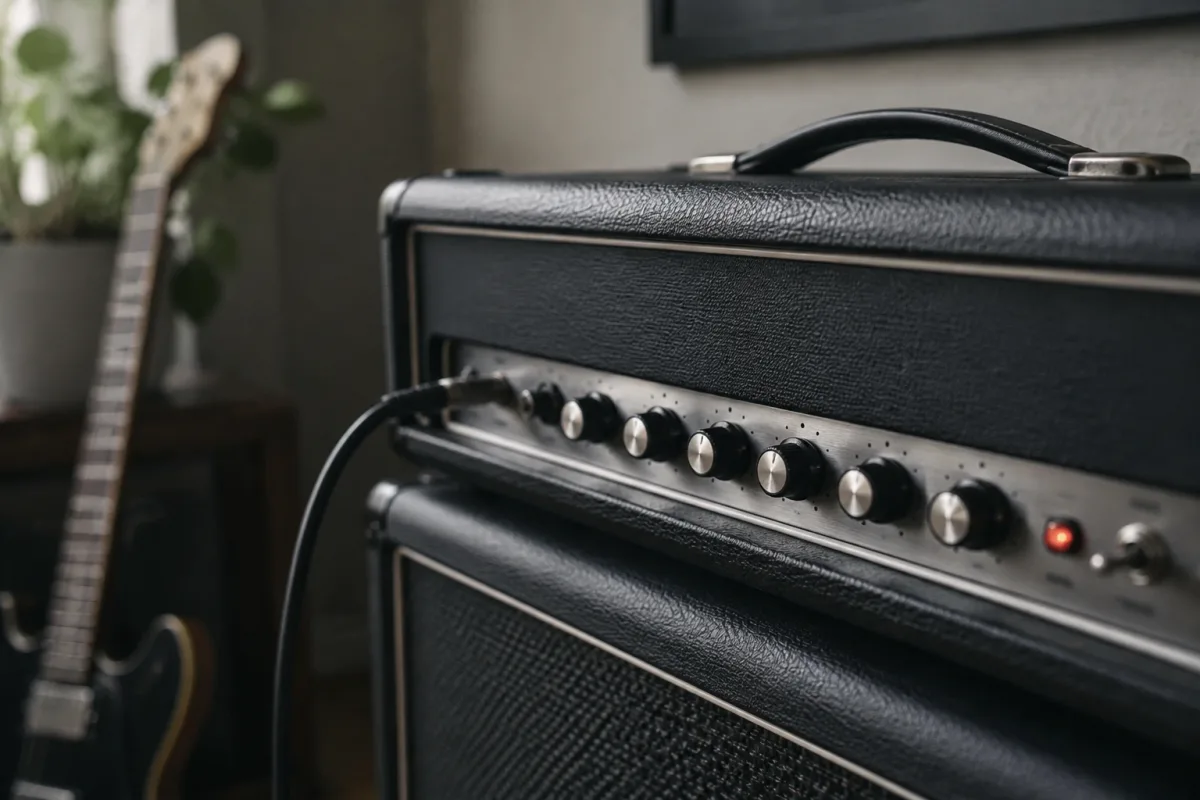
You've just acquired your first Laney amp, and you're staring at knobs, switches, and specifications that make your head spin. Don't worry—Laney amps are built for players at every experience level, and learning to use one properly doesn't require technical expertise. This guide walks you through those first sessions with your Laney amp, shows you how to find great tone without fear, and helps you avoid the mistakes that frustrate beginners. By the end, you'll be confidently dialling in sound and understanding what each control actually does.
Unboxing Your Laney Amp: What Comes With It
When your Laney amp arrives, inspect everything carefully. You should have the amplifier itself, a power cord (check voltage: UK models are 230V), and ideally an instrument cable and user manual. Some Laney amp models include a footswitch for channel switching or effects control—keep track of it. If your Laney amp shipped without a manual, download the digital version from Laney's website (search by model number). Set aside time to read the section on safety and connection. Laney amps are durable, but improper setup causes unnecessary wear or damage.
The Safe Setup: Placement and Power-On Procedure
Position your Laney amp on a stable, level surface, ideally on a stand or amp cart (not the floor). Laney amps come in sizes from small 15-watt combo amps to large half-stacks; placement affects airflow and sound projection. If your Laney amp is in a cabinet, position it so the speaker faces toward you at ear level (sitting or standing, depending on your playing position). Check that the speaker cable connecting the Laney amp head to the cabinet is firmly seated—loose connections create buzzing or no sound. Finally, before powering on, ensure the volume knob is set to minimum. Turn the power switch on and wait 30 seconds—many Laney amp models have a warm-up period before they reach full operation.
Understanding Your Laney Amp's Core Controls
Every Laney amp has several basic controls. The input gain adjusts how hard your guitar signal hits the amp's preamp; start here for tone shaping. Volume (or master volume) controls output loudness to your audience. Tone controls (treble, middle, bass) shape the frequency response—experiment once you're comfortable. Presence control (if your Laney amp has one) affects high-end sparkle; small adjustments create noticeable differences. Many Laney amp models include an effects loop for adding external effects without affecting the main signal chain. If you're new to effects, leave the effects loop off initially and focus on the core controls.
Your First Sound: The Setup Process
Plug your guitar into your Laney amp's input jack. Start with gain at minimum, master volume at minimum, and all tone controls (bass, treble, middle) in the middle position (usually marked with a centre notch). Turn the power on and wait for the amp to warm up. Slowly increase the gain until you hear a response to your playing—you're not chasing volume yet, just response. Play a few chords and notice the tone. Adjust the bass first: increase it to warm things up, decrease it to tighten the low end. Do the same with treble—increase for brightness and articulation, decrease for smoothness. Middle range controls mids; experiment to find what your guitar sounds like. Once the tone feels right, slowly increase the master volume to a comfortable listening level.
The Golden Rule: Start Quiet
The biggest mistake beginners make with a Laney amp is cranking volume before understanding how the gain and master volume interact. A Laney amp at bedroom volume (5-10 on the volume dial) still has plenty of headroom and tone shaping capacity. You don't need bedroom-destroying volume to learn your amp's character. Practice playing quietly, get to know the controls, and adjust only one thing at a time. Wait ten seconds after each change to hear the full effect. This patient approach teaches you how your Laney amp actually works.
Common Beginner Mistakes with Laney Amp Setup
First mistake: confusing gain and volume. Gain shapes tone; volume controls loudness. A highly-gained Laney amp at low volume still sounds overdriven (great for blues or rock). A low-gain Laney amp at high volume sounds clean. Second mistake: moving all knobs simultaneously. Change one thing at a time and listen. Laney amps are designed to teach you about tone; random knob-twisting teaches you nothing. Third mistake: leaving your Laney amp powered on when not playing. Turn it off after sessions to extend tube life (if your model uses tubes). Fourth mistake: ignoring the manual's recommendation about break-in time. New amplifiers need a few hours of normal play before reaching full character; patience pays. Fifth mistake: not cleaning cable connections. Dusty or corroded jacks cause intermittent problems or signal loss—wipe connections yearly.
Effects and Switches: Getting Comfortable
Many Laney amp models include overdrive, distortion, or digital effects built-in. These start life switched off. Once you're comfortable with your Laney amp's basic tone, experiment with one effect at a time. Switch it on, play with it, notice how it changes your sound, then switch it off. Don't be seduced into using every effect simultaneously—great tone comes from restraint. If your Laney amp has channel switches (usually via footswitch), practice switching between clean and overdrive channels. Each channel has independent tone controls; dial each one in separately, then get comfortable switching between them.
For deeper insights into Laney amp specifications, capabilities, and advanced techniques, explore our complete guide to Laney amp.
Growing Your Skills
After a few weeks with your Laney amp, you'll notice preferences forming. Maybe you prefer warm, thick tone, so you increase bass and reduce treble. Maybe you love the crunch of mild overdrive. Document these settings—photograph the control positions or write them down. As your playing evolves, your Laney amp preferences will too. The joy of a quality amp like Laney is that it rewards exploration. Take your time, change one control at a time, and listen carefully. Your Laney amp isn't a complicated machine—it's a tool for discovering your unique sound. Trust the process, be patient, and enjoy learning.



Comments