


Keeley Electronics Compressor article
Keeley Electronics Compressor for Beginners: A Complete Guide
Keeley compressors demystify compression for beginners. Discover how these pedals make compression audible and musical, and how to learn this essential effect properly.
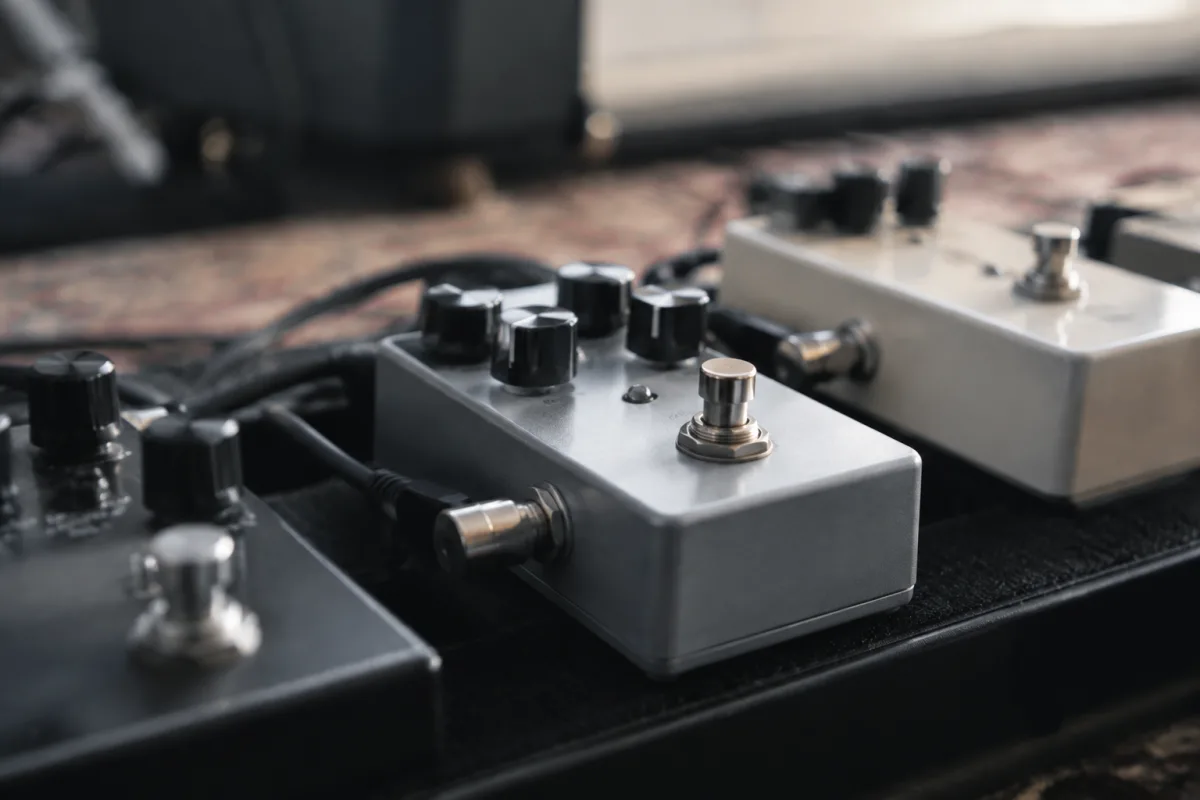
Compression is one of the most mysterious effects for beginner guitarists—everyone recommends it, but the concept seems abstract and intimidating. Keeley Electronics makes this barrier substantially lower with compressors specifically designed to teach you what compression actually does. If you're curious about adding compression to your tone but worried it'll be too complicated, Keeley compressors offer the perfect entry point with transparent controls and genuinely musical results that inspire continued exploration.
Understanding Compression (The Beginner Version)
Before exploring Keeley compressors specifically, understanding what compression does helps you appreciate why they matter. Compression automatically reduces the volume of loud peaks in your signal whilst leaving quieter parts untouched. This creates more consistent volume throughout your playing, helps your tone cut through in a band mix, and adds smooth sustain to your notes.
The challenge for beginners is that compression feels invisible. Unlike overdrive (which obviously distorts) or delay (which clearly repeats), compression works subtly. Your attack (the initial hit of the note) gets tamed, sustain extends, and overall volume sits more consistently. Some beginners don't hear obvious differences until someone points out "listen to how even that playing sounds now."
Keeley's approach to beginner compressors addresses this directly. Their pedals are designed so you hear compression working immediately when you engage them, rather than requiring extensive tweaking before perceiving results. This immediate feedback is crucial for building intuition about what compression does.
Why Keeley Compression Suits Beginners
Keeley Electronics is an American company founded by Robert Keeley, known for building boutique effects that prioritise musicality over complexity. Their compressors, in particular, have become industry standards precisely because they sound genuinely good across all settings—from pristine clean tones to heavily driven styles.
For beginners specifically, Keeley compressors excel because:
- Controls are intuitive—typically just volume, attack, and sustain knobs that do exactly what their names suggest
- Default settings sound inspirational even without tweaking; you experience immediate results
- The effect is audible and satisfying to beginners, creating motivation to explore compression further
- Build quality is professional-grade, meaning your first compressor won't fail from normal playing
- Resale value remains strong, so if compression doesn't capture your interest, you haven't wasted money
Entry-Level Keeley Compressor Models
Keeley's range includes several beginner-appropriate options. The Compressor Plus represents a sweet spot for many beginners—it includes essential controls without overwhelming options. Three main knobs (Sustain, Attack, and Volume) handle the core compression adjustment. Engaging the pedal immediately changes your tone audibly, which satisfies beginners seeking obvious results.
The four-knob design removes the temptation to get lost tweaking parameters excessively. This simplicity is actually brilliant for learning—you adjust sustain to control how long notes ring, attack to control how aggressively compression engages, and volume to match your bypass level. That's genuinely all most players need for serious use.
Keeley also offers the Comp+, a slightly more sophisticated version with additional tonal shaping. For absolute beginners, the standard Compressor Plus is preferable—master basic compression first, explore advanced options later.
What Compression Actually Does (And Hearing It Work)
Many beginners struggle to hear compression when first encountering it. Keeley compressors are intentionally designed to be more audible than subtly transparent alternatives. This matters psychologically—if you can't hear an effect working, you lose motivation and become convinced it's pointless.
With a Keeley compressor engaged, you'll immediately notice:
- Sustained notes extend noticeably: A note that normally fades becomes longer, ringing more consistently
- Volume feels more even: Hard-picked notes don't jump out as sharply; the dynamic range compresses
- Tone thickens: Particularly audible on clean tones, compression adds body and presence
- Playing feels more controlled: Beginners often struggle with dynamic inconsistency; compression masks this, letting cleaner technique develop naturally
This audibility builds understanding. After a few sessions playing through a Keeley compressor, you stop needing explanation—you simply hear what compression contributes to your tone.
Common Beginner Mistakes (And How Keeley Avoids Them)
Setting too much compression: Beginners often turn the Sustain knob way up, creating unnatural squashed tone. Keeley's default settings are conservative; you hear compression working without it sounding broken. Start with defaults, tweak slightly, resist over-tweaking immediately.
Using compression everywhere incorrectly: Some effects (reverb, delay) sit well in any part of a song, but compression shines most on specific sections. Keeley's audible effect encourages natural learning—you experiment with when compression serves your tone best rather than leaving it on mindlessly.
Assuming compression is only for professionals: Beginners sometimes think compression is "advanced" and unnecessary for their playing. Keeley's approach—making compression obviously musical—disarms this misconception immediately. You hear why professionals use it.
Connecting compression last in the signal chain: Compression typically works best early in your chain, before drives and modulation effects. Keeley documentation clarifies this clearly for beginners, removing guesswork.
The Beginner's Compression Learning Path
Week 1–2: Use default settings exclusively. Play through the pedal, focusing on what sounds different—the extended sustain, the even dynamics, the thicker tone.
Week 3–4: Experiment with the Sustain knob. Increase it slightly and hear how more sustain changes your tone. Back it off and notice the difference. This teaches you directly what that control does.
Week 5–6: Adjust Attack. Faster attack compresses your initial note strike harder; slower attack lets the initial hit through before compressing sustain. Hear how this changes dynamics.
After 6 weeks: You now understand compression intuitively. Use your Keeley purposefully on specific songs or passages rather than as a permanent "always on" effect.
This progression teaches you what compression does through direct musical experience rather than technical explanation. By the end, compression isn't mysterious—it's a tool you understand through your ears.
Practical Setup and Maintenance
Keeley compressors use standard 9V battery or mains power (sold separately). They're rugged enough for regular gigging without worry about damage from normal handling. Cable connections are straightforward—input, output, and power. Nothing complex for beginners to navigate.
The pedal integrates easily into any signal chain. Placing it early (after tuner, before drive effects) is conventional and works well for most styles. Some players place it after drives for different tonal characteristics—experiment once you've developed basic compression intuition.
Maintenance is virtually non-existent. Wipe down after playing, store in reasonable climate, and you'll use the pedal for years without issues. Keeley's build quality means your first compressor likely outlasts your beginner phase considerably.
Moving Beyond Beginner Status With Compression
Here's the beautiful aspect of starting with a Keeley compressor: you don't outgrow it. Many advanced players keep their first Keeley compressor indefinitely because it remains genuinely useful regardless of playing level. Compression is one of those effects where quality matters more than complexity—a good compressor like Keeley's transcends beginner versus advanced distinction.
As you develop, you might explore different compression styles (optical versus FET, for example), but your initial Keeley compressor will still sound excellent in your signal chain years later. This differs from budget starter gear that you typically replace—your first quality compressor becomes a permanent tool.
Complete Information and Advanced Topics
For comprehensive specifications of Keeley's entire compressor range, detailed technical information, and advanced compression concepts, visit our complete guide to Keeley Electronics compressors. That resource covers the full portfolio, advanced features, and how different Keeley compressors suit various playing styles beyond the beginner scope.
Taking Your First Compression Step
Choosing a Keeley compressor as your introduction to compression is genuinely smart. You're prioritising audible results and beginner-friendly design over confusion-inducing complexity. The effect is immediately musical, teaching you through your ears rather than technical parameters. After weeks of playing through a Keeley compressor, you'll understand compression intuitively and be ready to explore compression's role in your permanent tone. Your first compressor has become a tool that'll serve you for years, regardless of where your playing develops.



Comments