


Harmonizer Effect Pedal article
Harmonizer Effect Pedal for Beginners: A Complete Guide
A harmonizer effect pedal creates harmonies that follow your playing. This beginner guide covers setup, key settings and common mistakes to avoid.
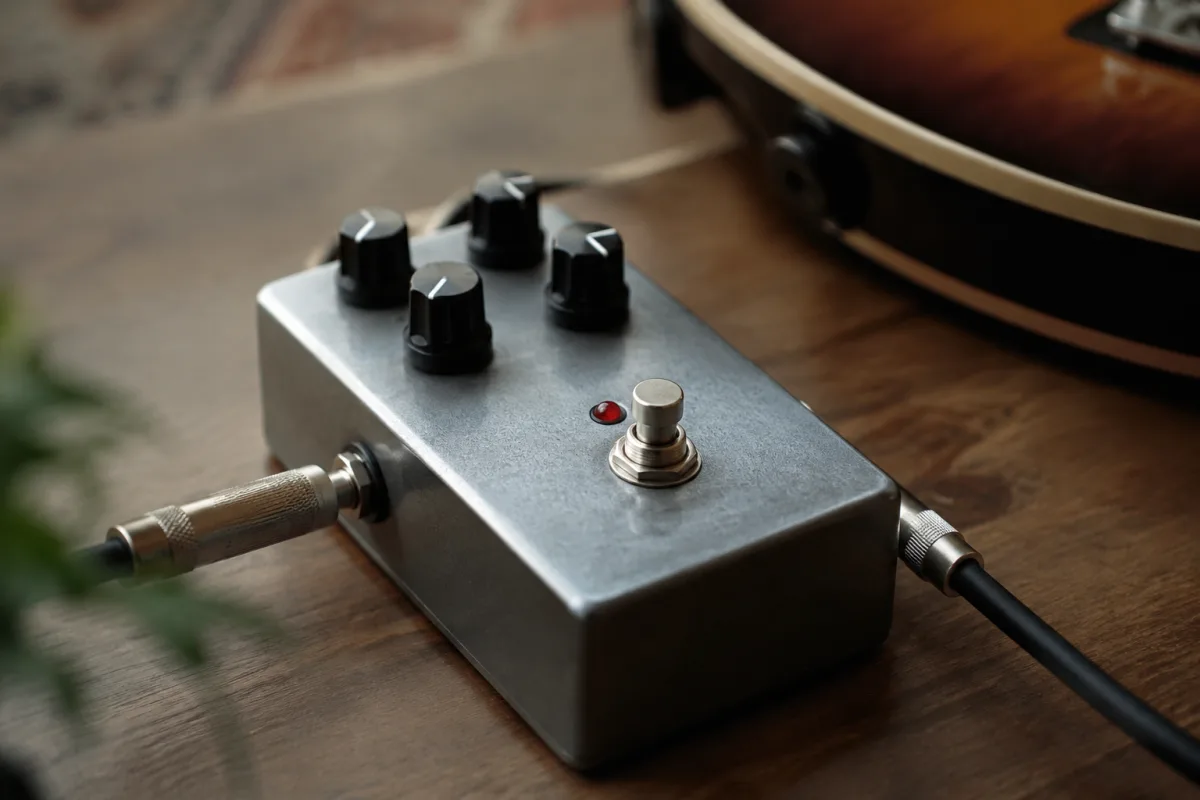
A harmonizer effect pedal can sound like magic the first time you hear it: you play a single note and suddenly it sounds like two or three guitarists playing in harmony. But if you’ve just bought your first harmonizer effect pedal, the controls might look confusing and the sound might not match your expectations. Don’t worry. Harmonizer effect pedals follow simple logic, and you can get great sounds in an afternoon. This guide walks you through how they work and what to expect as a beginner.
What Does a Harmonizer Effect Pedal Actually Do?
A harmonizer effect pedal listens to the note you play and generates additional notes that harmonise with it. Play a C note, and the harmonizer adds a C an octave above or an E note (a third interval) below, automatically in tune. It creates the illusion of multiple guitars playing together, or a backing vocal harmony.
This sounds complicated, but the pedal does the heavy lifting. You just play normally. The harmonizer listens, calculates the harmony and blends it with your original signal. You hear both your guitar and the harmony together.
Not every harmonizer effect pedal works the same way. Some create smooth, chordal harmonies. Others generate tight, pitch-shifted copies of your note. Some sound polished and professional; others are lo-fi and experimental. As a beginner, just know that harmonizer effect pedals come in many flavours—the sound you get depends on the model and how you set it up.
The Basic Controls on a Harmonizer Effect Pedal
Most harmonizer effect pedals have these key controls:
- Mix or Dry/Wet: How much of the harmony you hear versus your original guitar. At 0%, you hear only your guitar (the effect is off). At 100%, you hear mostly the harmony. Start around 50–70% so both your original tone and the harmony are audible.
- Voice or Interval: Which harmony is generated. A +3 interval might add a third above your note; a +5 adds a fifth. Some pedals let you choose multiple intervals at once (e.g., +3 and +5 together, creating a chord). Beginners should start with a single voice to understand what’s happening.
- Key or Root Note: The musical key the harmonizer is working in. If you set it to C major, the harmonies will stay in that key. This prevents harmonies that sound out of tune. For beginners playing in one key, set it and leave it.
- Blend: On some units, a separate control for how transparent the harmony sounds. Leave this at default unless you want a particular character.
- Footswitch: Turns the harmony on and off. Some pedals have a footswitch to toggle between different harmony settings—useful for changing from verse to chorus.
Setting Up Your First Harmonizer Effect Pedal
Connect it: Plug your guitar into the input, the output to your amp (or next pedal). Power it via battery or adaptor (standard 9V centre-negative).
Set the key: This is crucial. Most harmonizer effect pedals need to know what key you’re playing in so it can generate in-tune harmonies. If you’re jamming in E minor, set the key to E. Check the pedal’s manual for how to do this—it varies by model.
Choose a single harmony: Start simple. Select "+3" (a third above your note) or "+5" (a fifth above). Avoid multiple harmonies at first.
Set the mix to 50%: This way you hear your original guitar and the harmony equally. Adjust from there once you understand what’s happening.
Play a simple melody: Play something you know well. Listen to how the harmony follows your note. If it sounds out of tune, the key setting might be wrong. Double-check it.
Common Beginner Mistakes With Harmonizer Effect Pedals
- Setting the key wrong: If the harmony sounds out of tune, 90% of the time it’s because the key setting doesn’t match what you’re playing. If you change keys during a song, the harmony will sound wrong in the new key. Set the key correctly before playing.
- Using too many harmonies at once: Some pedals let you stack +3, +5 and +7 harmonies all at once. This creates a thick chord, but it can muddy your tone if you don’t balance it carefully. Start with one voice and add others only after you understand the first.
- Setting the mix too wet: At 100% wet, you hear mostly the harmony and lose your original guitar tone. This sounds weird and often out of tune. Keep the mix at 50–70% so your original signal is audible and the harmony sits well.
- Playing fast lines expecting perfect tracking: Harmonizer effect pedals can struggle to track very fast passages or intervals larger than an octave. If you play a riff faster than the pedal can process, it might stumble. This isn’t a fault—it’s a limitation of pitch detection. Slow down and the harmony tracks perfectly.
- Leaving it on all the time: A harmony effect is cool, but overusing it gets tiring. Use it for specific parts—a verse, a solo—and bypass it for rhythm sections. Save the effect for moments where it adds meaning.
- Expecting studio-quality tone: Budget harmonizer effect pedals sound lo-fi and processed. Professional units sound better but cost more. As a beginner, low-fi can be fine; just know the tone is part of the character.
Practical Tips for Getting Good Sounds
- Use short sustain: Harmonizer effect pedals sound better on notes with natural sustain. A sharp, percussive note is harder to harmonize. Long, singing notes harmonise smoothly.
- Play cleanly: If you play sloppy or out of time, the harmonizer will expose it. Play precisely and the effect shines. This is actually a good thing—it teaches you better playing.
- Use it on vocals, too: Some harmonizer effect pedals can harmonise a vocal microphone. Experiment with this if you sing and play simultaneously.
- Combine with other effects: A harmonizer after a reverb sounds ethereal. A harmonizer before a distortion sounds crunchy and aggressive. Try different positions in your signal chain.
Types of Harmonizer Effect Pedals
Harmonizer effect pedals come in different flavours. As a beginner, just know these exist:
- Pitch shifters: Simple pitch-shift based, good for octaves and dramatic intervals, sometimes lo-fi-sounding.
- Harmonisers with chord recognition: Advanced models that listen to your playing and generate harmonies that fit musically. More expensive but often sound better.
- Polyphonic harmonisers: Can harmonise multi-note chords, not just single notes. Very complex and usually professional-grade.
As a beginner, a basic single-voice harmonizer effect pedal is plenty to learn on. Upgrade to more complex types once you understand the basics.
For a comprehensive look at harmonizer effect pedals and their full range, see our complete guide to harmonizer effect pedals.
Your First Week With a Harmonizer Effect Pedal
Day 1: Connect the pedal. Set the key. Choose a single voice. Play familiar melodies and listen to how the harmony follows.
Day 2–3: Experiment with the mix knob. Notice how 30% sounds subtle, 70% sounds prominent, 100% sounds completely harmony-focused. Find a mix you like.
Day 4–5: Try different intervals. A +3 sounds musical. A +5 sounds fuller. A -3 (below) sounds darker. Discover which you prefer.
Day 6–7: Use the harmonizer in a real song context. Play parts with it, parts without. Find places where the harmony adds magic and places where it distracts.
By the end of a week, you’ll be genuinely comfortable with a harmonizer effect pedal.
Conclusion: It’s Simpler Than It Sounds
A harmonizer effect pedal looks like it has lots of moving parts, but the core is simple: it detects your note and adds harmonies. Set the key correctly, start with a single voice and a 50% mix, play cleanly, and you’ll get great sounds immediately. The complex part isn’t learning the pedal—it’s learning when to use it musically. Start there and you’ll get the most from your harmonizer effect pedal.



Comments