
Guitar Power Attenuators article
The Complete Guide to Guitar Power Attenuators
A guitar power attenuator lets you push your tube amplifier's power section into overdrive whilst reducing output to neighbourhood-friendly levels. Learn how they work and what to look for.
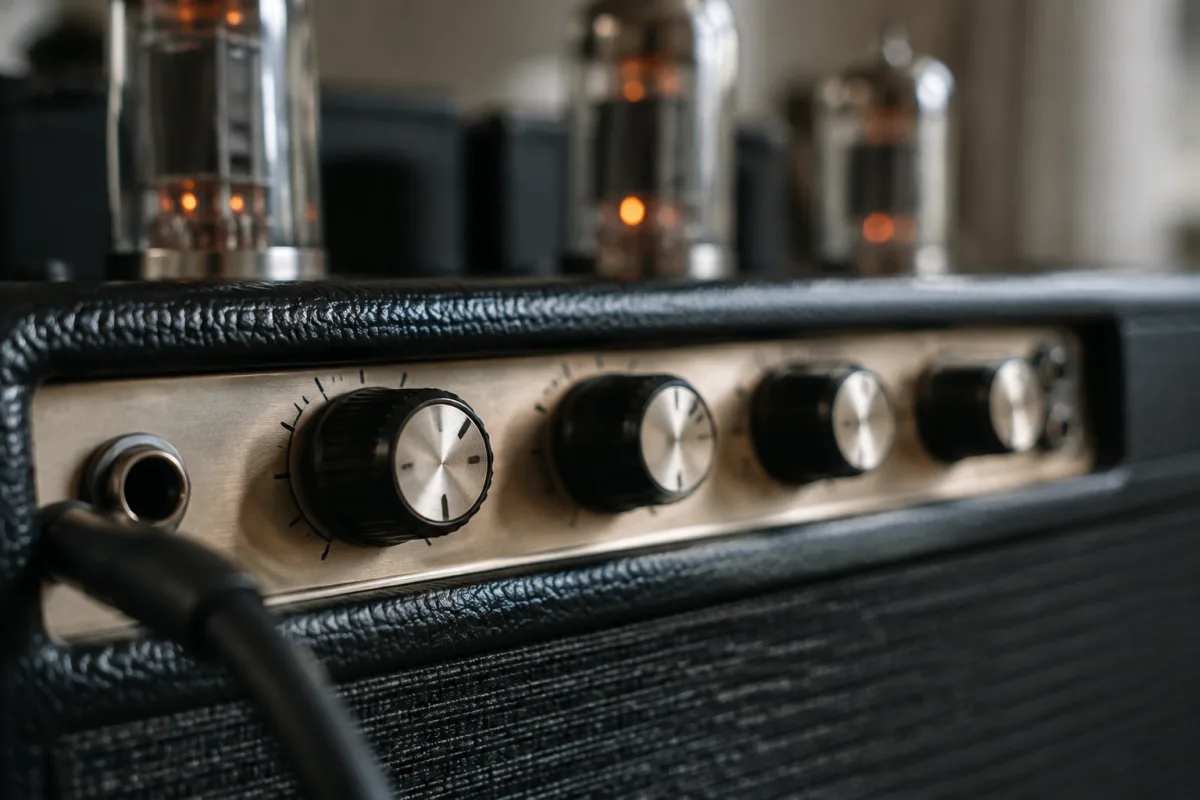
A guitar power attenuator is an indispensable tool for anyone who wants to harness the tonal magic of a cranked tube amplifier without blowing out windows or incurring the wrath of neighbours. Also called a power soak, a power attenuator allows you to push your amp's power section into overdrive—where most high-wattage amps deliver their best tone—whilst reducing the actual volume output to bedroom or living-room levels. Whether you're a tone-chaser who demands natural tube breakup or a recording artist looking for studio flexibility, understanding how power attenuators work and what to look for will transform how you approach your rig.
How Guitar Power Attenuators Work
The power section of a tube amplifier is the final stage before the speaker, where the preamp signal gets amplified to high voltage by power tubes and pushed through an output transformer. This is where the amp's character truly emerges—where a Marshall gets its crunch, a Fender its chime, and a Mesa its raw authority.
A guitar power attenuator sits between the amp's output and the speaker, intercepting the signal and reducing its volume before it reaches the speaker cabinet. Traditional designs use resistive networks (like large wirewound resistors or variable potentiometers) to dissipate excess power as heat, bleeding some of the signal away. Modern attenuators often employ reactive loading or impedance-matching circuits that preserve the amp's natural tone whilst reducing volume more efficiently and with less heat generation.
The key advantage over simply turning down your amp's volume knob is that your power section remains driven hard, still generating the harmonic richness and compression that makes tube amplifiers musical. You get the tone of a cranked 100-watt stack at a whisper.
Types of Power Attenuators
Power attenuators come in several flavours, each with distinct strengths:
- Resistive attenuators: The simplest design, using resistor networks to dissipate power. They're affordable and reliable but generate significant heat, especially at higher wattages. Common in vintage setups and budget-conscious rigs.
- Reactive/load-box attenuators: Use impedance-matching networks to more closely simulate a speaker load whilst absorbing power. They run cooler, sound more natural, and are less taxing on your amp's output transformer. Increasingly popular for modern rigs.
- Combo amp attenuators: Designed specifically to sit between the preamp and power section of combo amplifiers or to replace an amp's speaker entirely, offering precise control over volume without a separate cabinet.
- Capaci-tive attenuators: A rare design using capacitive elements to reshape the frequency response as they attenuate, sometimes offering unique voicing options.
Key Considerations When Choosing a Power Attenuator
Several factors determine whether a power attenuator will serve you well:
| Factor | What It Means | Why It Matters |
|---|---|---|
| Wattage rating | Maximum power the attenuator can handle (e.g. 100W, 50W, 20W) | Match or exceed your amp's output wattage. An undersized attenuator will overheat or fail. |
| Impedance matching | How well the attenuator simulates a speaker load | Proper impedance matching (4Ω, 8Ω, 16Ω) keeps your amp happy and tone natural; mismatched impedance can damage the output transformer. |
| Attenuation range | How much volume reduction is possible (e.g. −3dB to −20dB) | A wide range lets you go from bedroom volumes to silent for recording or silent practice. |
| Heat dissipation | How the unit handles excess power (fans, heat sinks, cooling) | Poor cooling means the attenuator can overheat or drift in tone; better designs stay cool and stable. |
| Tonal colouration | Whether the attenuator adds or removes frequencies | Some players prefer a little high-end roll-off for aggressive tones; others want transparency. Choose based on your amp and ear. |
Popular Power Attenuators
Several highly regarded models have proven themselves in professional studios and live rigs:
- THD Electronics Hot Plate: The classic, affordable resistive attenuator. Renowned for its honest, transparent tone. Available in various wattage ratings; beloved by blues and vintage rock players.
- Bourgeois Audio Loadbox: A reactive load box that doubles as a speaker emulator for silent recording. Exceptional tone and build quality, though pricier than resistive alternatives.
- Rivera Rockcrusher Recording: A reactive attenuator with built-in speaker simulation and recording output. Ideal for studio work and silent practice without compromise.
- Seymour Duncan Power Stage 170: A hybrid approach combining attenuation with tube gain staging and a power amp section. Offers flexibility for both studio and live use.
- Marshall Amp Soak: Marshall's own reactive attenuator, designed specifically for their amps but compatible with most brands. Solid all-rounder at a reasonable price point.
Installing a Power Attenuator in Your Rig
Installation is straightforward but requires care. Most power attenuators sit between your amp's speaker output jack and your speaker cabinet, using heavy-duty speaker cables. Check your amp's output impedance (usually printed on the back or in the manual) and set your attenuator to match.
Always turn off your amplifier before connecting or disconnecting a power attenuator. Never operate a tube amplifier without a load (speaker or attenuator) connected—running an amp into open air can destroy the output transformer. If your attenuator has adjustable attenuation, start at full volume and gradually reduce it, listening for any changes in tone that might indicate impedance mismatch or a faulty connection.
Some modern attenuators include a headphone or line-level output, letting you record silently or add a wireless in-ear monitor system. Check your model's manual for all available options and safety considerations.
Benefits and Trade-Offs
A power attenuator is a game-changer for bedroom players, recording artists, and anyone who wants studio-quality tube tone at low volume. You get to push your power tubes into their sweet spot, enjoy the natural compression and harmonic bloom that comes with it, all without waking the household or triggering noise complaints.
The trade-off is cost (quality attenuators run £200–£800+) and, with resistive designs, heat management. Some players find that attenuated amps sound slightly different from full-volume rigs, though the best reactive designs are remarkably transparent. Your tone may shift slightly based on the attenuator's design and your amp's characteristics—a worthwhile experiment if you have the chance to borrow or rent one first.
Conclusion
A guitar power attenuator is one of the smartest investments you can make if you're serious about tube tone but constrained by space or noise. Whether you choose an affordable resistive hotplate or a high-end reactive load box, a power attenuator liberates you from the tyranny of volume, letting you experience the full sonic potential of your amplifier at any level. Spend time researching models that match your amp's wattage and impedance, consider whether you need silent recording features, and don't hesitate to try before you buy if possible. Your neighbours—and your ears—will thank you.


Comments