


Guitar Power Amplifiers Buying guide
Guitar Power Amplifiers: A Complete Buyer's Guide
Confused about guitar power amplifiers? This buying guide covers types, wattage needs, specifications to compare, and how to match amps to your actual requirements.
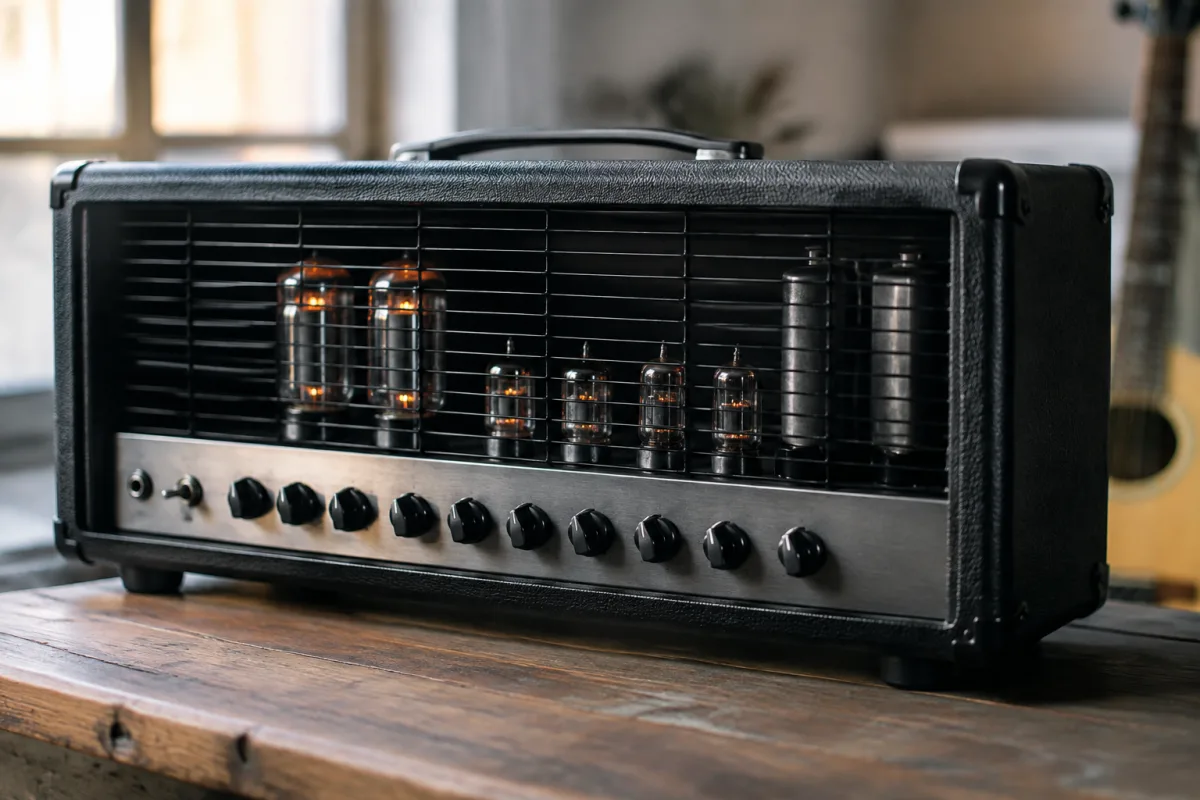
You've invested in a good preamp or amplifier head—now you're wondering about adding a separate power amplifier. Perhaps you're combining a valve head with a power amp for ultimate tone shaping, or you're building a professional rig from components. Guitar power amplifiers unlock sonic possibilities but require careful purchasing. This guide walks you through what matters when choosing, the specs to compare, and the traps that catch uninformed buyers.
Understanding the Role of a Power Amplifier
A power amplifier is the final stage of your signal chain. It takes a line-level signal from your preamp or head and amplifies it to the voltage and current needed to drive speakers. In integrated amplifiers (like most combo amps), the preamp and power amp are in one box. Separating them gives you flexibility: you can change preamps without replacing the whole amplifier, use different power ratings for different venues, or combine tube preamps with solid-state power stages for custom tonal blends.
Tube vs. Solid-State Power Amplifiers
Tube Power Amplifiers: Use vacuum tubes to amplify the signal. Tubes add natural compression and harmonic warmth even when clean. They distort gracefully when overdriven. Disadvantages: heavier, hotter running, tubes wear out and need replacement (£100–£300 every 3–5 years), more expensive upfront (£500–£3000+). Preferred by tone purists and classic-rock players.
Solid-State Power Amplifiers: Use transistors for clean, predictable amplification. Very reliable, lightweight, cool-running, and affordable (£300–£1500). Distortion when overdriven is less musically pleasant than tubes. No tube replacement costs. Ideal for players wanting dependable performance and affordability.
Hybrid Power Amplifiers: Combine tube input stages with solid-state output. Aim for tube warmth with solid-state reliability. Mid-range pricing (£600–£1500). A compromise that works for some players.
Your choice depends on tone priorities and budget. Tubes cost more but offer tone character. Solid-state is practical and affordable. Choose based on your needs, not gear mythology.
Wattage: What's Actually Useful
Power amplifier wattage directly affects how loud you can play. However, wattage matters less than many assume:
50W tube amp vs. 50W solid-state: Tubes compress more and feel louder subjectively. The solid-state needs slightly more power to match perceived volume.
Doubling wattage = +3dB volume increase: Going from 50W to 100W sounds a bit louder but not dramatically. Going from 100W to 200W is a modest increase. This is why 50W is plenty for club gigs and 100W handles most venues.
Practical wattage guide:
- Bedroom/studio (under 20 people): 20–50W is ample. Overkill above this.
- Small clubs/bars (50–200 people): 50–100W handles most situations. PA systems often do the heavy lifting anyway.
- Large venues/outdoor (200+ people): 100–200W recommended. Beyond 200W, rarely necessary for guitar in professional settings (PA systems amplify for you).
Don't overpay for wattage you won't use. A 50W amp in most scenarios outperforms expectations. Buy what you need, not what sounds impressive on spec sheets.
Key Specifications to Compare
Output Impedance and Speaker Impedance Matching: Critical detail. Speaker impedance (measured in ohms: 4, 8, 16) must match the power amp's rated output impedance. Mismatched impedance reduces power output or damages the amplifier. Always verify impedance compatibility before purchase.
Input Sensitivity: Measured in volts or dBV. This controls how much input signal the power amp needs. Higher sensitivity means quieter preamps still drive it effectively. Look for input sensitivity around 1V (typical). Extremely low sensitivity (<0.5V) needs very hot preamp signals.
Headroom and Clipping: Headroom is the amplifier's ability to reproduce peaks without distortion. More headroom = cleaner sound at volume. Clipping is when the amplifier runs out of headroom and distorts. For clean guitar (jazz, funk), high headroom matters. For crunch tones, some clipping is desirable.
Frequency Response: Guitar power amps should cover 20Hz–20kHz minimum. Look for flat response in this range. Anything outside this range isn't critical for guitar applications.
Signal-to-Noise Ratio: Measured in dB. Higher is better. 80dB+ is excellent and nearly imperceptible. Below 70dB starts sounding noisy. Most modern amps exceed 80dB, so this is rarely a problem.
Comparing Price Tiers
| Price Range | Typical Features | Best For |
|---|---|---|
| £300–£600 | 50-100W solid-state, basic input options, reliable performance | Budget-conscious players, beginners experimenting with separation |
| £600–£1000 | 50-100W solid-state or hybrid, better specifications, more control | Serious hobbyists, working musicians, high-standards players |
| £1000–£1500 | Tube power amp or professional solid-state, excellent specs, boutique options | Professional players, studio work, tone connoisseurs |
| £1500+ | Tube power amps, handmade options, professional-grade DSP, custom designs | Touring professionals, studio engineers, collectors, tone perfectionists |
Common Pitfalls When Buying Guitar Power Amplifiers
Buying more wattage than you need: Amplifier wattage doesn't equal quality. A 200W amp isn't better than a 50W amp if you play small venues. Overpowered amplifiers are heavier, hotter, and waste money.
Ignoring impedance compatibility: This is the biggest mistake. Mismatched impedance damages amplifiers. Always verify your speaker cabinet impedance matches the amp's output rating before purchase.
Confusing "professional" with "necessary": A touring guitarist might need 100W and professional reliability. A bedroom player needs 20W. Buying professional-grade gear for amateur needs is wasteful.
Not auditioning through your cabinet: Power amp tone depends heavily on the speaker cabinet. The same power amp sounds different through a vintage 1x12 vs. a modern 2x12. If possible, demo the amp through your actual cabinet.
Overlooking tube replacement costs: Tube power amps need tube replacements every 3–5 years (£100–£300 minimum). Budget this into the total cost of ownership.
Separation Advantages: When Buying Separate Power Amps Makes Sense
You separate preamp and power amp when:
- You want to experiment with different preamps without replacing the whole rig
- You need multiple power ratings (50W for studios, 100W for venues)
- You're combining a vintage preamp with modern reliable power stages
- You want to maximize tone customization
- You're running multiple channels through a mixer into separate power amps
For beginners or players content with one preamp sound, separation adds unnecessary complexity. Start integrated; upgrade to separation later when your needs demand it.
Matching Preamps and Power Amps
Any decent preamp works with any decent power amp if impedance matches. Popular combinations:
Tube preamp + solid-state power amp: Tube warmth with solid-state reliability. Best of both worlds for many players. Common setup in professional rigs.
Tube preamp + tube power amp: Maximum tube character. More expense and maintenance but ultimate tone for tube purists.
Solid-state preamp + solid-state power amp: Affordable, reliable, clean. Practical for clarity-focused players.
Connectivity and Control Features
Input Options: Standard 1/4-inch balanced XLR is typical. Some power amps offer speaker-level inputs for hybrid systems. Check your preamp's output type before buying.
Master Volume: Essential for controlling output without changing preamp settings. All modern power amps include this.
Presence and Bass Controls: Some power amps offer EQ controls. Useful for tailoring tone but not critical if your preamp handles EQ.
Parallel Effects Loop: Some designs include this. Rarely critical for power amps but useful in certain signal chain configurations.
New vs. Used Power Amplifier Considerations
Used power amps can offer excellent value, especially tube models:
Advantages of Used: 30–50% savings, tube amps with proven reliability, immediate availability.
Disadvantages: Unknown maintenance history, no warranty, potential tube wear requiring replacement soon after purchase.
Smart used buying: Purchase from reputable dealers or experienced players. Ask maintenance history. For tube amps, budget for new tubes even if the amp works now. Avoid first-generation designs (reliability unknown). Test the amp thoroughly before committing.
Venue and Gigging Considerations
Your typical performance venue shapes your power amp choice:
Recording studios: 50W solid-state is plenty. Clean headroom matters more than volume. Reliability is paramount.
Small clubs: 50–100W, either type. Venue PA often handles main amplification. Your power amp feeds the monitor system.
Festival rigs: 100–200W for security. Larger stages use your amp signal into a mixing console feeding PA. Volume less critical than reliability.
Traveling musicians: Lighter solid-state amps win over heavy tube models. Reliability on the road trumps tone nuances.
Making Your Decision: A Checklist
Before buying a guitar power amplifier:
- Define your typical venues and performance sizes
- Verify your preamp's output impedance and type
- Check your speaker cabinet impedance
- Decide between tube and solid-state based on tone priorities and budget
- Choose wattage realistically (usually 50–100W is plenty)
- Demo through your actual cabinet if possible
- Compare specifications (input sensitivity, headroom, noise floor)
- Budget maintenance costs if choosing tube amp (tube replacement every 3–5 years)
- Verify return/warranty policy
For an in-depth exploration of guitar power amplifiers, professional applications, and advanced configurations, review the complete guide to guitar power amplifiers.
Conclusion
Choosing a guitar power amplifier requires understanding impedance, wattage needs, and your tone priorities. Tube amps offer character and warmth at higher cost. Solid-state amps provide reliability and affordability. For most players, 50–100W solid-state separates is a smart, practical choice. Buy based on your actual venues and needs, not magazine specs or gear mythology. A properly matched preamp and power amp combination transforms your tone and gives you flexibility for years to come. That's the real value—not raw power, but matching the right amplification to your genuine playing requirements.


Comments