


Strymon Timeline Guitar Pedal Buying guide
Strymon Timeline Guitar Pedal: A Complete Buyer's Guide
The Strymon Timeline guitar pedal ranks among the most sought-after delay units in professional circles. This buying guide walks you through its capabilities, true cost, and whether it's right for your needs.
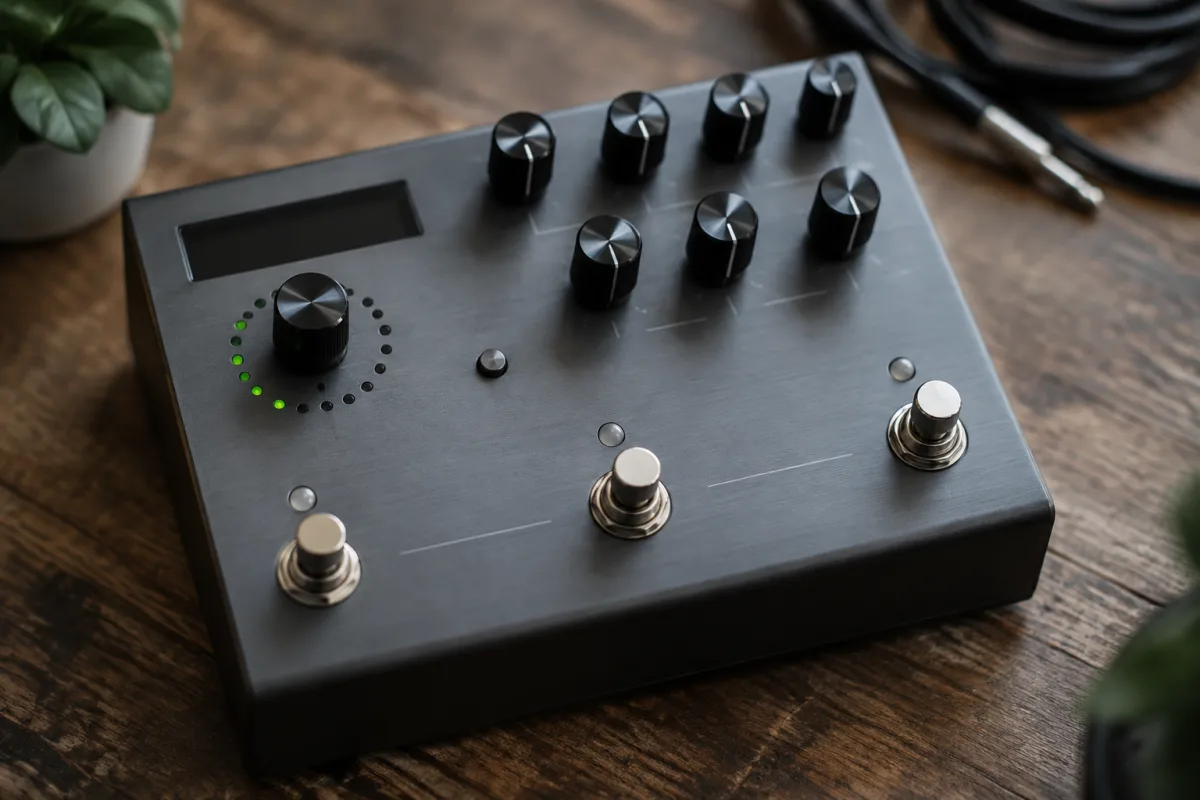
The Strymon Timeline guitar pedal ranks among the most sought-after delay units in professional and semi-professional circles. With studio-quality effects, intuitive controls, and legendary build reliability, it's a serious investment that demands clear understanding of its capabilities and true cost. This buying guide walks you through what the Strymon Timeline actually offers, how to evaluate whether it's right for your needs, and how to avoid overpaying for features you won't use.
What Makes the Strymon Timeline Stand Out
The Strymon Timeline isn't just a delay pedal—it's a creative tool that stores 50 delay algorithms ranging from classic tape echo to ambient textures and experimental effects. Unlike entry-level delay pedals with three or four preset sounds, the Timeline gives you genuine sonic variety within a single compact unit. Each algorithm can be tweaked with multiple parameters: delay time, feedback, mix level, tone, and more. This flexibility appeals to session musicians, recording artists, and live performers who need one pedal to handle diverse tonal demands.
Build quality sets Strymon apart from budget competitors. The Timeline uses premium switches, potentiometers, and internal components rated for thousands of hours of use. Professional guitarists trust Strymon pedals to survive years of touring and daily gigging without malfunction. That reliability commands premium pricing but justifies the cost if you're gigging regularly or recording seriously.
Key Specifications to Understand
The Timeline features stereo inputs and outputs, meaning you can process both your dry guitar signal and send effects through a stereo amplifier setup. This stereo capability dramatically expands sonic possibilities—delays can ping-pong between channels, creating immersive spatial effects impossible on mono pedals. If you're not using stereo amplification currently, this capability becomes relevant as your rig grows.
The pedal has two footswitches: one for bypassing the effect, one for scrolling through presets. Real-time parameter adjustment happens via three footpedals (for delay time, feedback, and mix) plus the four knobs on the pedal's face. This dual control approach—footpedals for live tweaking, knobs for static setup—accommodates both spontaneous performance adjustments and precise studio tone-shaping.
The Timeline includes a built-in expression pedal input, allowing you to connect an external footpedal and modulate delay parameters in real time. This feature is crucial for ambient players and experimental musicians but largely irrelevant for straightforward rock and blues guitarists. Understand your playing style before deciding whether this adds genuine value to your specific needs.
Delay Algorithms: Variety and Practicality
The 50 delay algorithms divide into several categories: analog tape simulations, digital delays, pitch-shifted delays, reverse delays, and ambient textures. Most players use three to five regularly; the remaining 45 provide creative exploration for studio sessions and experimental work. The tape delay algorithms are particularly valued for their warm, natural sound that complements traditional guitar tones. Digital delays offer pristine clarity for modern and electronic music.
Common algorithms any Timeline user should understand: Analog Tape (warm, natural tape echo), Digital Delay (clear, repeatable), Tape Echo (vintage-style slapback), and Ambient (long decays for spacious textures). These four cover 90% of practical playing scenarios. The specialized algorithms—pitch shifter delays, reverse delays, diffused ambient textures—unlock creative territory once you've mastered basics.
Comparison to Other Premium Delay Pedals
| Pedal | Price Range | Algorithms | Key Advantage | Best For |
|---|---|---|---|---|
| Strymon Timeline | £350–400 | 50 delays | Versatility, build quality, studio algorithms | Professionals, recording artists, touring musicians |
| Boss DD-500 | £250–300 | 99 effects (delays + reverbs + modulation) | Deep editing, combination effects, value | Sound designers, studio musicians, experimenters |
| Eventide H9 | £300–350 | 100+ algorithms (all Eventide effects) | Unlimited creative possibilities, cloud updates | Advanced musicians, synth-influenced players |
| TC Electronic Flashback | £200–250 | 15 delays | Simplicity, affordable quality, compact size | Gigging guitarists, minimalist pedalboards, beginners |
The Timeline occupies a sweet spot: more affordable than the Eventide H9, more focused than the Boss DD-500, and significantly more capable than the TC Electronic Flashback. Choose the Timeline if you need 40+ professionally-designed algorithms without the overwhelming complexity of multi-effects processors. Choose the Boss if you want delay plus reverb, modulation, and deeper editing in one pedal. Choose the Eventide if budget allows and you want maximum creative flexibility.
Sound Quality and Tonal Character
The Timeline's primary strength is tonal authenticity. The tape echo algorithms sound remarkably close to vintage tape machines—warm, slightly compressed, with natural organic character. Musicians who've invested years developing tones around specific vintage gear find the Timeline's tape algorithms satisfying replacements, avoiding the need to cart around fragile vintage equipment.
Digital delay algorithms prioritize clarity and precision. They don't add character or colour; they simply repeat your note exactly. Some players find this too clinical; others value the transparency. Importantly, no Strymon Timeline algorithm sounds obviously digital or cheap. Every algorithm meets studio-grade standards.
Power Requirements and Connectivity
The Timeline requires a quality power supply delivering 1.3 amps at 9 volts DC. Don't skimp on the power supply—cheap adapters introduce noise and reliability issues. Strymon recommends their dedicated Zuma power supply (£350) for multiple pedals, or a quality third-party option like Cioks or RigRunner. Budget accordingly; a proper power solution adds £50–150 to your total investment.
Stereo connections use standard 1/4-inch TRS jacks, compatible with any stereo amplifier setup. USB connectivity allows firmware updates (new algorithms are occasionally released), preserving your investment's relevance over years. Expression pedal inputs are 1/8-inch TRS, compatible with most standard expression pedals available on the market.
Price Tiers and True Cost of Ownership
The Strymon Timeline's retail price sits around £350–400 in the UK. This places it firmly in the premium category. Street prices occasionally dip to £320 during sales or second-hand markets. A cheap Timeline used locally might cost £250–300, but verify its condition carefully—damage to the enclosure or footswitches can be expensive to repair.
True cost of ownership includes a quality power supply (£50–100), stereo cabling if upgrading to stereo output (£30–50), and potentially an expression pedal if you want that capability (£50–120). Budget £400–500 total for a complete, gig-ready Timeline setup with professional-grade supporting equipment.
Who Should Buy the Strymon Timeline
Purchase the Timeline if you gig regularly (monthly or more), record seriously, or play professional sessions. The investment justifies itself through reliability and creative possibilities when your music-making generates income or significant engagement. The Timeline is also ideal for studio musicians who want 50 precision algorithms accessible without diving into complex menu systems.
Don't buy the Timeline if you're exploring delay effects for the first time. Start with a budget delay pedal (£40–80) like the Boss DS-1 or Boss DD-3 to understand whether delay suits your style. Once you're confident you use delay regularly, upgrade to the Timeline. Similarly, avoid the Timeline if you only need basic analog tape echo. The TC Electronic Flashback offers excellent tape algorithms at half the cost.
Common Buying Mistakes to Avoid
Purchasing without testing is a major pitfall. If possible, play the Timeline through your own amplifier and guitar setup before committing. Tone is subjective; what sounds magical in a retailer's demo might not match your preferred sound character. Some players find the Timeline's algorithms excessively detailed or unintuitive to program; others adore that precision. Trial before purchase matters.
Another mistake is buying without a proper power solution. The Timeline demands clean power; running it on a cheap adapter introduces hum, dropped notes, and reliability issues. Factor power supply cost into your buying decision from the start.
Confusing the Timeline with the Strymon BigSky (reverb) or Volante (tape echo focused) is another common error. Each Strymon pedal fills a specific niche. The Timeline is their delay specialist; if you specifically want verb or ultra-focused tape echo, different pedals might serve better. Research the full Strymon range before deciding.
Stereo Setup Considerations
The Timeline shines in stereo amplifier setups where delays can ping-pong between channels. If you're running mono amplification, you'll use perhaps 70% of the Timeline's capabilities; stereo setups unlock the remaining 30%. This isn't a dealbreaker for mono players—the Timeline remains excellent—but stereo users get significantly more from their investment.
For deeper exploration of this premium pedal's full capabilities, check our complete guide to the Strymon Timeline guitar pedal. That resource covers advanced programming, creative applications, and maintenance guidance.
The Decision Matrix
Ask yourself these questions before buying: Do you gig or record regularly? (Yes = Timeline justified.) Do you need delay specifically, or would you prefer multiple effects? (Delay only = Timeline; multiple effects = Boss DD-500.) Is your budget flexible to include quality power supply? (Yes = proceed; no = consider more affordable alternatives.) Are you ready to learn 50 algorithms, or would you prefer simpler? (Embrace complexity = Timeline; value simplicity = Flashback.)
Final Thoughts
The Strymon Timeline earns its premium price through meticulous algorithm design, legendary build quality, and professional-grade reliability. It's not the cheapest delay pedal, and it's not essential for casual players. But for touring musicians, recording artists, and serious enthusiasts, the Timeline delivers professional-grade effects that inspire creativity and survive years of intense use. Make the investment confidently if your music-making demands professional tools.


Comments