
Guitar Note Tuner article
The Complete Guide to Guitar Note Tuner
A reliable guitar note tuner is essential for every guitarist. Discover the different types, how they work, and which one suits your needs.
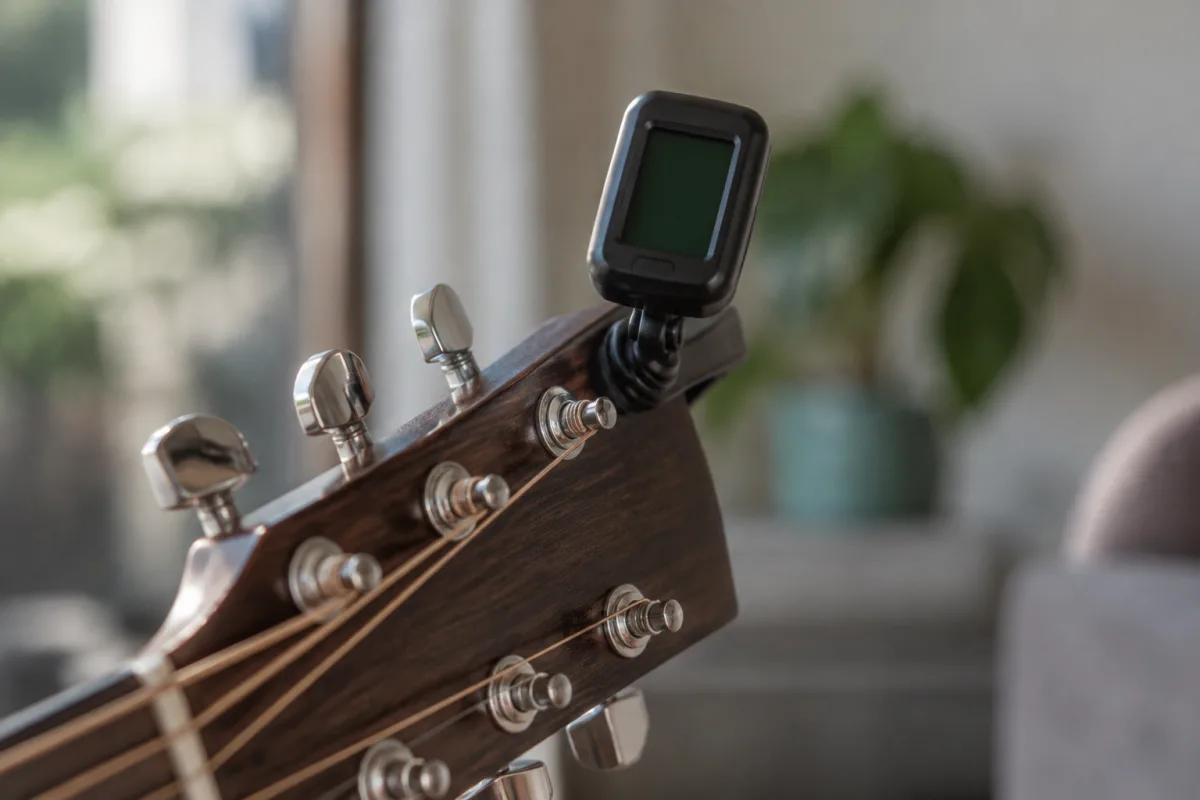
A guitar note tuner is one of the few genuinely essential accessories every guitarist needs. Whether you're picking up an acoustic for your first song or tuning a vintage electric before a stadium gig, a reliable guitar note tuner is your first step. Bad tone starts with bad tuning. A great guitar note tuner removes that variable, letting you focus on playing. The options have evolved dramatically over the past decade. You can spend £5 on a basic clip-on guitar note tuner or £300 on a studio-grade reference instrument. Understanding what you actually need changes everything about how you practice and perform.
What Is a Guitar Note Tuner?
A guitar note tuner is a device that listens to the sound your guitar makes and tells you whether each string is in tune. The guitar note tuner detects the frequency of each note and compares it to the correct pitch. Display it on a screen or dial showing how far sharp or flat you are. Ancient guitar note tuners used mechanical needles. Modern guitar note tuners use LED indicators or digital screens with remarkable precision. Some guitar note tuners work by listening to your guitar through a microphone; others sense vibrations directly from the instrument.
Types of Guitar Note Tuners
A clip-on guitar note tuner attaches to your headstock using a small spring clip. You pluck each string, and the guitar note tuner's display shows you the note and how in or out of tune it is. Clip-on guitar note tuners are affordable (£10–50), portable, and work anywhere. They're the industry standard for gigging musicians and practice rooms. Most beginner guitarists start with a clip-on guitar note tuner.
A pedal guitar note tuner sits on your pedalboard, letting you tune silently during performances. You plug your guitar into the guitar note tuner, which mutes the output and displays tuning information. Pedal guitar note tuners cost £40–150 and offer excellent visibility on stage. They're essential for live performers in environments where a noisy tuning process would break the flow of a set.
A desktop guitar note tuner connects to your computer or sits on a desk with a microphone input. These professional-grade guitar note tuners offer remarkable accuracy and often include tuning references for standard tunings and alternate tunings. A quality desktop guitar note tuner costs £50–200 and excels for studio work where precision matters most.
A strobe guitar note tuner is the gold standard for accuracy. Instead of a simple needle or digital display, a strobe guitar note tuner uses rapidly flashing patterns to reveal even minute tuning deviations. A true strobe guitar note tuner can detect tuning errors measured in cents (1/100th of a semitone). Professional studios and meticulous players invest in strobe guitar note tuners despite the higher cost (£150–400+).
How Guitar Note Tuners Work
Most clip-on guitar note tuners use a small microphone or vibration sensor to pick up the frequency of each string. The guitar note tuner's processor converts that sound into data and compares it against known note frequencies. The comparison tells you whether your string is sharp (too high), flat (too low), or in tune. A visual display shows you the direction and magnitude of error, letting you adjust the tuning peg until the note lands squarely in the middle.
The accuracy of a guitar note tuner depends on its internal reference. Budget guitar note tuners might be accurate to within 5 cents. Mid-range models offer ±2 cents. Professional-grade guitar note tuners boast ±1 cent accuracy or better. For practical purposes, ±2 cents is imperceptible to most ears and perfectly adequate for performance and practice.
Tuning Modes and Features
Standard chromatic mode on a guitar note tuner listens to any note and tells you what it is. This is the default mode for most clip-on guitar note tuners. You pluck a string, the guitar note tuner displays the note (E, A, D, G, B, E for standard tuning), and you adjust the peg until it aligns perfectly.
Guitar mode on some guitar note tuners pre-selects the six strings of standard tuning. This speeds up the tuning process and prevents confusion. A few guitar note tuners even detect which string you're playing and automatically highlight it.
Alternate tuning modes on many guitar note tuners let you select dropped-D, open tunings, or any non-standard configuration. If you frequently change tunings, a guitar note tuner with preset alternate tunings is genuinely convenient. Many modern models support dozens of alternate tunings.
Some advanced guitar note tuners include a reference tone output—useful for tuning by ear when you want to develop that skill. A few even offer a built-in metronome for practice.
Choosing the Right Guitar Note Tuner
If you gig regularly, a clip-on guitar note tuner is non-negotiable. The best clip-on guitar note tuners cost £25–50 and are light enough to leave on your headstock between sets. They're fast, accurate, and visible on stage even under lights. Popular choices include the Korg AW-4G and Boss TU-05.
For studio and home recording, a desktop or audio interface-based guitar note tuner offers precision and convenience. Many modern audio interfaces include tuning software. If you're serious about studio work, a dedicated guitar note tuner that connects to your interface ensures accuracy independent of your interface's processing.
For beginners, any reasonably reviewed clip-on guitar note tuner under £20 is perfectly adequate. You'll eventually outgrow it, but learning to tune accurately on a budget model builds good habits.
Common Mistakes With Guitar Note Tuners
A guitar note tuner is only as good as your setup. If your tuning peg is loose or bent, no guitar note tuner can help you stay in tune. Before blaming the guitar note tuner, check that your tuning pegs turn smoothly and your bridge is seated properly.
Tuning to a guitar note tuner doesn't teach you how to hear pitch. Developing ear training alongside mechanical tuning makes you a better musician. Spend time tuning by ear against a reference tone to build that skill independently from a guitar note tuner.
Forgetting to change guitar note tuner batteries kills reliability. Check your guitar note tuner batteries monthly if you gig regularly. A dead guitar note tuner mid-performance is a rookie mistake worth avoiding once.
The Bottom Line
A guitar note tuner is not an optional nicety—it's essential for anyone serious about playing guitar. The convenience of modern guitar note tuners, their accuracy, and their affordability make them a genuine bargain compared to older alternatives. Whether you're a beginner picking up a guitar for the first time or a touring professional, a reliable guitar note tuner removes tuning from the list of things you need to worry about. It lets you focus on what actually matters: how you sound. Choose a guitar note tuner appropriate to your context—a clip-on for gigging, a strobe for studio work, or a pedal if effects are your world. A good guitar note tuner becomes so transparent you forget it's there. That's exactly the point.



Comments