
Guitar Effects Power Supplies article
The Complete Guide to Guitar Effects Power Supplies
Quality guitar effects power supplies eliminate ground loop hum and ensure reliable power distribution across your pedalboard. Learn why isolated power matters and how to choose the right supply for your setup.
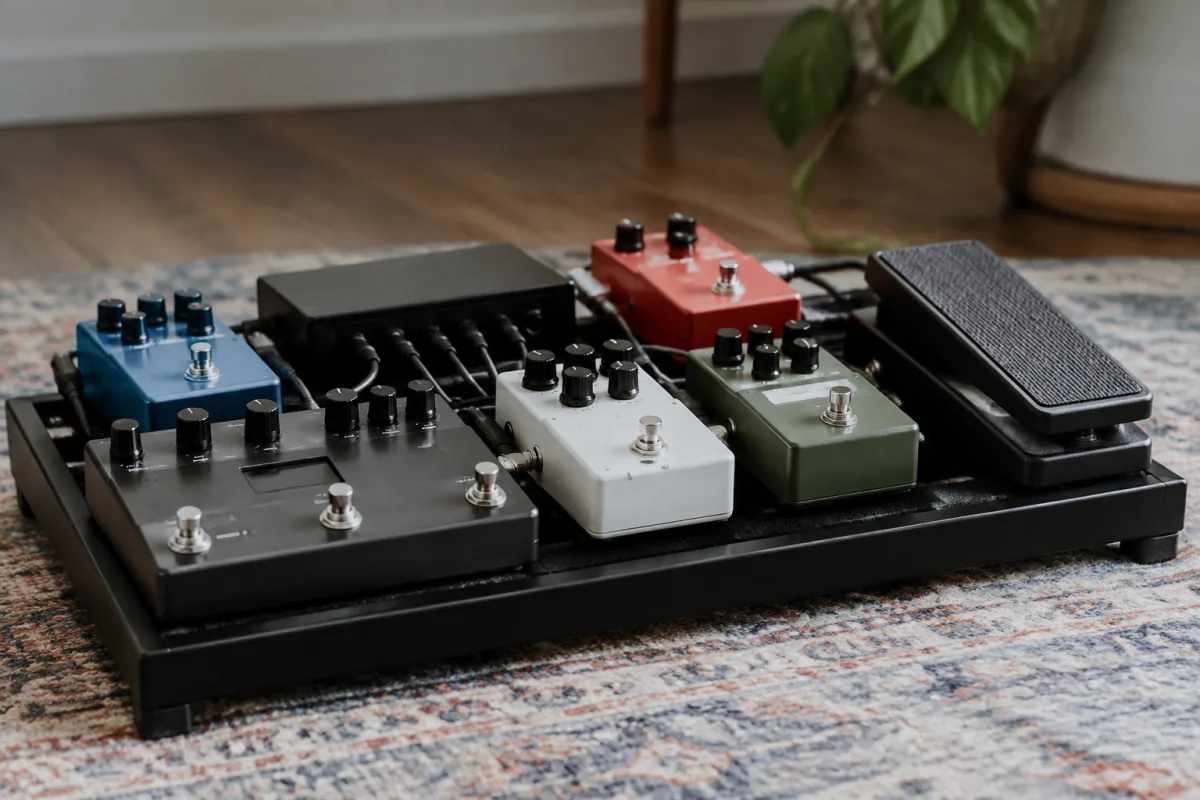
Guitar Effects Power Supplies: The Overlooked Foundation of Your Pedalboard
Every guitarist using effects pedals relies on a critical but often overlooked component—a reliable power solution. Guitar effects power supplies form the electrical foundation connecting your pedalboard to AC mains, ensuring clean, stable current distribution to every pedal. The difference between a quality dedicated supply and cheap alternatives is immediately audible; proper power eliminates hum, ground loops and noise that plague bargain solutions. Whether you're running a single overdrive pedal or a sprawling 20-pedal monster board, selecting appropriate guitar effects power supplies ensures your rig sounds professional and performs reliably night after night.
Why Dedicated Guitar Effects Power Supplies Matter
Most guitarists start with the cheap included power adapters supplied with individual pedals. Connecting multiple adapters creates ground loops—invisible electrical paths causing audible hum and buzz that degrades tone quality. A dedicated solution eliminates this problem by providing galvanically isolated supplies, meaning each pedal receives power through a separate electrical circuit, preventing ground loop interference entirely. Additionally, many pedals require considerably more current than budget adapters provide; underpowering causes erratic behaviour, unusual sounds and premature component failure.
Professional touring musicians and serious recording artists view quality power distribution as non-negotiable. The minimal cost of guitar effects power supplies compared to expensive pedalboards and instruments justifies investment in proper electrical infrastructure. Clean power pays dividends in tone clarity, reliability and equipment longevity.
Types of Guitar Effects Power Supplies
Basic Linear Power Supplies
Entry-level solutions use linear power supplies featuring simple transformer-based designs. These supplies provide stable power at reasonable cost but offer limited features and isolation. They work adequately for small boards with 2–4 pedals drawing modest current. For larger setups or particularly demanding effects units, linear supplies prove insufficient.
Isolated DC Power Supplies
Professional guitar effects power supplies feature isolated DC outputs, meaning each pedal connection has its own isolated circuit. This isolation completely eliminates ground loop hum and allows simultaneous powering of pedals that would otherwise interfere with each other. Isolated supplies are the standard for touring musicians and demanding pedalboards. They're more expensive than basic solutions but deliver results justifying the investment.
Isolated AC Supplies
Some effects pedals require AC power rather than DC. Specialised guitar effects power supplies offer isolated AC outputs alongside DC circuits, accommodating vintage effects units, tube-based pedals and other AC-hungry components. These supplies are less common than pure DC variants but essential for specific pedalboard configurations.
Combination Supplies
Advanced solutions combine isolated DC outputs with AC taps, USB charging ports, and monitoring features all in a single unit. These flexible guitar effects power supplies suit complex modern pedalboards mixing digital and analogue effects, vintage and contemporary components.
Key Specifications for Guitar Effects Power Supplies
Total Available Current
Measured in milliamps (mA), total current capacity determines how many pedals you can power simultaneously. A typical compact pedal draws 50–100 mA; larger effects like delays or reverbs consume 200+ mA. Calculate your board's total current requirement and purchase guitar effects power supplies offering 20% headroom above that figure. For example, a board requiring 1000 mA total should use a 1200+ mA supply to avoid stress-related failures.
Isolation Quality
Look for supplies advertising genuine galvanic isolation between outputs. Specifications should describe isolation levels (measured in decibels); better isolation means cleaner power. Professional supplies offer 100+ dB isolation, ensuring virtually zero noise coupling between pedals. Entry-level supplies may specify only 40–60 dB isolation, sufficient for small boards but noticeable with larger setups.
Voltage Options
Standard supplies provide 9V, 12V and sometimes 18V outputs. However, various pedal types require different voltages—most common effects use 9V, but some modulation and delay pedals prefer 12V or 18V. Flexible guitar effects power supplies offering multiple voltage options accommodate diverse pedalboards without requiring secondary power solutions.
Output Count
The number of individual power outputs limits how many pedals you can connect. Entry-level supplies offer 4–6 outputs; professional solutions provide 8–12 or more. Count your current and anticipated pedal count, then purchase supplies offering additional capacity for future expansion.
Comparing Power Supply Options
| Supply Type | Price Range | Isolation | Outputs | Best For |
|---|---|---|---|---|
| Basic Adapter | £20–40 | None | 1 | Single pedal, emergency backup |
| Basic Linear | £40–80 | Minimal | 4–6 | Small boards, budget-conscious players |
| Isolated DC | £80–200 | 80+ dB | 6–10 | Mid-size boards, touring, studios |
| Professional | £200–400+ | 100+ dB | 10+ | Large boards, touring, demanding applications |
Voltage Regulators and Filtering
Premium guitar effects power supplies include active voltage regulation and multi-stage noise filtering. These features dramatically reduce electrical noise transmitted to your pedalboard. Whilst basic supplies may use passive filtering, professional supplies employ active circuitry that adapts to changing demand, maintaining consistent clean power regardless of usage patterns.
Installation and Cable Management
Most guitar effects power supplies arrive with connector cables matching common pedal specifications (2.1mm barrel connectors, daisy-chain cables, etc.). Dedicated connectors for each pedal are preferable to daisy-chaining whenever possible—daisy-chaining connects multiple pedals through a single cable, potentially reducing isolation benefits. Organising power cables neatly and keeping them separate from audio cables prevents electromagnetic interference that could introduce hum.
Common Problems Solved by Quality Power
Upgrading to proper guitar effects power supplies solves numerous frustrating issues:
- Ground Loop Hum: Audible 50Hz hum disappears with isolated power.
- Erratic Pedal Behaviour: Glitchy, unreliable effects often result from insufficient current; proper power supplies eliminate this.
- Digital Noise: Digital effects introduce switching noise audible through cheap power; isolation eliminates this.
- Unexpected Interactions: Certain pedal combinations interfere sonically; isolation prevents this.
Bottom Line
Investing in quality guitar effects power supplies ranks among the smartest decisions guitarists can make. The minimal cost relative to your total gear investment pays enormous dividends in tone clarity, reliability and compatibility. Whether you play small clubs or stadiums, bedroom studios or world-class facilities, clean power delivered through appropriate guitar effects power supplies elevates everything your pedalboard can do. Don't overlook this fundamental component—your tonal quality depends on it.


Comments