
Guitar Effect Delay article
The Complete Guide to Guitar Effect Delay
The guitar effect delay is one of the most expressive effects available to guitarists. This guide explores how delay works, practical applications across genres and how to master this versatile effect for your music.
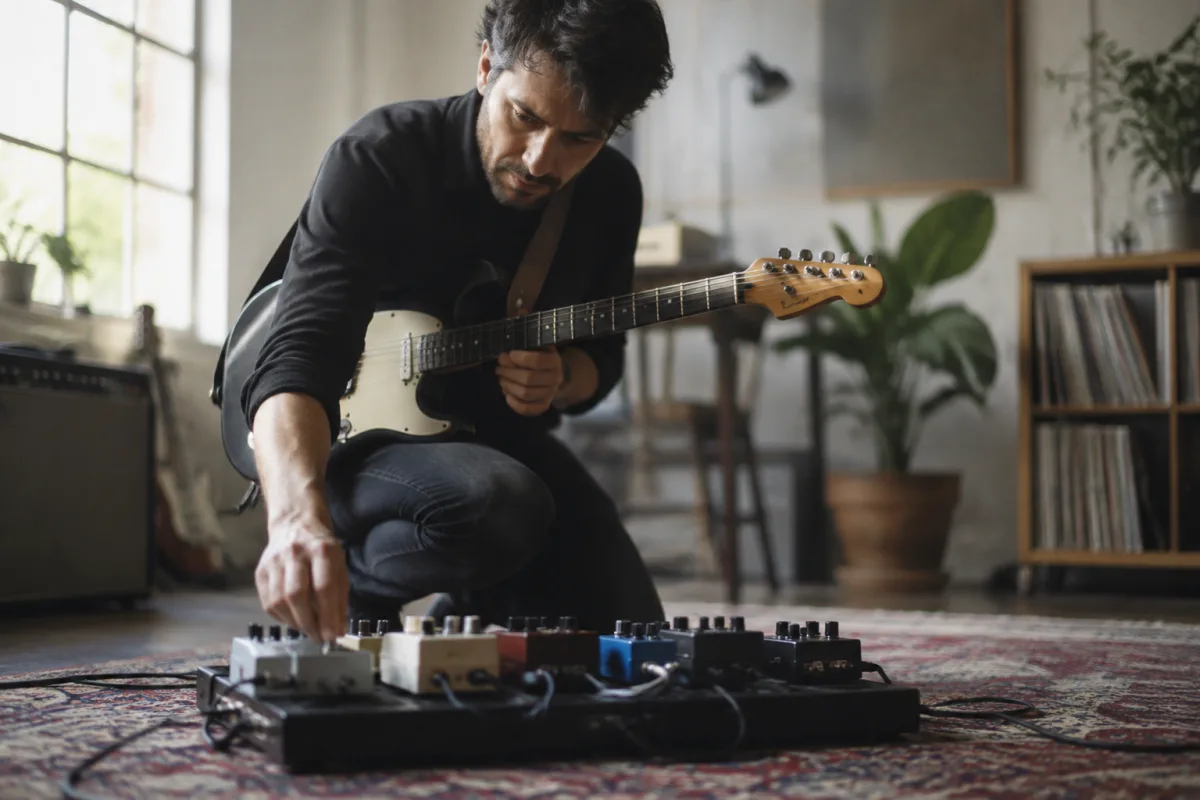
The guitar effect delay is one of the most expressive and musically useful effects in the guitarist's arsenal. From subtle ambience to spacious soundscapes, delay shapes tone and creates dimension that transforms ordinary passages into memorable musical moments. Whether you're adding subtle depth to your sound or creating dramatic repeats, understanding guitar effect delay unlocks creative possibilities every guitarist should explore.
How Guitar Effect Delay Works
A guitar effect delay captures your playing, stores it briefly in digital or analogue memory, and plays it back after a set time interval. This creates the illusion of playing in a larger space—like shouting in a canyon and hearing your voice echo back. The delay time (measured in milliseconds) determines how long before the repeat sounds. A 50ms delay sounds like playing in a small room; a 500ms delay creates a distinct repeat your listeners can hear clearly.
Most guitar effect delay pedals and processors let you adjust four core parameters: delay time (how long before the repeat), feedback (how many times the delayed signal repeats), mix (how much delayed signal blends with your dry tone) and tone (the character of the repeated signal).
Types of Guitar Effect Delay
Analogue delay uses physical tape loops or bucket-brigade circuits, creating warm, natural repeats with inherent character and slight degradation that sounds organic. Professional and blues players favour analogue guitar effect delay for its musical quality, though analogue delays are expensive and less flexible than digital options.
Digital delay offers precise control, unlimited repeats and consistency across performances. Modern digital guitar effect delay units emulate various tape and spring reverb machines, capturing their character whilst adding conveniences analogue can't match. Most contemporary guitarists start with digital delay for its flexibility and affordability.
Reverse delay plays the delayed signal backwards, creating otherworldly effects. Ping-pong delay bounces repeats between left and right stereo channels, perfect for spacious guitar tones. Modulated delay adds movement to the delayed signal, creating shimmering or wobbling repeats that capture ambient territory other effects can't reach.
Practical Applications for Guitarists
| Music Style | Delay Time | Feedback/Repeats | Mix Level |
|---|---|---|---|
| Blues lead | 300–500ms | 2–4 repeats | 15–30% |
| Ambient/pad | 500–2000ms | 6+ repeats | 50%+ |
| Post-rock | 300–750ms | 4–8 repeats | 40–60% |
| Funk/rhythm | 150–300ms | 1–2 repeats | 10–20% |
| Slapback (retro) | 100–150ms | 1 repeat only | 20–40% |
Keep delay time in musical proportion to your song's tempo. Synchronise your guitar effect delay to the beat (most modern units sync to tempo via tap tempo or MIDI) so repeats land rhythmically rather than fighting your rhythm section. Subtle delays (10–20% mix) add ambience without drowning the original signal. Heavy delays (50%+ mix) become a primary effect, transforming your tone into something entirely new.
Layering Delay With Other Effects
Chain your guitar effect delay strategically within your signal path. Place delay after overdrives and distortions so those effects colour the delayed signal too—the repeats sound distorted and aggressive, perfect for lead rock tones. Place delay before reverb so both effects work together, creating spacious, natural sounding repeats.
Combine subtle delay with reverb for lush, polished tones. Use delay alone for tight, controlled effects. Stack modulated delay with chorus for shimmering, movement-rich textures. Experimentation reveals the combinations that serve your music style.
Choosing Your Guitar Effect Delay
Pedal delays (compact stompboxes) offer simplicity and portability, perfect for gigging musicians who need quick adjustments. Entry-level guitar effect delay pedals cost £50–£150 and provide essential features. Premium boutique pedals exceed £300 and offer superior tone and build quality.
Multi-effects processors include guitar effect delay alongside reverb, modulation and other effects, offering comprehensive sound-shaping in a single unit. These suit studio recording and players wanting maximum tonal options without a pedalboard of individual devices.
Amplifier-built-in delays let you access delay directly via your amp's controls or footswitch. This integration offers convenience and ensures amp and delay work together optimally, though you're limited to that model's delay character.
Delay Time and Musicality
Tap tempo, the ability to manually set delay time by pressing a footswitch in rhythm with your music, appears on modern guitar effect delay units. This simple feature transforms your playing—instantly match delay to your song's tempo without menu diving, add dramatic tempo changes during performances, and adapt instantly when songs speed up or slow down.
Some guitarists use delay as a compositional tool, setting long delay times and creating loops of repeated phrases that evolve musically. This loop-based approach transforms delay from mere effect into creative instrument.
Ambient and Experimental Textures
Push guitar effect delay into experimental territory by maximising feedback and delay time, creating infinite repeating soundscapes that blur the line between your playing and generated drones. Use reverse delay for backwards whispers lurking beneath your primary tone. Modulate the delay with an expression pedal, sweeping from clean tones into heavily delayed territories.
These adventurous approaches suit post-rock, experimental and ambient guitar styles where texture matters more than conventional musical structure. A simple guitar effect delay becomes a sound design instrument in these contexts.
Live Performance Considerations
On stage, delay adds dimension to solos that might otherwise sound thin or dry. Control feedback carefully—too much creates unwanted repeating chaos, too little makes delay sound subtle to the point of invisibility. Tap tempo becomes invaluable during live performances, letting you lock delay to the song without stopping to adjust settings.
Use delay consistently—once your audience adjusts to your spacious tone, suddenly removing it makes your playing sound dry and flat by comparison. Keep delay present throughout performances unless dramatic effect change serves your arrangement.
Mastering Guitar Effect Delay
The guitar effect delay transforms a simple riff into a shimmering, spatial experience, enriches chord progressions with depth and adds polish to lead work. Start subtle—a bit of 300-400ms delay at 20% mix adds professionalism to any tone. As you gain confidence, explore longer times, heavier feedback and experimental reverse or modulated delays.
Every legendary guitarist's tone includes thoughtfully placed delay. Whether your style is blues, rock, post-rock or experimental ambient, a quality guitar effect delay takes your playing from good to genuinely memorable.


Comments