
Guitar Effect Boss article
The Complete Guide to Guitar Effect Boss
Boss guitar effects deliver professional-grade tone and legendary durability in compact pedals and full processors, trusted by beginners and touring musicians alike.
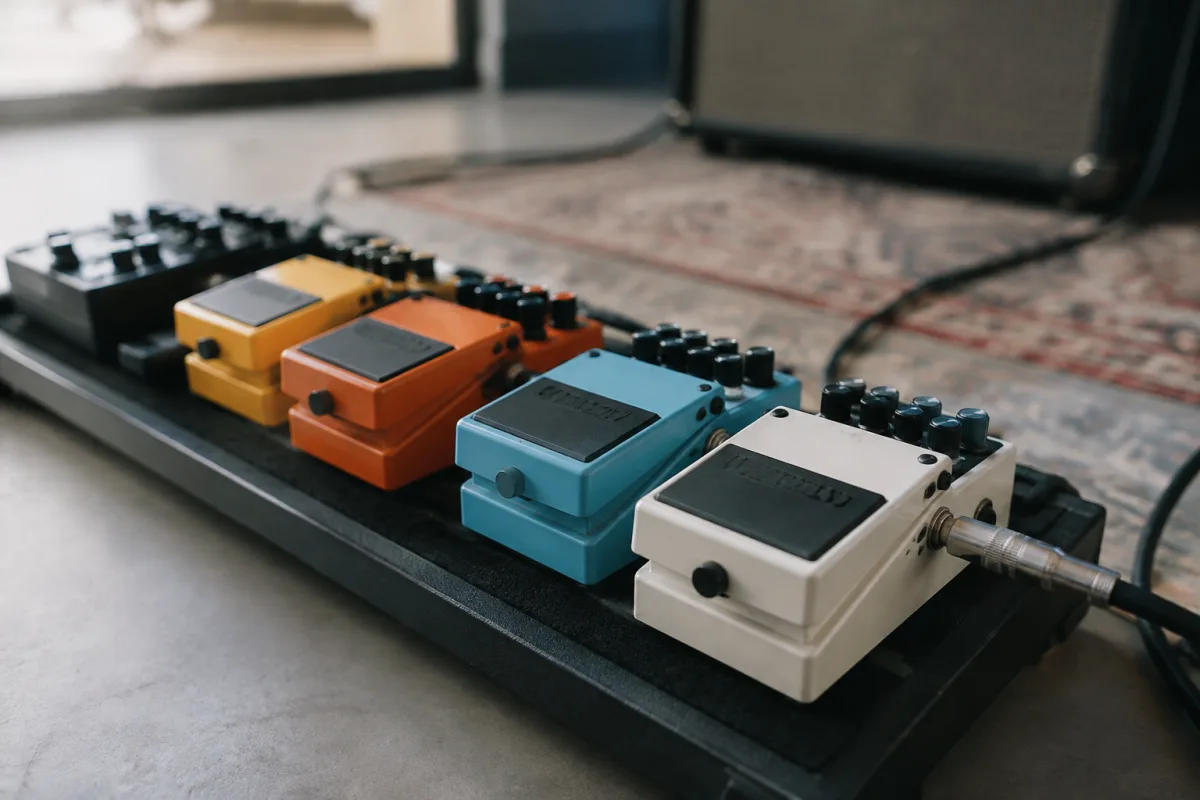
Boss has been the industry standard for guitar effects and processors for decades, and for good reason. Whether you're a weekend amateur tinkering with your first pedalboard or a touring professional relying on bullet-proof reliability night after night, Boss offers guitar effect solutions that have earned trust through genuine durability and creative sonic possibility. A guitar effect boss pedal or processor represents an investment in sound-shaping that rewards exploration and experimentation.
The Boss Legacy in Guitar Effects
Boss, the effects division of Roland Corporation, has shaped modern guitar tone since the 1970s. Their reputation rests on three pillars: uncompromising build quality, intuitive operation, and genuine sonic character. A guitar effect boss product is built to survive years of stage use, travel and environmental variation without losing functionality. This reliability is part of why professional musicians keep Boss on their boards and why beginners can buy with confidence that their investment won't let them down.
Compact Pedals: The Core Range
The guitar effect boss compact pedal series — the DS (distortion), OD (overdrive), CH (chorus), DL (delay) and countless others — represents the backbone of the company's output. These small metal boxes, instantly recognisable by their bright colours and sturdy footswitches, deliver exceptional sound quality in a footprint that fits any pedalboard.
A guitar effect boss pedal in this category typically features one or two footswitches, a handful of knobs for key parameters, and often an expression pedal input for dynamic control. Their simplicity of operation belies deep sonic capabilities — a Boss OD-1 or BD-2 Blues Driver, for instance, offers dozens of hours of explorative tone-tweaking and still surprises.
Multi-Effects Processors
For guitarists who want comprehensive effects processing in a single footboard, a guitar effect boss multi-effects unit offers dozens of effects, amp simulations and spatial processing in an integrated system. Models like the GT-1 and ME-80 series let you construct complete rigs inside a single chassis, from amp modelling through complex effects chains to expression pedal control and preset management.
These guitar effect boss processors bridge the gap between traditional pedalboards and modern digital tone-shaping, appealing to players who want maximum flexibility without physical clutter.
Sound Quality and Character
What distinguishes a guitar effect boss product is the sound. Boss effects are known for clarity and musicality — they colour your tone without obscuring your playing. A Boss distortion or fuzz effect cuts through a mix; a Boss delay creates space without muddiness; a Boss chorus shimmers. This sonic predictability means that when you dial in a tone, you know roughly what you're going to get across different amps and guitars.
Reliability and Durability
A guitar effect boss pedal will survive years of heavy use. The footswitches are engineered to handle thousands of engagements; the electronics use military-grade components; the enclosures are solid aluminium. This is why touring musicians stock Boss effects — they're dependable gear that won't fail during a performance.
Even vintage Boss effects from the 1980s and 1990s still function perfectly, a testament to their engineering. This durability also means strong resale value — a used guitar effect boss pedal rarely loses more than 30–40% of its purchase price, making them sensible long-term investments.
Ease of Use
A guitar effect boss product prioritises intuitive operation. Knobs directly control key parameters; on/off footswitches are large and responsive; the signal flow is straightforward. This approachability has made Boss the first-choice effects brand for beginners while satisfying professionals who value simplicity.
Even complex guitar effect boss processors like the GT-1 are navigable without consulting the manual, because Boss designs for musicians first and spec-sheet enthusiasts second.
Integration with Pedalboards
A guitar effect boss pedal or processor fits seamlessly into any pedalboard setup. Standard footswitch sizes, consistent power requirements (usually 2 AA batteries or USB), and widespread pedal-board-ready enclosures mean you can mix Boss effects with other brands and build the exact rig you envision.
The expression pedal inputs on many Boss guitar effect products also allow foot-controlled parameter adjustment without additional external pedals, saving pedalboard real estate.
Affordability and Value
A guitar effect boss pedal is rarely the cheapest option in its category, but it's rarely the most expensive either. Boss positions itself as the quality middle ground — better than budget brands, more affordable than ultra-boutique options. This positioning has made Boss the reference point for effects pricing and quality across the industry.
Genre Versatility
A single guitar effect boss pedal or processor works across genres. Blues players swear by Boss overdrive and distortion; electronic musicians build vast soundscapes in Boss multi-effects units; jazz guitarists use Boss modulation for subtle colour. This versatility means you're not buying genre-specific gear — you're buying tools that adapt to your evolving musical interests.
Conclusion
Whether you're assembling your first pedalboard or upgrading a working rig, a guitar effect boss product deserves serious consideration. The combination of proven reliability, genuine sonic quality, intuitive operation and sensible pricing makes Boss the professional's choice and the beginner's safest bet. A guitar effect boss investment pays dividends in creative possibility and peace of mind that your gear will be there when you need it.


Comments