


Go Keys Roland Buying guide
Go Keys Roland: A Complete Buyer's Guide
Decide if the Roland GO:Keys matches your musical needs. This buyer's guide covers specifications, real-world capabilities, genre suitability, accessories needed, and honest price-value assessment.
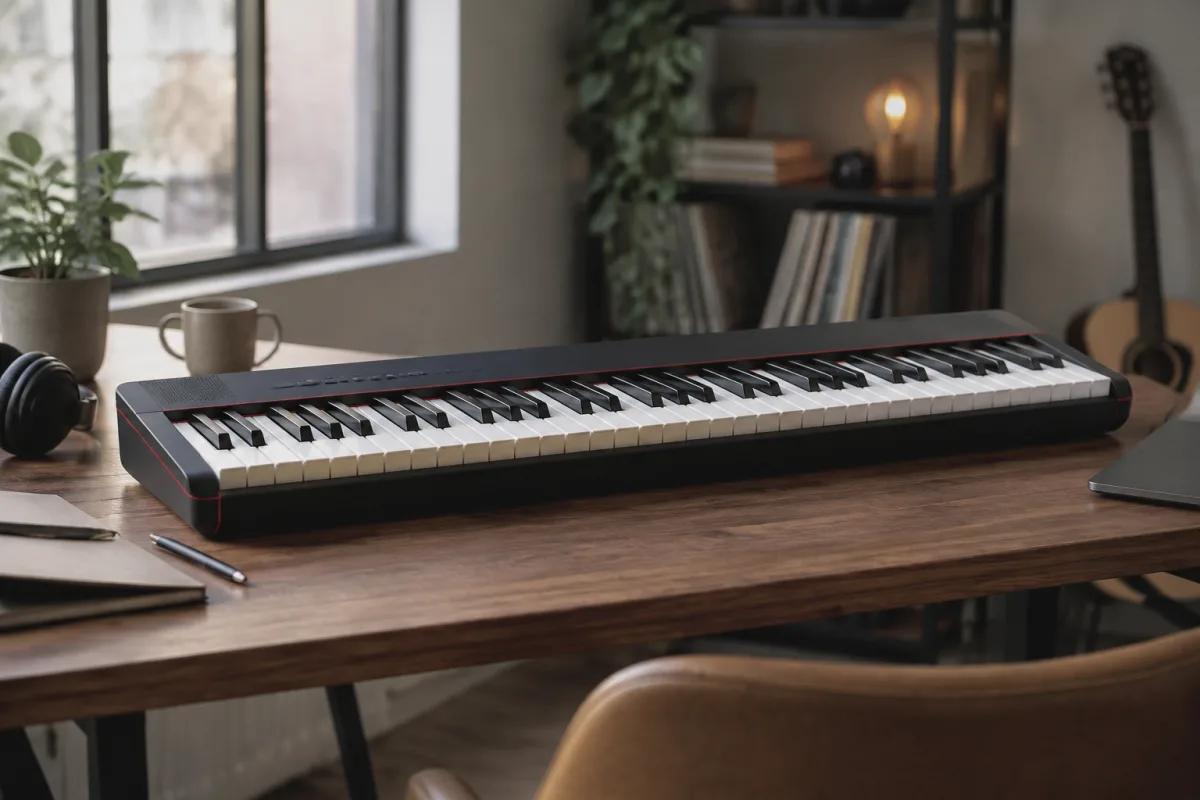
The Roland GO:Keys has become one of the most popular compact keyboards on the market, attracting bedroom producers, street performers, and touring musicians alike. If you're considering purchasing a Roland GO:Keys, this guide will help you determine whether it matches your specific needs, budget, and playing style. Understanding the instrument's capabilities, limitations, and real-world applications will save you from buyer's remorse and ensure you make an informed purchasing decision.
Is Roland GO:Keys the Right Choice for Your Musical Genre?
The Roland GO:Keys excels in contemporary music production, particularly EDM, hip-hop, lo-fi, and pop production. Its preset sounds work beautifully for these genres, and the built-in drum machine provides solid rhythm programming capabilities. If you produce or perform these styles, the GO:Keys offers excellent value and workflow efficiency.
For classical piano purists, however, the GO:Keys falls short. Its piano sounds, whilst functional, lack the nuance and dynamic response of higher-end keyboards or acoustic pianos. Jazz musicians may find the limited sound palette restrictive for traditional jazz improvisation, though contemporary jazz producers often embrace its electronic character intentionally.
Rock and indie musicians appreciate the GO:Keys for its portability and synth capabilities, making it ideal for adding texture and keyboard layers to live performances. Electronic and experimental musicians leverage its sound-shaping tools and MIDI capabilities for creative soundscaping.
Key Specifications to Evaluate Before Purchase
The GO:Keys features a 61-key keyboard with velocity sensitivity but no aftertouch—a reasonable compromise for the price point and form factor. The keys use a semi-weighted action that feels more like a synth than an acoustic piano, which some players find limiting whilst others prefer its lightweight responsiveness.
Sound library diversity matters significantly. The GO:Keys includes approximately 350 voices covering pianos, electric pianos, synthesizers, strings, brass, and unusual textures. For production work, this breadth suits experimentation, though professionals often layer external samples and synthesizers alongside the GO:Keys' built-in sounds.
Processing capabilities include effects like reverb, chorus, and delay that are practical and immediately useable. These aren't professional-grade effects, but they're sufficient for adding polish to performances and recordings. The onboard drum machine offers 700+ drum kits and patterns, providing legitimate rhythm programming functionality without requiring external drum machines.
Battery life reaches approximately 6 hours on alkaline batteries or 24+ hours with USB-C power, crucial for busking and portable use. The USB-C connectivity enables MIDI communication with DAWs, allowing integration into home studio setups alongside production software.
Comparing Roland GO:Keys to Similar Instruments
Versus the Korg Volca series, the GO:Keys offers a full-sized keyboard with more comprehensive sound library and superior portability due to its integrated speaker. The Volca series caters to deep synthesis enthusiasts rather than general-purpose musicians.
Against higher-end portable keyboards like the Korg Kross or Roland Fantom Lite, the GO:Keys sacrifices build quality and depth for significantly lower cost. If budget is your primary constraint, the GO:Keys punches above its weight; if you need professional reliability and advanced sound design, the premium options justify their price.
Compared to synthesizer workstations aimed at producers, the GO:Keys accepts its limitations gracefully and focuses instead on immediate usability and fun factor. You're making different compromises with each instrument—the GO:Keys prioritises accessibility and portability over deep synthesis control.
Essential Accessories and Additional Costs
A quality stand elevates the keyboard to comfortable playing height and is nearly essential for serious use. Budget £30-£60 for a stable, height-adjustable stand. Without proper positioning, playing for extended sessions causes strain and reduces enjoyment.
Headphones are valuable for silent practice and stage monitoring. The GO:Keys has a headphone output, but its built-in speaker quality is surprisingly decent for casual playing and busking. Higher-quality headphones improve the listening experience during production work.
A USB-C cable enables MIDI connectivity with computers, and high-quality MIDI cables (if using five-pin DIN connectors on other equipment) add flexibility. Expect £10-£20 for reliable connectivity cables.
A carrying bag or case protects your investment during transport. Soft cases run £30-£60, whilst hardshell flight cases exceed £100 but offer superior protection for touring musicians.
Expression pedals and foot controllers enhance performance possibilities, though these remain optional. Most players start without these and add them later if needed.
Real-World Capabilities and Limitations
In live performance, the GO:Keys functions admirably as a backing instrument or solo performance keyboard for small venues and street performances. Its portability and integrated speaker eliminate the need for extensive sound reinforcement. However, larger venues require microphone amplification and proper monitoring systems.
For home music production, the GO:Keys works well as a MIDI controller for your digital audio workstation and a sound source in its own right. Many bedroom producers create complete tracks using GO:Keys sounds layered with their DAW's synthesizers and samples. Expect to use it as one part of a larger production toolkit rather than as your complete solution.
Recording quality depends entirely on your interface and recording technique. The GO:Keys' audio outputs feed cleanly into interfaces, yielding professional recordings. Audio quality isn't limited by the keyboard itself when properly configured.
Price Value Assessment
At approximately £400-£450 new in the UK market, the Roland GO:Keys offers exceptional value for aspiring musicians and budget-conscious producers. At this price point, you're purchasing genuine functionality rather than just a practice keyboard. The build quality and feature set compete favourably against instruments costing twice as much.
Used Roland GO:Keys instruments typically sell for £250-£350, depending on condition. The secondary market offers excellent value if you're willing to accept minor cosmetic wear. Pricing stability has been strong, suggesting it retains resale value reasonably well.
Compare this investment against acoustic piano lessons (£25-£50 per week), expensive MIDI keyboards without sounds (£300-£800), or professional keyboard workstations (£1500+). The GO:Keys' price point makes keyboard music-making accessible to musicians who might otherwise choose other instruments.
Common Mistakes in the Buying Decision
Don't purchase the Roland GO:Keys expecting it to replace an acoustic piano or high-end keyboard. Understand and accept its design as a versatile, portable instrument rather than a piano substitute. Many disappointed buyers expected unrealistic piano-like characteristics.
Avoid assuming the onboard effects and drum machine are sufficient for professional production without supplementary tools. Use them as starting points that you'll typically enhance with external processing in your DAW.
Don't overlook its portability advantage. If you travel, perform, or work in different locations, this benefit alone justifies the purchase over more stationary keyboard solutions.
Never buy without testing if possible. Visit music shops and try before committing. Some players find the semi-weighted action unsuitable for their technique, discovering this incompatibility too late for a comfortable purchase.
For historical context and technical foundation, reference the complete guide to GO:Keys Roland, which explores Roland's design philosophy and the technical principles underlying portable keyboard architecture.
Making Your GO:Keys Purchase Decision
The Roland GO:Keys merits serious consideration if you value portability, sound quality, and affordable entry into keyboard music-making. Evaluate your specific use case—whether live performance, home production, practice, or busking—and confirm the GO:Keys matches those requirements. Try one if possible, understand its real capabilities versus your expectations, and factor in accessory costs. If the GO:Keys aligns with your musical goals and budget, it delivers genuine value and years of creative enjoyment.


Comments