
Fuzz Effect Pedal article
The Complete Guide to Fuzz Effect Pedal
The fuzz effect pedal defines rock, roll, and experimental guitar. Discover germanium versus silicon fuzz pedals, how they shape tone, and choosing your ideal fuzz sound.
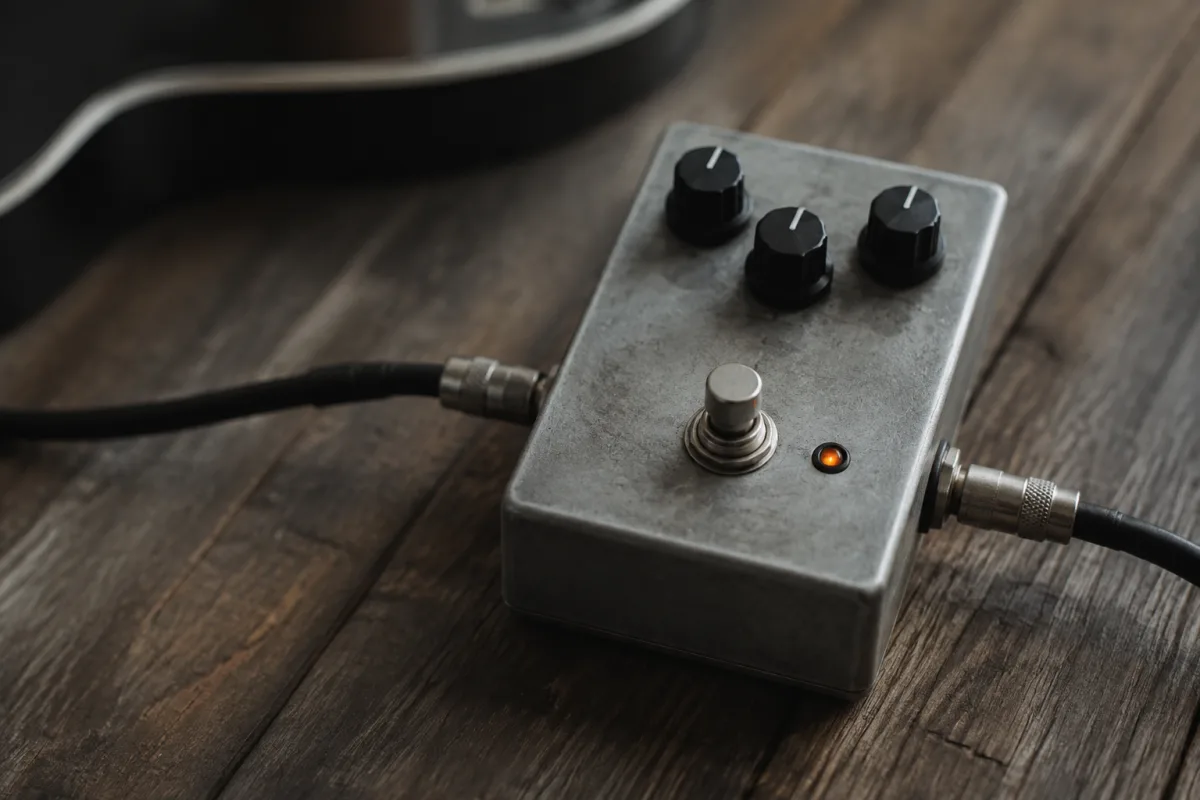
The fuzz effect pedal transformed rock and roll the moment it first distorted a guitar signal in the 1960s. From the Kinks' "You Really Got Me" to Hendrix's psychedelic explorations to contemporary garage and indie rock, fuzz effect pedals define entire musical eras and artist signatures. This guide explores the fuzz effect pedal landscape, how fuzz pedals work, and how to choose a fuzz effect pedal that matches your musical vision.
What is a Fuzz Effect Pedal?
A fuzz effect pedal is a distortion device that clips and compresses your guitar signal until it sounds thick, aggressive, and harmonically rich. Unlike overdrives that preserve your original tone's character, a fuzz effect pedal fundamentally transforms the signal into something new—thickened and "broken up" in a way that feels distinctly fuzzy rather than merely loud. The fuzz effect pedal achieves this through asymmetrical clipping, which creates odd-order harmonics adding musical aggression.
Plugging your guitar into a fuzz effect pedal immediately communicates its power. Clean guitar tone becomes thunderous and compressed, responsive to pick dynamics and guitar volume adjustments. The fuzz effect pedal is less forgiving than overdrives—placing fingers precisely matters because every note receives aggressive treatment.
Types of Fuzz Effect Pedals
The fuzz effect pedal landscape divides into several families:
- Classic Germanium fuzz effect pedal — uses germanium transistors producing warm, musical fuzz. Classic fuzz effect pedals based on vintage designs are the standard for blues and classic rock.
- Silicon fuzz effect pedal — employs silicon transistors for sharper, more aggressive fuzz. Silicon fuzz effect pedals gained popularity in the 1970s for heavier rock applications.
- Big Muff fuzz effect pedal — the massive, pillowy fuzz effect pedal style popularised by Electro-Harmonix. The Big Muff fuzz effect pedal sits between classic fuzz and distortion.
- Octave fuzz effect pedal — adds sub-octave and octave-up frequencies alongside fuzz. The octave fuzz effect pedal creates psychedelic, expansive sounds.
- Hybrid fuzz effect pedal — combines fuzz with overdrive or distortion characteristics. Hybrid fuzz effect pedals offer versatile tonal options within a single pedal.
Understanding Fuzz Pedal Controls
| Control | Function in a Fuzz Effect Pedal |
|---|---|
| Fuzz | Controls the amount of clipping and aggression. On a fuzz effect pedal, this ranges from subtle crunch to extreme saturation. |
| Volume | Compensates for the natural level increase from fuzz. Most fuzz effect pedals boost signal, requiring volume reduction to match unity gain. |
| Tone | Filters harmonics to shape fuzz character. A fuzz effect pedal's tone control ranges from dark and woody to bright and piercing. |
| Gate | Reduces noise when the input drops below a threshold. Premium fuzz effect pedals include gate controls preventing signal noise between phrases. |
| Bias | On advanced fuzz effect pedals, bias adjusts the clipping characteristic, fundamentally altering how the fuzz effect pedal responds. |
Fuzz Pedal Tone Characteristics
A fuzz effect pedal's inherent character is shaped by its transistor type and circuit topology. Germanium-based fuzz effect pedals deliver warm, fat distortion prized in blues and classic rock. Silicon-based fuzz effect pedals produce aggressive, modern aggression. The Big Muff fuzz effect pedal style achieves its characteristic thickness through multiple clipping stages—each fuzz effect pedal iteration and manufacturer adds subtle variations affecting the overall tone.
The fuzz effect pedal responds dynamically to your playing. Soft picking produces subtler fuzz; digging in activates more aggression. This responsiveness makes a fuzz effect pedal more expressive than simple distortion. Many musicians appreciate how a fuzz effect pedal rewards technique and dynamics in ways that make you a better player.
Using a Fuzz Effect Pedal in Your Rig
Placement of a fuzz effect pedal in your signal chain dramatically affects results. A fuzz effect pedal placed first in the chain (before overdrive) produces classic, aggressive fuzz. A fuzz effect pedal placed after overdrive layers smooth overdrive underneath aggressive fuzz. Most musicians experiment with fuzz effect pedal placement until finding their ideal tone.
Buffer-related issues plague some fuzz effect pedals—certain designs act as high-impedance loads affecting your guitar's tone even when the fuzz effect pedal is bypassed. Professional luthier-crafted fuzz effect pedals address this through buffer circuits. When choosing a fuzz effect pedal, ask about tone-sucking risk if signal chain clarity matters to you.
Choosing Your Fuzz Effect Pedal
Define your primary musical application. Classic rock and blues players favour Germanium fuzz effect pedals or Big Muff variants. Heavy rock and metal musicians prefer silicon-based fuzz effect pedals or modern designs with extended gain. Psychedelic experimentalists explore octave fuzz effect pedals for expansive soundscapes.
Budget significantly influences your fuzz effect pedal choice. Entry-level fuzz effect pedals cost £50–100 and deliver genuine fuzz character. Mid-range fuzz effect pedals (£150–300) offer refined controls and better construction. Premium handmade fuzz effect pedals exceed £300, featuring boutique components and vintage-inspired circuitry. Test a fuzz effect pedal extensively before committing—many guitar shops allow trial periods.
Maintenance and Care of Fuzz Pedals
Most fuzz effect pedals require minimal maintenance. Replace batteries annually or switch to an external power supply for reliability. Store your fuzz effect pedal in moderate temperature conditions—extreme heat and cold affect transistor performance. If your fuzz effect pedal develops crackling or intermittent operation, consult a technician rather than attempting self-repair.
Many fuzz effect pedals use LED indicators for on/off status; bulbs occasionally fail but replacement is straightforward. Quality fuzz effect pedals are built to last decades—many vintage fuzz effect pedals from the 1960s and 1970s still perform flawlessly today.
Conclusion
The fuzz effect pedal remains as vital and inspiring to modern musicians as it was to Jimi Hendrix and David Jones. Whether you chase vintage warmth with a Germanium fuzz effect pedal or modern aggression with contemporary silicon designs, a fuzz effect pedal unlocks tonal territory impossible on clean guitar. Start with a quality fuzz effect pedal matching your genre and budget, and prepare for the transformative moment when you dial in YOUR fuzz effect pedal sound.


Comments