


Envelope Filter Pedal article
Envelope Filter Pedal for Beginners: A Complete Guide
Envelope filter pedals respond to your picking dynamics—the harder you play, the more dramatic the effect. This guide covers entry-level models and how to master the technique.
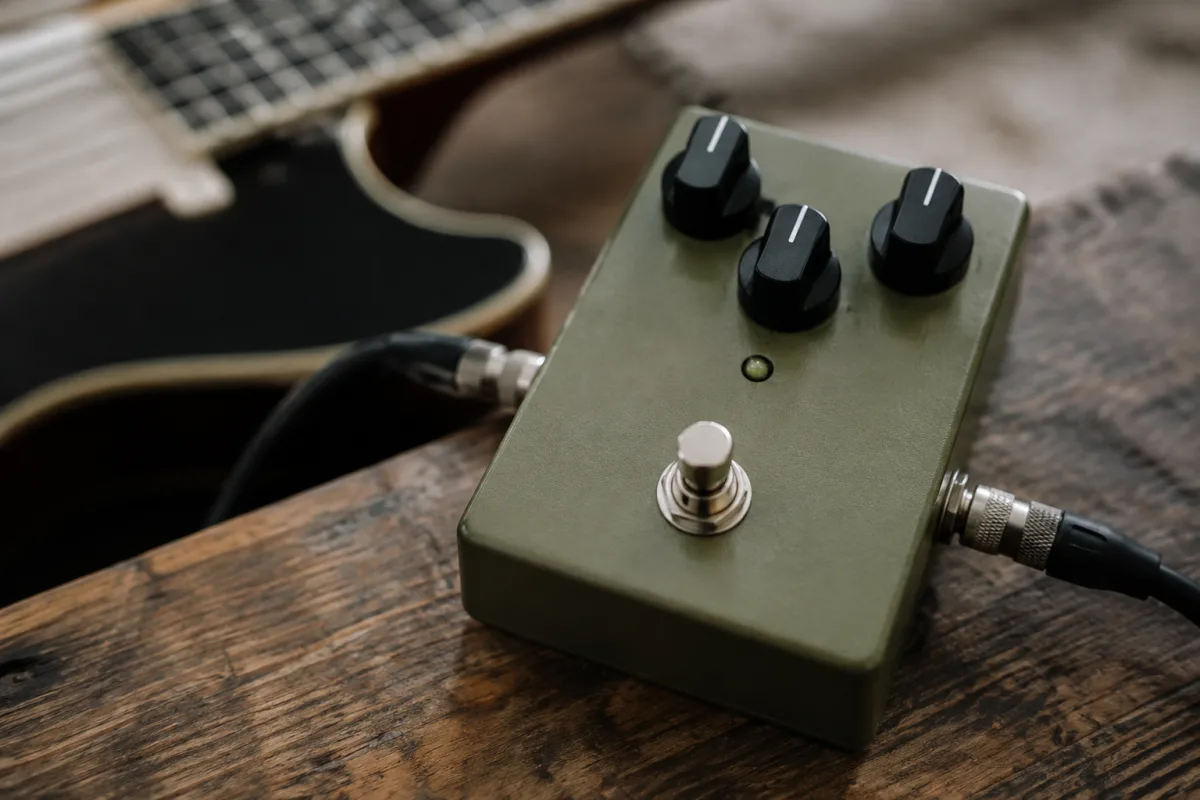
Envelope Filter Pedals for Beginners: Finding Your Funky Voice
An envelope filter pedal is one of the funkiest, most rewarding effects a guitarist can discover. It responds to how hard you play—dig in with aggression, and the filter opens up into wah-like territory; play softly, and it stays tight and subtle. The effect sounds like you're dynamically wah-ing your own tone, which is intoxicating once you grasp it. If you're curious about envelope filters but intimidated by the complexity, this guide demystifies the effect and shows how to start using an envelope filter pedal without overthinking it.
What is an Envelope Filter?
An envelope filter pedal doesn't need to be mystified. Imagine a wah pedal that moves all by itself, controlled by how hard you strike each note. Play a note loud and aggressive, and the filter sweeps upward (opens). Play softly, and it sweeps downward (closes). The envelope filter pedal reads your attack (how quickly you hit the strings) and responds. It's responsive—almost alive. This touch sensitivity is what sets it apart from a traditional wah, which you control manually with your foot.
Why Start with an Envelope Filter?
Envelope filter pedals are most at home in funk, R&B, and jam bands—genres where groove and dynamic playing matter. If you play any of those styles, or even if you're just drawn to the squelchy, percussive sounds you hear in '70s funk tracks, an envelope filter opens creative doors. Beyond genre, using an envelope filter pedal teaches you to be dynamic with your picking—you learn to vary your attack naturally, which improves your overall playing. It's educational and fun.
How an Envelope Filter Pedal Works
Most envelope filter pedals have a few core controls:
- Sensitivity — How responsive the pedal is to your picking dynamics. Crank it up, and soft notes trigger dramatic sweeps. Turn it down, and you need to pick harder to activate it.
- Decay/Release — How fast the filter closes (or opens). Faster decay = snappier, funkier sound. Slower = smoother, more wah-like.
- Peak/Resonance — Emphasis at the filter's peak frequency. Higher resonance = more pronounced squelch. Lower = smoother, more natural.
- Tone — Where the filter peaks (high vs low frequencies). Dial in warmth or brightness.
Entry-Level Envelope Filter Pedals
Boss's EV-5 and EV-30M are industry standards—affordable (£80–120), intuitive, and beloved by beginners and pros alike. The Electro-Harmonix Micro Q-Tron is quirky and responsive (£100–140). Ibanez made classic envelope filters that show up used for £50–100. For beginners, any of these work well. You don't need to spend £200+ on an envelope filter pedal to learn the effect. Start affordable, and upgrade later if you find yourself living in the filtered sounds.
Touch Dynamics: The Learning Curve
An envelope filter pedal rewires how you think about picking. Most beginners pick with consistent force; an envelope filter forces you to vary your attack consciously. This feels awkward for a week, then revelatory. You'll discover that playing softly and letting the envelope filter do the talking is often more musical than aggressive digging. This is exactly why the effect is so valuable—it teaches restraint and subtlety.
Pairing an Envelope Filter Pedal with Your Tone
| Guitar Type | Best Use | Tone Tips |
|---|---|---|
| Jazz/semi-hollow | Smooth, bluesy sweeps | Lower sensitivity, slower decay |
| Strat/single-coil | Bright, snappy funk | Higher sensitivity, fast decay |
| Humbucker/solid-body | Fat, percussive funk | Mid-to-high resonance, medium decay |
| Bass guitar | Synth-like wubs | High sensitivity, slow decay, full range |
Common Beginner Mistakes
Don't crank the sensitivity to maximum and expect control—start at 50% and dial upward. Don't assume an envelope filter replaces a wah—they're different tools. A wah is manual and precise; an envelope filter is responsive and groovy. Don't stack an envelope filter with a wah unless you know what you're doing; they fight each other. And don't ignore the decay knob—it's the difference between usable funk and gimmicky squelch.
Where an Envelope Filter Fits in Your Rig
An envelope filter pedal works well before overdrive or distortion. This way, the filter modulates your base tone, then the distortion fattens it. Placing it after distortion is also valid but sounds less interactive. Most pro setups put envelope filter early in the signal chain (after wah if used), then drive pedals, then modulation and delay. Start with one position, experiment, and find what sounds best.
Genres Where Envelope Filters Shine
Funk and R&B are the obvious homes. But envelope filter pedals also add magic to jam band grooves, psych rock, and experimental playing. Carlos Santana used them masterfully; so did Prince. If you listen to groove-heavy music and hear mysterious wah-like sweeps that aren't footpedal-driven, you're hearing an envelope filter. That's your signal it might suit your music.
When to Add More Effects
Master an envelope filter pedal for a month before adding other pedals around it. You want to feel how the effect responds to your playing, learn the touch dynamics, and make it second nature. Then, if you want, layer overdrive underneath or add modulation on top. But start alone—an envelope filter pedal is most powerful when it has room to breathe.
Secondhand Envelope Filter Pedals
Used envelope filter pedals are often cheaper and equally good. Check that all knobs are smooth, the footswitch clicks securely, and the jacks are tight. A vintage Boss EV-5 from 20 years ago plays identically to one bought today. The secondhand market is trustworthy for envelope filter pedals; buy with confidence.
Bottom Line
An envelope filter pedal is a gateway drug to responsive, dynamic playing. Start with a Boss EV-30M or Electro-Harmonix Micro Q-Tron around £100–120. Plug it in, play with sensitivity and decay, and let the effect teach you touch control. Within a month, you'll either be addicted to the sound (and eager to master it) or you'll discover it's not for your style (and you'll sell it without loss). Either way, the experiment costs little and teaches much. For deeper context on envelope filter history and advanced techniques, explore the complete envelope filter guide covering the effect's lineage and pro approaches.
FAQ
Is an envelope filter the same as a wah pedal?
No. A wah is manual (you control the sweep with your foot). An envelope filter is automatic (it responds to your picking dynamics). They sound similar but play differently.
What's the best entry-level envelope filter pedal?
Boss EV-30M or Ibanez AEL (if you find one used). Both are under £120, intuitive, and used by pros. Electro-Harmonix Micro Q-Tron is excellent too if you like more character.
Can I use an envelope filter on bass?
Yes, absolutely. Bass players often prefer envelope filters for synth-like sounds. Bass response is deeper and more dramatic than guitar.
How long does it take to learn an envelope filter?
One week to understand the basic controls. One month to feel natural with the dynamics. Three months to craft your own voice with it. Don't rush—let the learning be playful.
Do I need a specific guitar for an envelope filter?
No. Any guitar works. Single-coils give brighter results; humbuckers give fatter results. Both are musically valid.
Can I combine an envelope filter with other effects?
Yes. Overdrive underneath and reverb on top is a classic pairing. Avoid stacking two dynamic effects (envelope filter + auto-wah) unless you want chaos.
What does the "sensitivity" knob do?
It controls how responsive the pedal is to your picking attack. Higher = more responsive (soft notes trigger sweeps). Lower = less responsive (you need to dig harder).
Will an envelope filter make me sound professional?
No tool makes you professional. But mastering an envelope filter pedal shows musicality and dynamic control—traits of mature players. Use it thoughtfully, and it will enhance your voice.



Comments