
Effects Pedal Looper article
The Complete Guide to Effects Pedal Looper
An effects pedal looper is one of the most creatively powerful tools a guitarist can own. Discover how these pedals work, what to look for, and how to master them for solo performance.
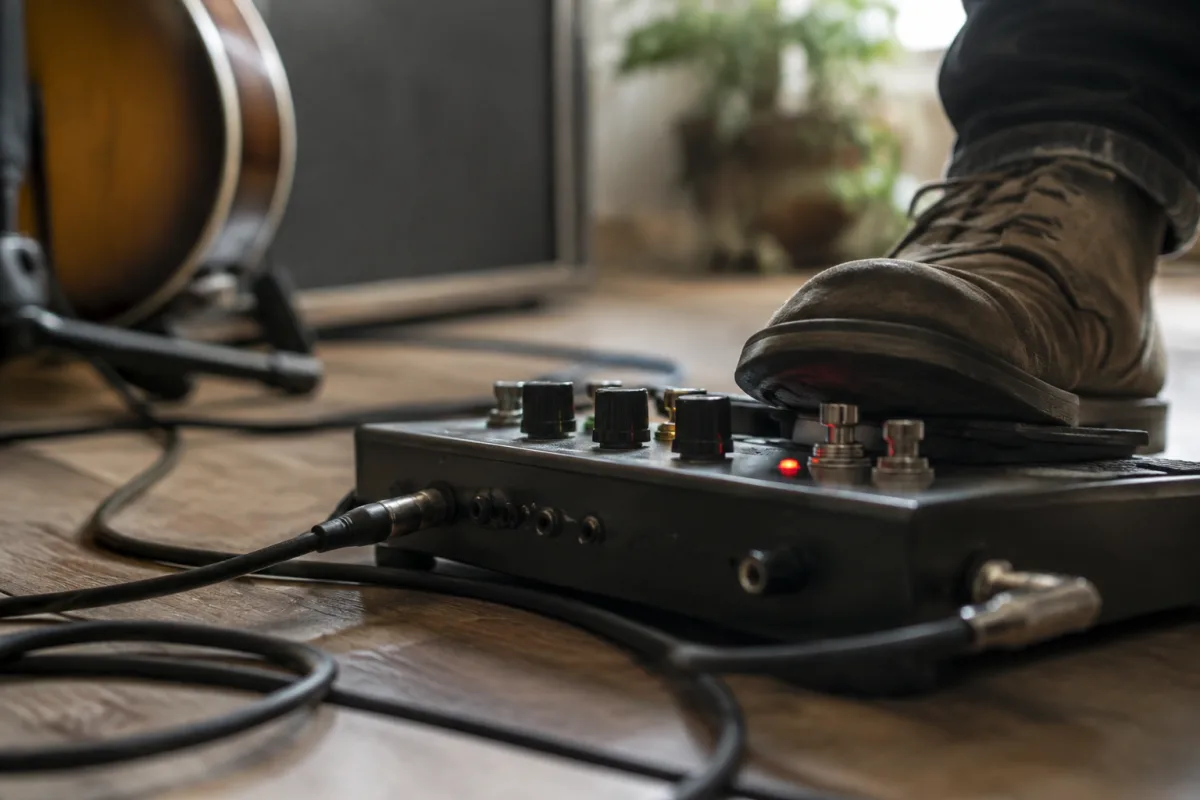
An effects pedal looper is one of the most creatively powerful tools a guitarist can own. Whether you play solo acoustic sets, experimental electronic music, or traditional rock, a looper lets you record and layer your own sound in real time, building rich arrangements from a single instrument. Unlike a simple delay, a looper captures complete bars or sections of your playing and plays them back on command, allowing you to overdub new parts on top. The result is a compelling, professional sound with minimal setup — perfect for busking, small venues, or studio experimentation.
What Is an Effects Pedal Looper?
A looper is an effects pedal that records audio in real time and plays it back continuously as a rhythmic foundation for new material. You activate the looper, play a phrase or riff, then stop recording. The loop plays repeatedly whilst you play fresh material over it — a bass line, melody, harmony, or completely different texture. Most loopers let you layer multiple loops on top of each other, building complexity and depth with each pass.
The fundamental appeal of a looper is its simplicity and immediacy. There's no need for a backing band, a pre-recorded track, or complex equipment. A guitarist with a looper can sound like an ensemble, adapting in real time to the energy of the moment. This makes loopers invaluable for solo performers and particularly popular in busking, intimate venues, and folk or acoustic settings.
Modern loopers come in several formats: compact single-footswitch pedals, larger multi-track systems with separate foot controls for each loop, and software-based loopers within multi-effects processors or digital audio workstations.
Key Features of Quality Loopers
When evaluating an effects pedal looper, consider these essential specifications:
- Loop length and capacity. How long can a single loop be before it loops back and cuts off? Quality loopers offer anywhere from 30 seconds to several minutes. Capacity (total available memory) limits how many layers or separate loops you can record before you run out of space.
- Audio quality. Look for 24-bit or higher resolution recording and a high sample rate (48 kHz minimum). Cheap loopers introduce noticeable compression, distortion, or degradation with each layer added.
- Footswitch responsiveness. The pedal's footswitch should respond instantly — lag between pressing and recording starting can throw off your timing. Dual footswitches allow one for recording/overdubbing and one for controlling playback.
- Display clarity. A clear display showing remaining loop time, number of loops, and current levels helps you stay in control during performance.
- Undo and redo functions. Mistakes happen. A good looper lets you undo the last recording and try again without disrupting the loop that's already playing.
- Rhythm reference. Some loopers offer a built-in metronome or tap-tempo function to keep your loops rhythmically tight and help you sync multiple loops at the same tempo.
Types of Loopers
Looper options range from minimalist to feature-rich:
| Type | Use Case | Typical Price Range |
|---|---|---|
| Compact single-pedal looper | Busking, simple layering, travel-friendly. Often one footswitch for record/play. Typical loop length 30 seconds to 2 minutes. | £50–150 |
| Desktop multi-loop looper | More complex arrangements. Multiple simultaneous loops with separate footswitches, undo buttons, and clear displays. | £150–500 |
| Guitar processor with looper | Integrated effects, looper, and amp modelling in one unit. Ideal if you want looping plus access to reverb, delay, distortion, and other effects. | £300–1500+ |
| Tape-echo looper | Analogue-style looping with warm, vintage character. Often a specialty pedal for players seeking distinctive tone. | £200–600 |
| DAW-based looper (software) | Maximum flexibility and unlimited loop length. Requires a computer, audio interface, and footswitch controller. | Free–$300+ |
Mastering the Looper Technique
Using an effects pedal looper effectively requires practice and rhythmic discipline. Start by recording a steady, simple loop — a bass riff or rhythmic pattern that anchors the piece. Once you've found your loop and pressed the pedal to start playback, you're free to layer new material on top.
Essential skills include:
- Clean timing. Your first loop sets the tempo and rhythm for everything that follows. Play with a metronome beforehand to develop timing precision.
- Layering strategy. Decide in advance what you'll layer in which order. Bass/rhythm first, then melody, then harmony or texture creates clarity and prevents mud.
- Volume balancing. Each new layer should be audible without drowning out previous layers. Most loopers offer individual volume controls per loop — use them.
- Editing and overdubbing. Many loopers let you erase a single layer without affecting others (undubbing) or re-record over an existing loop. These tools let you refine arrangements in real time.
- Stopping and starting. Cleanly ending a loop-based arrangement requires stopping all loops in sync. Tap the footswitch or use the looper's built-in stop function.
Choosing the Right Looper for Your Needs
Budget and style dictate your choice. If you busk or play quiet venues solo, a compact £80–120 looper is sufficient. If you want a fuller, more professional arrangement and don't mind carrying heavier gear, a desktop multi-loop system offers far greater creative control. For guitarist-producers wanting maximum flexibility, integrating a looper into your DAW or using a processor with built-in looping gives you unlimited possibilities.
Whatever format you choose, an effects pedal looper removes barriers to creating rich, layered music on your own. It's a tool that rewards practice and experimentation, turning a single instrument into an ensemble in the hands of a creative player.


Comments