


Earthquaker Devices Pedal article
Earthquaker Devices Pedal for Beginners: A Complete Guide
Premium pedals confuse beginners, but Earthquaker Devices offers intuitive, inspiring effects. This guide shows which models to buy first and why quality matters.
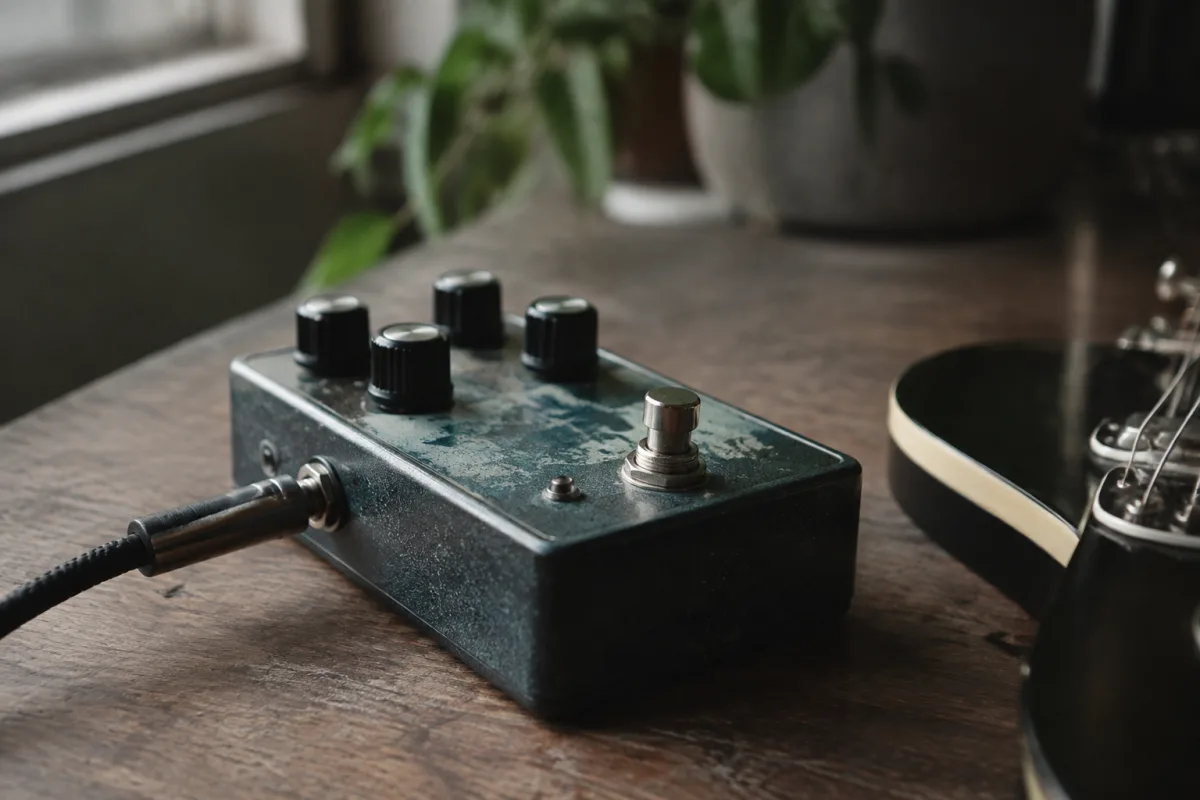
An Earthquaker Devices pedal feels like a luxury purchase when you're starting out. These handmade effects commands prices of £150–250, which can seem extravagant next to £30 budget alternatives. But here's what beginners discover: one quality Earthquaker Devices pedal teaches you more about tone than five cheap pedals combined. This guide shows you how to approach Earthquaker Devices pedals as a beginner, which models are entry-friendly, and why spending more actually accelerates your learning.
Why Beginners Should Consider Earthquaker Devices
Your instinct might be to start cheap and upgrade later. But Earthquaker Devices pedals offer something cheap pedals don't: intuitive controls and genuinely inspiring tone. Why does this matter?
- Inspiration inspires practice. A great-sounding Earthquaker Devices pedal makes you want to play more. Bad tone kills motivation.
- Tone teaches faster. Quality pedals respond clearly to subtle playing differences. You hear how dynamics matter. Cheap pedals mask everything.
- They last forever. Earthquaker Devices builds effects to last decades. You won't outgrow it; you'll love it more as you develop. That's real value.
- Resale value is high. You can sell a used Earthquaker Devices pedal for 60–75% of purchase price. Try that with a budget pedal.
Consider your first Earthquaker Devices pedal not as wasteful expense but as investment in motivation and learning.
Best Earthquaker Devices Pedals for Beginners
Not every Earthquaker Devices pedal is beginner-friendly. Some are deeply experimental. These are newbie-approved:
The Plumes (Overdrive)
The ultimate entry Earthquaker Devices pedal for beginners. The Plumes is an overdrive that ranges from light breakup to moderate crunch. Three simple knobs: Tone, Gain, Volume. That's it. No menus, no hidden features. The learning curve is zero. The tone is gorgeous—warm, responsive, and universally complementary to any guitar and amp combo. Price: around £150. Essential for rock and blues players.
The Collapse (Compressor)
Compression is crucial for beginners to understand—it tightens your tone and evens out dynamics. The Collapse makes compression intuitive. Two main knobs shape compression curve; a side panel provides fine-tuning if you want it. But you can ignore the deep stuff and just enjoy how it glues your tone together. Price: around £180.
The Space Spiral (Reverb)
Reverb is often a beginner's first effect purchase. An Earthquaker Devices pedal reverb sounds lush and warm. The Space Spiral offers algorithmic reverbs, spring reverb, and plate reverb simulations—all legendary-sounding. Simple controls make experimentation feel intuitive. Price: around £200. Highly recommended if you love spacious, atmospheric tone.
The Tone Reaper (Distortion)
For metal and hard rock beginners, distortion is non-negotiable. The Tone Reaper is an aggressive, saturated distortion that defines the aggression without muddiness. Simple three-knob layout. Responds beautifully to pick dynamics and string bending. Price: around £160.
Understanding the "Too Many Knobs" Feeling
Some Earthquaker Devices pedals look complex. The Avalanche Run, for instance, combines reverb with pitch-shifted delays and modulation—intimidating. As a beginner, resist these. Start with the Plumes, Collapse, or Space Spiral. Once you're comfortable, explore the more experimental models. Complexity becomes fun when you've learned the fundamentals.
Your First 30 Minutes With an Earthquaker Devices Pedal
- Plug in and set all knobs to noon (12 o'clock). This is the manufacturer's starting point.
- Play for five minutes without adjusting anything. Just hear the baseline tone. This grounds your reference.
- Slowly turn one knob at a time. Hear how each control shapes the sound. Understand the hierarchy of controls.
- Turn the pedal on and off a few times. Listen to the before/after. Hear how the effect changes your baseline tone.
- Stop there. Your brain is overwhelmed. Let it settle.
Resist the urge to "program" the perfect tone on day one. Tone discovery takes days, even weeks, as you play different musical contexts.
Beginner Mistakes With Earthquaker Devices Pedals
- Buying an experimental model as your first. The Afternoon, The Dive Bomb, The Palisades are amazing but require knowledge. Start with The Plumes or Collapse.
- Tweaking obsessively without playing. Knob-twisting without musical context teaches nothing. Play chords and melodies. Let the musical results guide your adjustments.
- Assuming an Earthquaker Devices pedal is a final-stage purchase. Many beginners feel guilty buying premium gear. Don't. One great pedal teaches faster than ten mediocre ones.
- Placing the pedal wrong in your signal chain. Overdrives typically go early; reverbs go late. Wrong placement undermines the effect. Research signal chain basics before connecting.
- Not reading the manual. Earthquaker Devices manuals are beautifully designed and full of wisdom. Spend 20 minutes reading.
Understanding Build Quality and Durability
An Earthquaker Devices pedal is handmade by humans in New York. Each pedal includes a QC check. The switches are industrial-grade; the pots are quality components. After years of stomping and stage abuse, these pedals keep performing. Cheap pedals start failing after 2–3 years. That's the quality gap.
Pricing and the Value Proposition
At £150–200, an Earthquaker Devices pedal costs 5–7 times what a budget brand costs. But consider long-term value:
- Budget pedal: £30, fails in 2 years, replacement needed. Total cost: £60–90 over 5 years.
- Earthquaker Devices pedal: £180, lasts 15+ years, resale value £110+. Net cost: £70.
Over a decade, the premium pedal costs less and sounds infinitely better. That's not luxury; that's math.
How to Afford Your First Earthquaker Devices Pedal
- Buy used. Search reverb.com or eBay for used examples. Save £40–60.
- Sell your cheap pedals first. That £30 budget overdrive might fetch £15 used. Put it toward an Earthquaker.
- Birthday gift. If family asks what you want, this is the answer.
- Spread purchases. Add one Earthquaker Devices pedal per year to your board rather than buying five cheap pedals at once.
Common Beginner Questions
- Do I need a power supply for an Earthquaker Devices pedal? No. Most run on standard 9V batteries (last 20+ hours). Premium power supplies (£40–80) reduce battery need but aren't essential starting out.
- Should I buy a Velcro-mounted pedalboard? Eventually, yes. For your first pedal, a simple shelf works. Upgrade when you add more pedals.
- Will an Earthquaker Devices pedal work with my amp? Yes. Any amp accepts any pedal. No compatibility issues.
Your Tone Journey Starts Here
Buying your first Earthquaker Devices pedal as a beginner isn't wasteful—it's accelerating your musical growth. The tone quality will inspire you to practise more, and the build quality means you'll own this pedal for decades. Start with The Plumes or Collapse. Let it become an extension of your playing. In three months, you'll wonder how you ever played without it.
Explore the full range of Earthquaker Devices pedals and their applications in our comprehensive guide once you've grown comfortable with your first model.


Comments