
Distortion Effects Pedal article
The Complete Guide to Distortion Effects Pedal
The distortion effects pedal transforms guitar tone from subtle grit to aggressive saturation, making it essential for rock, metal and alternative musicians seeking expressive sound control.
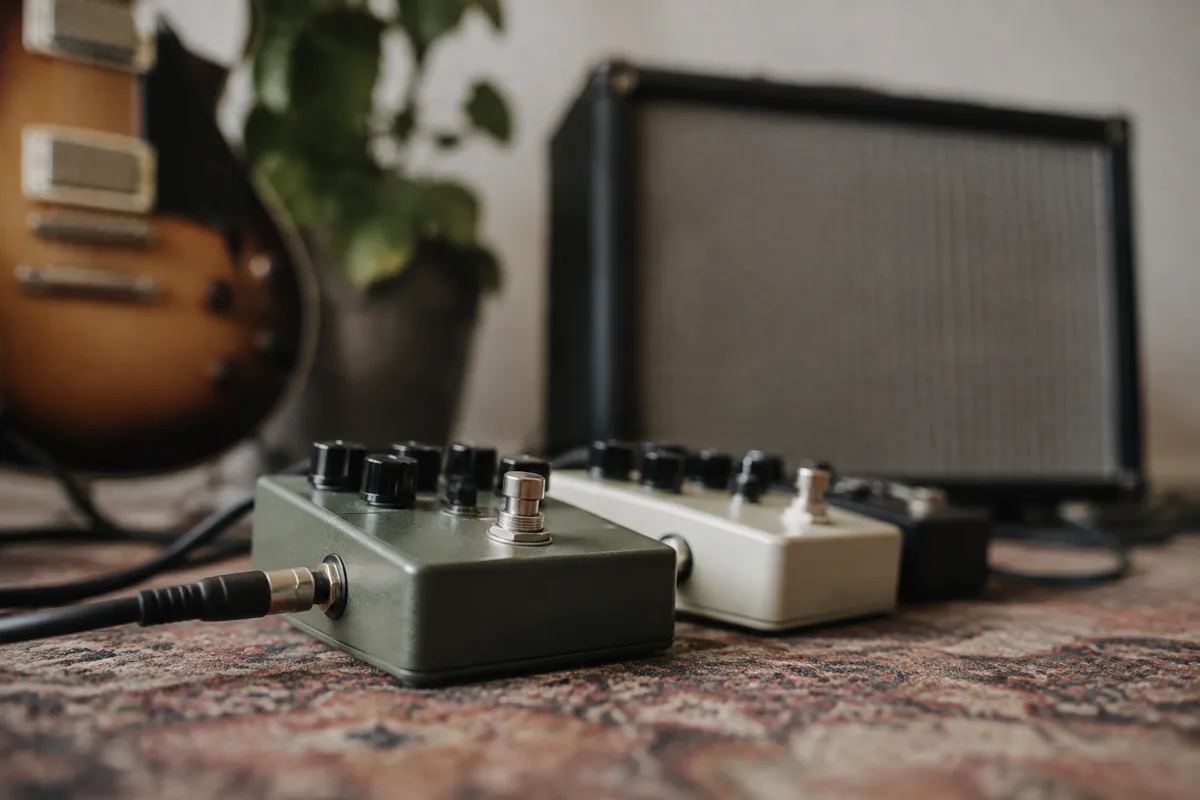
The distortion effects pedal remains one of the most iconic tools in rock, metal and alternative music. Whether you're a beginner exploring tone-shaping possibilities or an established performer seeking the perfect aggression in your signal chain, understanding how these devices work and finding the right one for your needs can transform your playing experience. From subtle grit to face-melting fuzz, this category of effect offers infinite creative possibilities.
Understanding Distortion
At its core, distortion clips and compresses your guitar signal, adding harmonics and grit to the clean tone. Unlike overdrive, which mimics a naturally overdriven amp, true distortion is a more aggressive effect that dramatically reshapes your sound. The amount of clipping—controlled by the gain knob—determines whether you get light breakup or heavy, saturated tone.
A quality unit provides sustain, presence and note definition even at extreme settings. Budget models often lose clarity and become muddy. Professional-grade options maintain harmonic complexity and clarity across their entire range, allowing you to stack them in your signal chain without tone degradation.
Key Controls and Tone Shaping
Most designs include several essential controls. The gain knob determines how much signal clipping occurs—more gain means more aggression. The tone knob shapes the frequency response, typically rolling off highs or boosting low-mids depending on the circuit. Volume controls the output level, crucial for maintaining consistent levels with your clean tone.
Advanced models add extra parameters: presence knobs for treble punch, mid controls for voicing, and even dedicated low-end shaping. These features let you tailor your pedal to specific amplifier types and playing styles. Players often spend years finding their ideal settings on a single unit.
Tube vs Solid-State Designs
Tube-driven circuits provide organic compression and harmonic richness prised by professionals. The tubes add natural saturation and dynamic response—your playing dynamics shape the effect. Solid-state designs offer consistency and portability, favoured by touring musicians who prioritise reliability.
Modern approaches blend both technologies: some units use tubes for tone generation whilst others employ solid-state circuitry with carefully tuned algorithms to emulate tube response. For most players, a quality solid-state option delivers satisfaction; true tone enthusiasts often prefer tube-based versions.
Genres and Applications
Blues-rock players typically use subtle settings—barely more than overdrive—to maintain note clarity and dynamics. Hard rock musicians favour moderate gain for powerful, defined tones. Metal players push aggressive settings to extremes, using high gain with carefully tweaked EQ to cut through dense mixes and maintain definition.
Genre boundaries blur in modern music; many players use multiple units stacked together, or combine distortion with overdrive or fuzz for complex, layered tones. Experimentation reveals creative possibilities beyond genre conventions.
Classic and Modern Options
Certain distortion effects pedal designs define the category. The Boss DS-1 became synonymous with metal tone during the 1980s, affordable and reliable. The Ibanez Tube Screamer pushed just enough grit to create classic rock textures. More recently, boutique builders have crafted innovative distortion effects pedal options targeting specific frequencies or playing styles.
The accessibility of digital modelling means musicians can now own dozens of simulations, each with unique voicing. Whilst convenient, many players still prefer physical pedals for their tactile engagement and sonic characteristics.
Signal Chain Placement
Where you place this type of effect in the signal chain significantly affects your tone. Closer to the guitar (near the start) allows dynamics to influence the sound and preserves natural overdrive characteristics. Later in the chain (before reverb and delay), you get more uniform saturation. Many professional players use multiple units at different positions for layered textures.
Pairing your choice with specific amplifiers requires experimentation. Some amps colour the effect dramatically; others remain transparent. Testing through different amplifiers reveals how amp interaction shapes your final sound.
Budget and Pricing
Quality options span a wide price range. Beginner-oriented solid-state models cost £30–£80. Mid-range boutique and established brands range £150–£400. Premium tube-based and hand-built designs exceed £500.
Rental or second-hand markets offer affordable entry points. Many vintage units outperform newer budget models due to component quality. Research and testing reveal which price tier suits your needs.
Mastering the Tone
Beyond dialling in settings, controlling this effect involves multiple techniques. Varying your picking attack influences how the sound responds. Adjusting your amplifier's gain and volume interacts with the pedal's characteristics. Using the volume knob on your guitar to roll back from full gain reduces intensity, giving you a second layer of control.
Experienced players often leave this device continuously engaged, using it as part of their core tone rather than just for solos. This approach requires choosing a unit that works across your entire musical range.
Build Quality and Reliability
Quality construction ensures years of reliable performance. Robust footswitches and shielded circuitry withstand touring demands. Battery or power supply operation provides flexibility; most professionals use dedicated power supplies for reliable current.
A well-chosen distortion effects pedal becomes an extension of your creative voice. Selecting the right unit—whether through price, tone character or specific features—rewards you with consistent, inspiring tone night after night and establishes your personal sonic signature.


Comments