


Digital Electronic Drum article
Digital Electronic Drum for Beginners: A Complete Guide
Considering drums but worried about noise and space? Digital electronic drums are the beginner-friendly answer. This guide explains what you need to know, what to buy, and how to build confidence from day one.
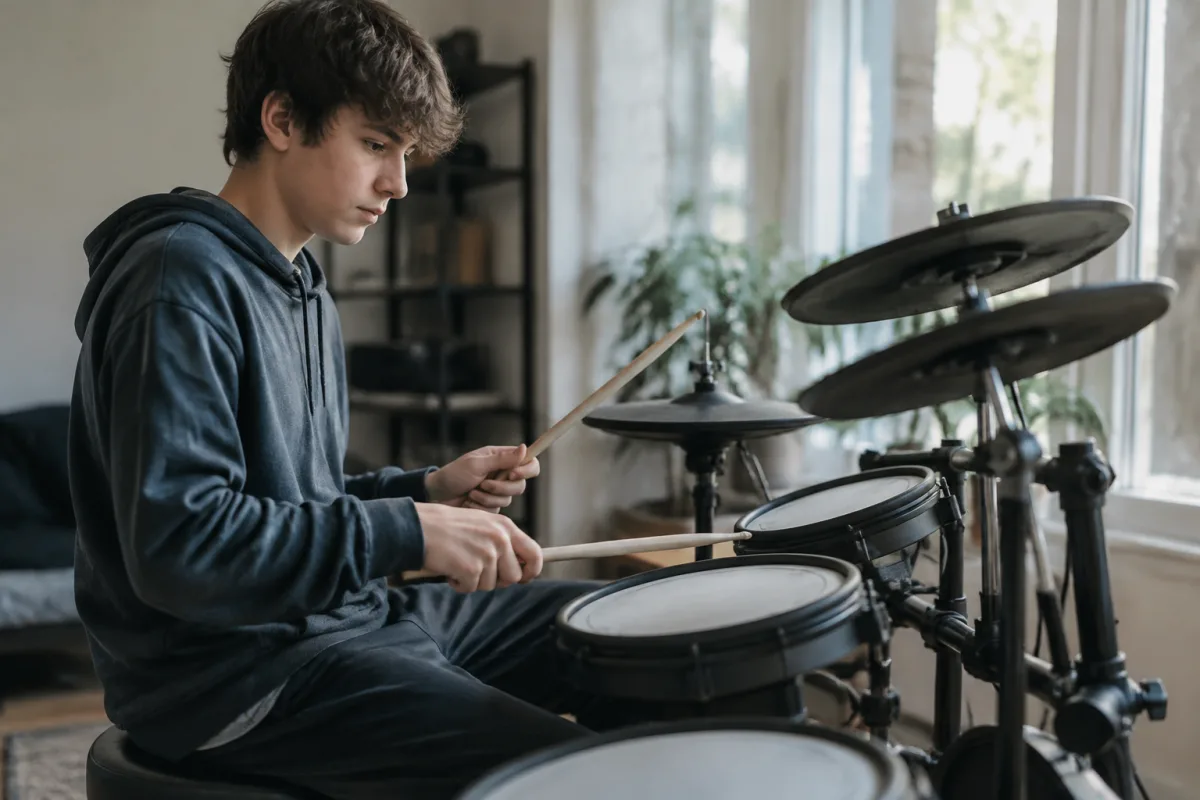
You've been curious about drums, but you're worried about the noise, the space, the cost—or you're not even sure if drumming is really for you. Digital electronic drums might be the answer you're looking for. Unlike acoustic drums, which are loud and require dedicated space, electronic drums are quiet, compact, and surprisingly affordable for beginners. If you've been hesitant to start, this guide is here to show you that learning drums is more accessible than you think.
Why Digital Electronic Drums Make Sense for Beginners
Let's address the elephant in the room: you probably can't set up an acoustic drum kit in your bedroom at midnight without upsetting the entire household. Digital electronic drums solve this problem elegantly. They're quiet enough to practice at any hour without disturbing neighbours or family. At the same time, they feel surprisingly real under your hands and respond to the way you play. For a beginner deciding whether drumming is worth pursuing, this combination is unbeatable.
Beyond noise, digital drums offer another huge advantage: they're compact. An acoustic kit takes up serious floor space and looks impressive but impractical for most homes. Electronic drums fold down or can be positioned in a corner. You can actually store them or move them if needed. For a beginner learning at home, this practicality matters.
There's also the money aspect. A decent beginner acoustic kit costs £300 to £600 or more. A beginner electronic drum kit costs £200 to £400. You're spending less money on something quieter, more compact, and still 100 percent capable of teaching you real drumming skills.
Understanding Digital Electronic Drums: The Basics
An electronic drum kit consists of several simple parts. Understanding them takes the mystery out of the whole thing.
Pads are the surfaces you strike with drumsticks. Unlike acoustic drums, you're hitting rubber or mesh pads rather than drumheads. These pads register the strike and send a signal. The module is the brain of the kit—it receives the signal from each pad and outputs the corresponding drum sound through speakers or headphones. The kick pedal triggers the bass drum sound when you press it with your foot. Everything plugs together and is ready to play.
That's genuinely all you need to know to get started. You don't need to understand the electronics inside. You just need to know that pads create sound through a module, and that sound comes out through speakers or into your ears via headphones. It's simple.
Starting Out: What to Look for in Your First Kit
Buying your first electronic drum kit is easier than you think. Focus on these practical factors and you'll make a solid choice:
- Pad quality: Rubber pads are cheaper but harder on your wrists. Mesh pads feel more like acoustic drums and are gentler. For beginner comfort, mesh is worth the extra cost. Look for kits with at least three mesh pads (snare and toms).
- Number of pads: A basic beginner kit usually has eight pads: kick pedal, snare, three toms, two cymbals, and a hi-hat. This is enough to learn drumming fundamentals. You don't need more as a beginner.
- Module quality: The module determines how realistic the sounds are and how many different drum kits it contains. Beginner modules have enough variety. Don't obsess over having 500 different drum kits—focus on having a good selection of drums you'll actually use.
- Connectivity: Check that the kit can connect headphones directly. This is essential for quiet practice. Some kits also have MIDI connections so you can eventually connect to a computer, but that's optional for beginners.
- Stand and pedal quality: The stand should feel solid, not wobbly. The kick pedal should feel responsive. These aren't glamorous features, but they make an enormous difference in whether you actually practise.
- Warranty: Electronic components can fail. Choose a kit with at least a one-year warranty so you're protected if something breaks.
Budget-Friendly Beginner Options
The good news is that solid beginner electronic drum kits don't cost a fortune. Here's what to expect at different price points:
- £150–250: Basic kits with rubber pads and limited features. These work, but the feel and sound are noticeably budget-level. Fine for absolute testing-the-waters beginners.
- £250–350: Sweet spot for beginners. Decent mesh pads, solid modules with good sounds, and reliable hardware. This range gives you quality without overspending.
- £350–500: Entry-level kits from respected brands. Better mesh pads, more features, and excellent durability. Choose this if you're confident about drumming and want a kit you won't outgrow immediately.
Start in the £250–350 range. You'll get genuine quality without breaking the bank.
Getting Comfortable: Your First Week With Electronic Drums
When your kit arrives, take time to set it up properly. Read the manual, follow the assembly instructions, and test each pad to make sure everything connects and sounds good. This isn't complicated—most setups take 30 minutes to an hour.
Your first goal isn't to play complicated rhythms. It's simply to get comfortable with the feeling of playing on pads. Sit down, put on headphones, and just play. Hit the different pads and get a feel for the response. Play along to songs you love. Get accustomed to the kick pedal. This exploratory phase builds confidence and muscle memory naturally.
One tip: start with headphones, not speakers. Headphones let you hear yourself more clearly and you can control the volume personally. Later, you might plug into a speaker system, but initially, headphones are your friend.
Common First-Timer Mistakes With Electronic Drums
Learning drummers often make predictable mistakes. Knowing about them now means you can avoid them:
- Hitting too hard: Beginners often strike pads with excessive force, thinking louder hits mean better playing. Actually, controlled striking with proper technique is better. Let the pads and pedal do the work—don't force it.
- Ignoring posture: Sitting properly at your kit matters. Your seat height should let your arms and legs move freely without strain. Bad posture leads to tension and slower learning. Invest five minutes in adjusting your setup properly.
- Neglecting the kick pedal: New drummers focus on hand coordination and ignore the kick pedal until later. Start building kick pedal technique from day one. Your feet are as important as your hands.
- Using only the default kit sound: Electronic kits come with dozens of drum sounds. Beginners often stick with the default kit for months without exploring. Experiment! Different sounds teach you different feels and keep practice interesting.
- Playing without headphones so everyone hates you: Yes, electronic drums are quiet, but they still make sound. Practise with headphones to keep things pleasant for those around you and to focus better on your own playing.
Making Your Purchase With Confidence
Choosing a digital electronic drum kit as your first drumming instrument is a smart move. You're not sacrificing real learning—you're gaining practicality, affordability, and the ability to actually practise regularly without conflict at home. These advantages will accelerate your development as a drummer.
Look for a kit in the £250–350 range with mesh pads, a solid module, and a sturdy stand. Make sure it has headphone connectivity and a decent warranty. Assemble it, connect headphones, and start playing. Within a few weeks, you'll have a genuine sense of whether drumming speaks to you. If it does, you're well-equipped to continue. If it doesn't, you've learned something valuable without a massive investment.
For more detailed information on digital electronic drums and what to consider for more advanced playing, check out our complete guide to digital electronic drums. Right now, though, you've got everything you need to make a confident first purchase and start your drumming journey. Welcome to the rhythmic world.


Comments