
Digital Consoles article
The Complete Guide to Digital Consoles
Digital consoles for guitar deliver authentic amp character, professional effects, and portability—ideal for touring and studio work.
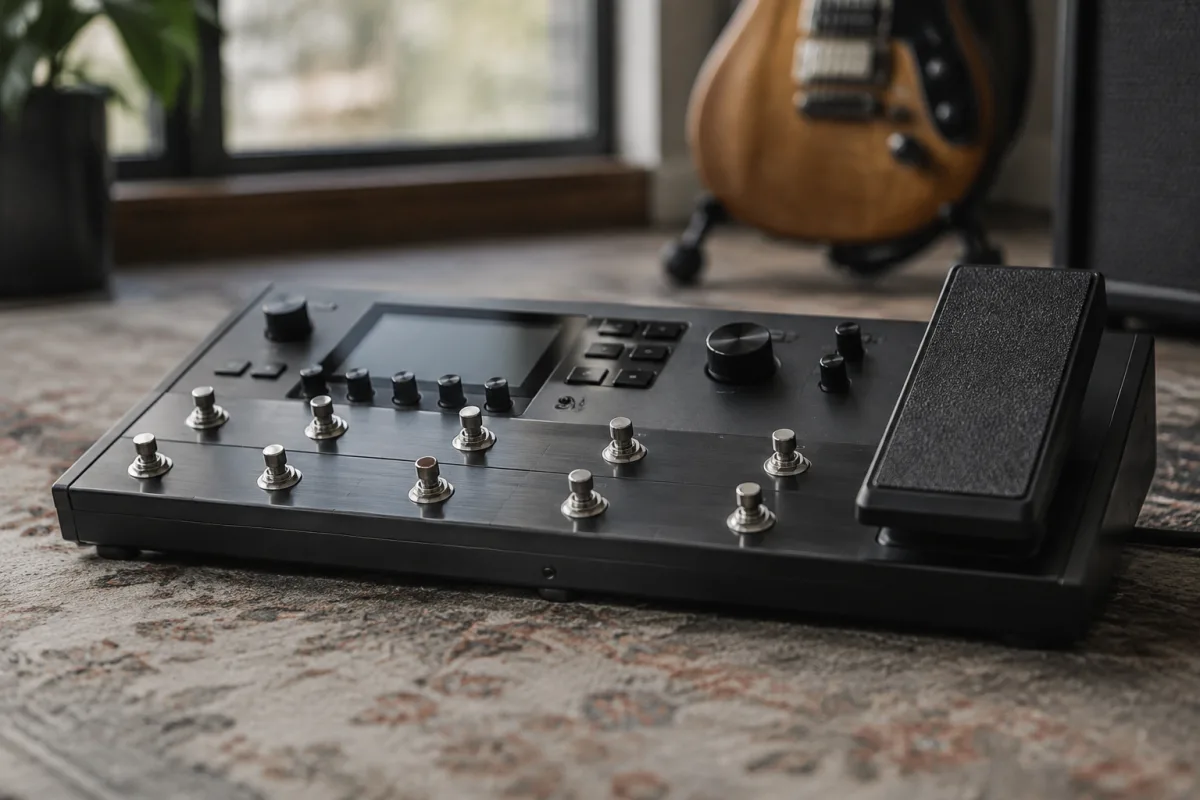
Digital consoles for guitar amplification have transformed modern performance and recording, offering amp modelling, effects processing, and tone shaping capabilities that would have required an entire room full of gear just two decades ago. Whether you're a touring musician seeking reliability and portability, a studio engineer building a professional recording chain, or a serious hobbyist wanting genuine tonal flexibility, a digital console for guitar delivers authentic sound character with modern convenience. This guide explores what digital consoles do, which models suit different needs, and how to integrate one into your setup.
Understanding Digital Consoles for Guitar
A digital console for guitar is a dedicated processing unit that models the sound of classic guitar amplifiers, adds sophisticated effects, and provides a direct output suitable for live sound reinforcement or recording equipment. Unlike a traditional guitar amplifier that produces sound through a physical speaker, a digital console for guitar processes your signal and sends it to a mixing console, audio interface, or powered monitor.
The distinction between a digital console for guitar and a guitar effects processor is subtle but important. A effects processor typically focuses on effects (reverb, delay, chorus, distortion), whereas a digital console for guitar emphasises amp modelling—reproducing the sonic character of classic tube amplifiers like the Marshall JCM800, Fender Twin Reverb, or Mesa Boogie Dual Rectifier.
Digital console for guitar technology relies on sophisticated digital signal processing and algorithms that capture not just the tone of an amp, but its behaviour—how it responds to pick attack, volume adjustment, and dynamic playing. Modern digital console for guitar units use convolution technology and machine learning to achieve remarkable fidelity compared to earlier modelling systems.
Key Features of Digital Consoles for Guitar
When choosing a digital console for guitar, these features determine practicality and sonic capability:
- Amp models: A quality digital console for guitar includes 20–100+ modelled amplifiers spanning classic and modern tones. More models provide flexibility, but quality matters more than quantity.
- Cabinet simulation: The speaker cabinet colours the amp tone significantly. A digital console for guitar must simulate various cabinet types (1x12 vintage British, 2x12 Fender, 4x12 Marshall stack) to achieve authentic tone.
- Built-in effects: Reverb, delay, chorus, flanger, phaser, and modulation effects should be included in your digital console for guitar. Some units offer dozens of effect types with deep parameter control.
- Expression pedal: A footswitch or expression pedal allows real-time control of volume, wah, or effect parameters whilst playing. Essential for expressive performance with a digital console for guitar.
- Direct output options: XLR balanced outputs for live sound, USB for recording, and headphone output for silent practise are standard on a good digital console for guitar.
- Footswitches: Programmable footswitches let you switch between preset configurations during performance. A digital console for guitar with at least 3–5 switches is practical.
- Display: A clear screen on a digital console for guitar makes real-time editing and preset navigation straightforward, especially in live settings.
Digital Consoles for Guitar vs. Alternatives
Comparing a digital console for guitar against other approaches:
| Option | Tone Quality | Portability | Cost | Best For |
|---|---|---|---|---|
| Digital console for guitar | Excellent (modern modelling) | Very high (3–8 kg) | £500–2500 | Touring, studio, tonal flexibility |
| Tube amplifier + pedalboard | Excellent (authentic) | Low (50+ kg) | £1500–5000+ | Traditional tone, acoustic character |
| Amp modeller plugin (DAW) | Very good (software) | N/A (computer-only) | £50–300 | Studio recording, production |
| Powered amplifier + speaker | Good (depends on cab) | Medium (20–40 kg) | £300–1000 | Live performance without traditional amp |
Popular Digital Console Models
The market includes several respected digital console for guitar options. Line 6 Helix is considered the industry standard—a comprehensive digital console for guitar with hundreds of amp and effect models, excellent build quality, and extensive community support. Fractal Audio Axe-Fx is the choice of professional touring guitarists; a digital console for guitar known for sound quality and deep editing capabilities. Boss ME-80 offers good tonal variety at lower cost, making it an accessible digital console for guitar for intermediate players. Kemper Profiler is unique—it profiles physical amplifiers to create custom models, so you can make a digital console for guitar that sounds like your specific tube amp.
Each digital console for guitar has a different philosophy. Choose based on your priorities: maximum portability, deepest tone quality, most affordable entry, or custom profiling capability.
Setting Up and Using a Digital Console for Guitar
Integrating a digital console for guitar into your signal chain is straightforward. Connect your guitar to the input, then route the digital console for guitar output to a mixing console (in a venue), an audio interface (for recording), or headphones (for silent practise). Many guitarists use a digital console for guitar in a hybrid setup—connecting a digital console for guitar to a traditional amplifier's input, effectively turning the amp into a coloured speaker.
A digital console for guitar excels in recording studios because you can reamp takes (re-record the amp sound without re-performing) or print the perfect tone without moving microphones. For live performance, a digital console for guitar eliminates the need to transport a heavy amplifier; you simply plug into the venue's monitor system and sound checks become much faster.
Learning to programme and use a digital console for guitar takes time—most units have a steep learning curve—but the investment in mastery pays dividends through faster setup, more flexibility, and more reliable performance compared to traditional amp-and-pedal setups.
Tone Characteristics and Sonic Authenticity
Modern digital consoles for guitar achieve remarkable fidelity to tube amplifiers. However, subtle differences remain. Some players report that a digital console for guitar sounds slightly sterile compared to a tube amp's organic warmth. This gap has narrowed significantly in recent years; flagship digital console for guitar units like the Fractal Axe-Fx III or Line 6 Helix are indistinguishable from tube amps through a decent speaker.
The tone of a digital console for guitar depends on your monitor system. A digital console for guitar through a quality powered speaker, studio monitors, or the venue sound system sounds far more convincing than a digital console for guitar through cheap headphones. Invest in your monitoring chain if you choose a digital console for guitar.
Conclusion
A digital console for guitar is an invaluable tool for modern guitarists seeking tonal flexibility, portability, and sonic authenticity. Whether you record in a studio, tour professionally, or simply want a more flexible and convenient alternative to lugging a tube amplifier, a digital console for guitar delivers on all fronts. Research the specific models suited to your priorities, test them if possible, and choose a digital console for guitar that matches your playing style and budget. The investment in a quality digital console for guitar typically pays for itself through faster setups, less expensive gear transportation, and the ability to capture your ideal tone wherever you perform or record.


Comments