
Chorus Guitar Effects Pedal article
The Complete Guide to Chorus Guitar Effects Pedal
A chorus guitar effects pedal creates the illusion of multiple voices playing in unison, producing warm, lush tone perfect for rhythm and atmospheric textures.
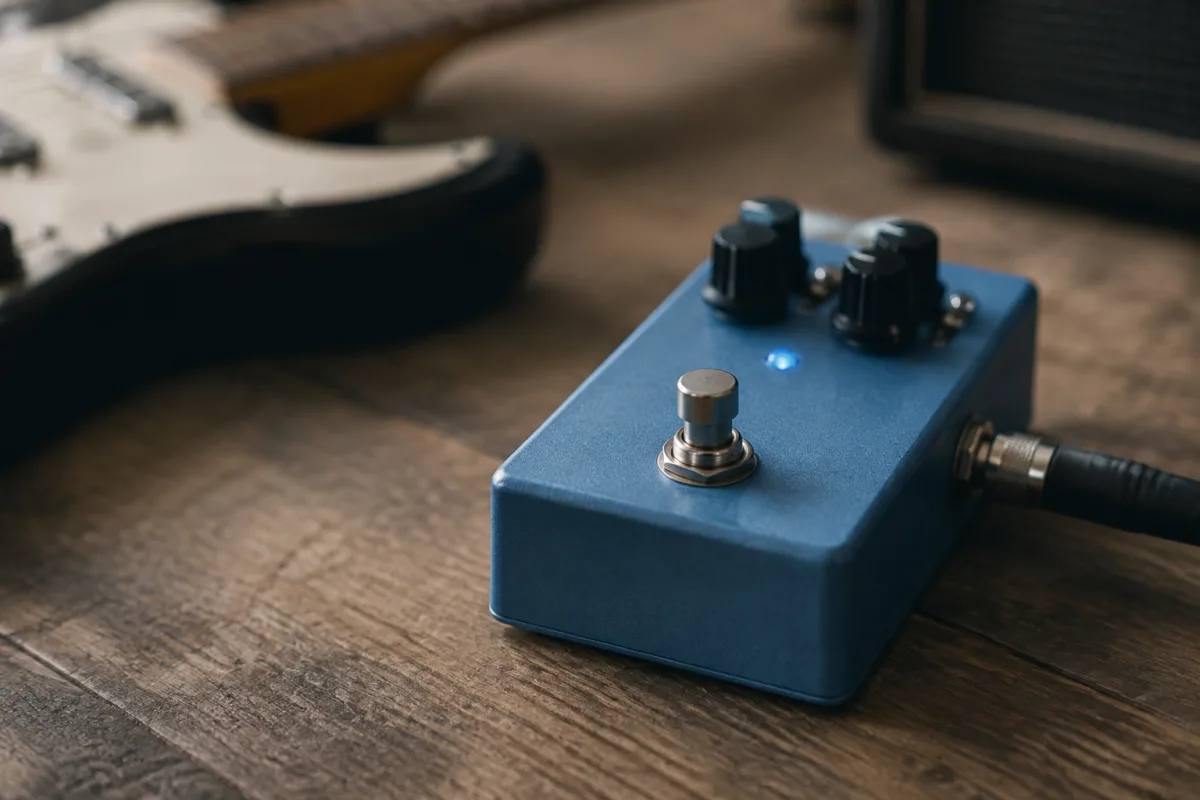
A chorus guitar effects pedal is an electronic device that creates the illusion of multiple voices or instruments playing in unison by subtly shifting the pitch and timing of your signal. The effect mimics the natural chorusing that occurs when multiple musicians play the same note simultaneously—each player's timing and tuning is fractionally different, creating richness and depth. A chorus guitar effects pedal recreates this effect electronically, transforming a single dry signal into something fuller and more atmospheric. This guide explains how chorus effects work, their characteristics, and which guitar players benefit most from using one.
How Chorus Guitar Effects Work
A chorus guitar effects pedal works by creating a pitch-shifted copy of your original signal, delaying it slightly, and mixing it back with the original. The pitch shift is tiny—typically just a few cents (hundredths of a semitone)—so the effect sounds like thickening rather than a separate instrument.
The key to chorus is modulation: the pitch shift and delay amount are constantly varying, typically at a rate of one to two hertz (one to two cycles per second). This variation prevents the effect from sounding static or artificial. The continuous pitch and timing fluctuations create the lush, warm, slightly "swirly" character that chorus is famous for.
Quality chorus guitar effects pedals use multiple modulated voices (sometimes three or four copies of your signal at slightly different pitch shifts and delays) to create an even richer, more complex effect than a simple two-voice chorus. This is particularly noticeable on sustained notes.
The Sound of Chorus
A chorus guitar effects pedal produces a warm, slightly detuned, thickened version of your original signal. It's subtle but unmistakable—the guitar sounds fatter, fuller, and slightly "out of focus" compared to the dry signal. The effect is flattering for most guitar tones and is particularly lovely on clean, jazz, and funk guitars.
Unlike distortion or overdrive which adds aggression, or delay which adds space, chorus adds body and presence. It makes a single guitar sound like two guitars playing in loose unison. This is why chorus is beloved in rhythm playing—it fills space without sounding overtly "effected."
Chorus works beautifully on sustained notes and slower passages. On fast, complex passages (like rapid single-note lines or intricate chords), the effect becomes less noticeable because the continuous changes in pitch and timing have less opportunity to develop. This is why chorus is more common in rhythm contexts than lead playing.
Chorus Guitar Effects: Controls and Settings
Most chorus guitar effects pedals have a few key controls: Rate (how fast the pitch modulation occurs), Depth (how much the pitch shifts), and Mix (how much of the effected signal blends with the dry signal).
Rate typically ranges from 0.1 Hz (very slow, almost imperceptible modulation) to 5 Hz or higher (fast, "swirly" modulation). Slower rates sound subtle and musical; faster rates sound more obvious and almost trippy.
Depth controls the amount of pitch shift—typically from zero (no shift, but still some delay creating a subtle effect) to several cents up (a noticeable pitch wobble). Most players find moderate depth (around 3–6 cents) most musical.
Mix controls the balance between dry signal (your original guitar) and effected signal. A 100 per cent wet mix is almost unlistenable (pure chorus with no original signal). A 50/50 dry/wet mix is typical and gives obvious chorus character. Many players prefer 30–40 per cent wet for a subtle, musical effect.
Types of Chorus Guitar Effects Pedals
Analog chorus pedals, like the legendary Boss CE-1 and Electro-Harmonix Small Clone, use analog circuitry to create the effect. They have a warm, slightly lo-fi character that some find more musical than digital emulations.
Digital chorus pedals offer precise control and often multiple algorithms simulating different famous chorus pedals. They're generally less "warm" than analog but offer flexibility and reliability.
Chorus as part of a multi-effects unit (like Boss ME-80 or Line 6 HX Effects) combines chorus with dozens of other effects in one device. This offers versatility but less focus than a dedicated pedal.
Compact, budget chorus pedals (£20–£50) offer basic chorus functionality and are perfectly adequate for beginners or players using chorus occasionally.
Popular Chorus Guitar Effects Pedals
The Boss CE-1 is the classic—expensive (£600–£900 used), legendary, and genuinely excellent. It defined the chorus sound for generations and remains sought-after by professionals.
The Electro-Harmonix Small Clone is iconic and affordable (£50–£80), offering warm, musical chorus that's graced countless records. It's the budget chorus that sounds expensive.
The Boss CH-1 is a modern standard (£80–£120), offering excellent sound and multiple variations. It's reliable, affordable, and used by touring musicians worldwide.
The Boss CE-5 combines multiple chorus algorithms in one pedal (£150–£200), allowing you to switch between classic and modern chorus sounds without changing pedals.
Budget alternatives from Behringer, Donner, and others (£20–£50) work adequately for learning and practising, though tonal quality is lower than established brands.
Chorus and Musical Genre
Chorus is particularly beloved in 1980s and 1990s alternative and grunge rock—artists like The Cure, My Bloody Valentine, and Nirvana used chorus extensively to create lush, atmospheric textures. Modern indie rock and dream pop often feature chorus prominently.
Funk and disco guitarists use chorus to add shimmer to clean guitar rhythms. Jazz players sometimes use subtle chorus to warm and thicken clean guitar tones. Classical crossover and progressive rock use chorus for atmospheric and experimental textures.
Chorus is less common in blues, hard rock, and metal, where distortion and other aggressive effects dominate. However, used subtly under a warm, slightly overdriven tone, chorus can add unexpected depth to these genres.
Chorus vs. Other Modulation Effects
Chorus differs from flanger (which creates a more dramatic "swooshing" sound with sharper peaks) and phaser (which creates a more "sucking" tone by cancelling frequencies). Chorus sounds smooth and warm; flanger sounds dramatic and obvious; phaser sounds hollow and spatial.
Chorus is the most subtle and musical of the modulation effects, making it ideal for texture without obvious artifice. If you want understated lushness, chorus is the choice. If you want obvious, dramatic modulation, flanger or phaser are better options.
Using Chorus Guitar Effects Effectively
Start with subtle settings: 30–50 per cent mix, moderate rate (around 1–2 Hz), and moderate depth (3–5 cents). Listen to how chorus thickens your rhythm sound without obviously changing your tone.
Use chorus in rhythm playing more than lead. The effect becomes less noticeable in rapid, complex passages but shines on sustained chords and slower melodies.
Combine chorus with other effects carefully. Chorus plus delay creates a very lush, orchestral sound. Chorus plus distortion can sound muddy unless the distortion is subtle. Most players find chorus combined with reverb (for additional space and depth) particularly beautiful.
Experiment with rate and depth. Slower rates sound more musical and subtle; faster rates sound more "swirly" and obvious. Deeper pitch shifts sound more like multiple instruments; shallower shifts sound like slight detuning.
The Timeless Appeal of Chorus
Despite being invented in the 1970s, chorus remains one of the most beloved guitar effects. It's perhaps less trendy than distortion or reverb, but it's never really gone out of style. Whenever a guitarist wants their tone to sound fuller, warmer, and slightly ethereal, chorus is the go-to effect.
Conclusion
A chorus guitar effects pedal is a beautiful, musical effect that transforms a single guitar into something richer and more orchestral. Whether you choose a budget option like the Small Clone, a modern standard like the Boss CH-1, or invest in a vintage CE-1, a quality chorus guitar effects pedal will be a tool you return to again and again. For rhythm playing, clean tones, and creating lush, atmospheric textures, chorus is essential. Add one to your pedalboard and discover why guitarists have loved this effect for decades.



Comments