


Chase Bliss article
Chase Bliss for Beginners: A Complete Guide
Chase Bliss pedals turn guitar effects into genuine creative tools, not just add-ons. Perfect for beginners curious about expanding their sound without complexity or compromise.
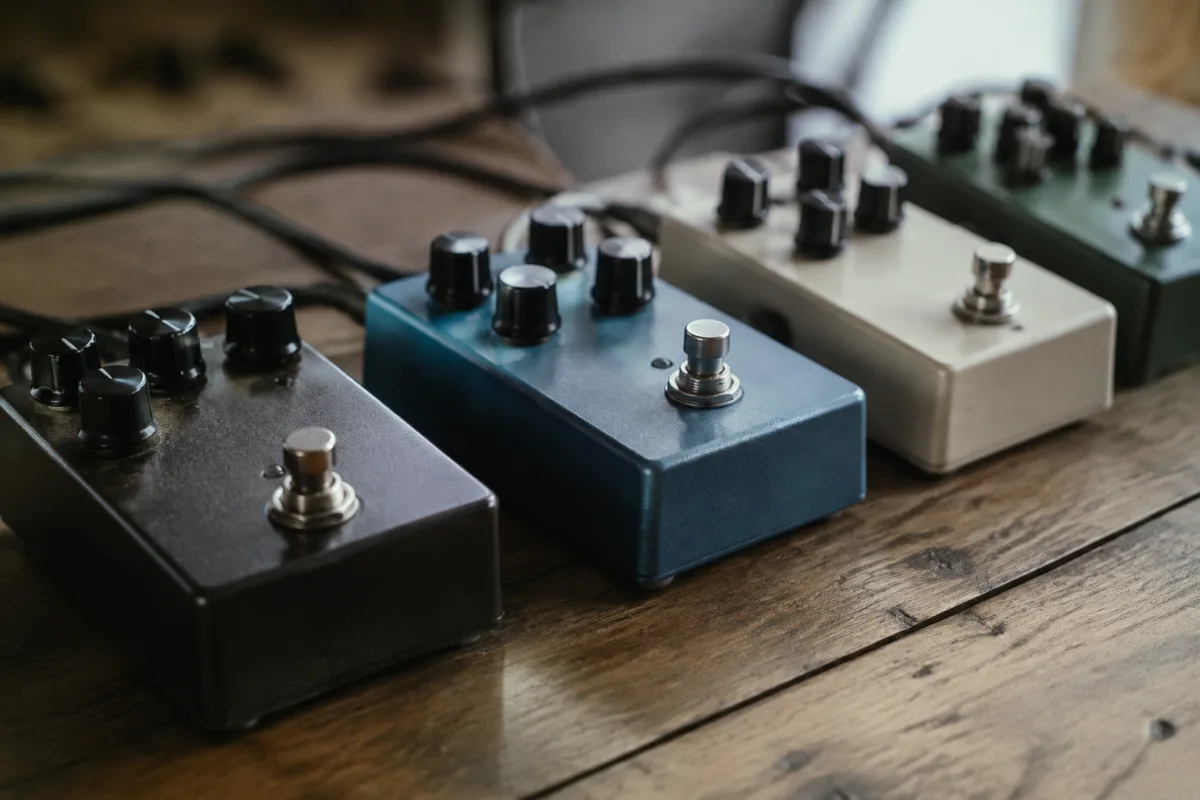
If you've heard a guitarist make wild, spacey, or impossibly expressive sounds from a single pedal, chances are it's a Chase Bliss creation. This boutique American effects manufacturer builds some of the most creative and innovative guitar pedals available, yet many beginners assume they're only for experienced players. The truth is simpler: Chase Bliss makes pedals for anyone curious about expanding their guitar's sonic possibilities, from your first experiments with effects to building a professional rig.
What Makes Chase Bliss Special for Beginners
Chase Bliss pedals stand apart because they combine extreme flexibility with genuine playability. Most beginner-level effects pedals are simple—overdrive, delay, reverb—with limited adjustment. Chase Bliss designs each pedal as an instrument in itself, with controls that invite experimentation. You're not just switching an effect on and off; you're sculpting and shaping sound in real time.
This approach intimidates some beginners: "Won't all those controls confuse me?" Actually, it's the opposite. Chase Bliss pedals reward exploration rather than demand mastery. Twist a knob, hear what changes, adjust again. Learning becomes joyful discovery rather than technical study.
The sound quality matters too. Chase Bliss effects sound like they're made with love, not just algorithmic efficiency. Even when you're learning and making "mistakes," a Chase Bliss pedal makes it sound musical rather than cheap or thin.
Understanding Chase Bliss Pedal Types
| Pedal Type | Best For Beginners Who Want To... |
|---|---|
| Modulation (Chorus, Flanger, Phaser) | Add movement and dimension to clean tones. Perfect starting point—immediately impressive without overwhelming. |
| Delay | Create space and echo without changing the core tone. Great for building confidence with effects. |
| Reverb | Add ambience and size. Works beautifully even on small mistakes—very forgiving to learn with. |
| Drive/Overdrive | Shape your basic tone character. A Chase Bliss drive pedal adds personality without harshness. |
| Combination (Dual effects) | Experiment with layered sounds. More complex, but deeper creative possibilities. |
Start with modulation or delay if you're new to effects. They're immediately rewarding, forgiving of beginner mistakes, and teach you how effects thinking works.
Your First Chase Bliss Experience: How to Get Started
Buy or borrow one pedal and spend a month with it. Don't jump to owning five different Chase Bliss units. Learning one deeply teaches you how all effects work. Read the manual—Chase Bliss includes detailed guides written in plain English, not manufacturer jargon.
Connect it simply: guitar → pedal → amplifier. Power it properly (most run on 9-volt batteries or USB; check your model). Spend the first few sessions just turning every knob and listening. There's no "wrong" setting. You're training your ear to hear what each control does.
After a week or so, you'll develop intuition. You'll turn a knob and think, "That makes the effect tighter," or "That adds more space." That intuition is the core skill of effects playing, and Chase Bliss pedals teach it beautifully.
Finally, record yourself. Use your phone to capture what you're doing. Playback reveals which settings you loved and which you'll never use again.
Common Beginner Mistakes with Effects Pedals
- Buying too many pedals before mastering any. A single Chase Bliss pedal offers more to discover than three basic department-store effects. Start with one.
- Leaving the pedal in "factory default" mode. Chase Bliss pedals ship with good preset settings, but you'll grow faster by tweaking. Don't be afraid to turn knobs.
- Using maximum settings all the time. Maximum reverb sounds like a cathedral; maximum delay produces echo soup. Moderate settings sound more musical and teach you faster.
- Ignoring the expression pedal input. Some Chase Bliss pedals accept a foot controller to sweep effects in real time. This transforms the pedal from static to dynamic.
- Neglecting tone matching with your amp. A Chase Bliss effect interacts with your amplifier's tone. Spend time adjusting both together rather than expecting the pedal alone to sound perfect.
Why Beginners Should Explore Chase Bliss
These pedals aren't "advanced only." They're simply more honest about what effects can be. A three-knob reverb pedal hides possibilities; a Chase Bliss reverb reveals them. You learn faster with honest tools.
The boutique price tag seems high, but a single Chase Bliss pedal replaces several cheaper units and sounds incomparably better. Over time, you'll save money by not buying mediocre alternatives.
Most importantly, these pedals make guitar more fun. Once you've shaped a unique reverb tone or discovered a modulation effect that makes you smile, you'll understand why guitarists love Chase Bliss.
Going Deeper: The Next Steps
As your confidence grows, explore pedal combinations and advanced settings. Learn about the technology behind effects—how modulation works, why delay creates space, how reverb algorithms differ. For in-depth exploration, our complete guide to Chase Bliss covers the brand's philosophy, specific pedal comparisons, and how to integrate effects into a professional rig.
Conclusion
Chase Bliss pedals demystify guitar effects for beginners. They're tools for creativity, not complexity. Start with one, explore fearlessly, record what you discover, and let your ear guide your next choices. Within weeks, you'll wonder how you ever played without effects. The world of sonic possibilities is open to you.



Comments