
Cables Audio Jack article
The Complete Guide to Cables Audio Jack
Audio jack cables are the unsung heroes of your signal chain. A quality cable preserves your tone and ensures reliability, whilst poor construction introduces noise and signal loss.
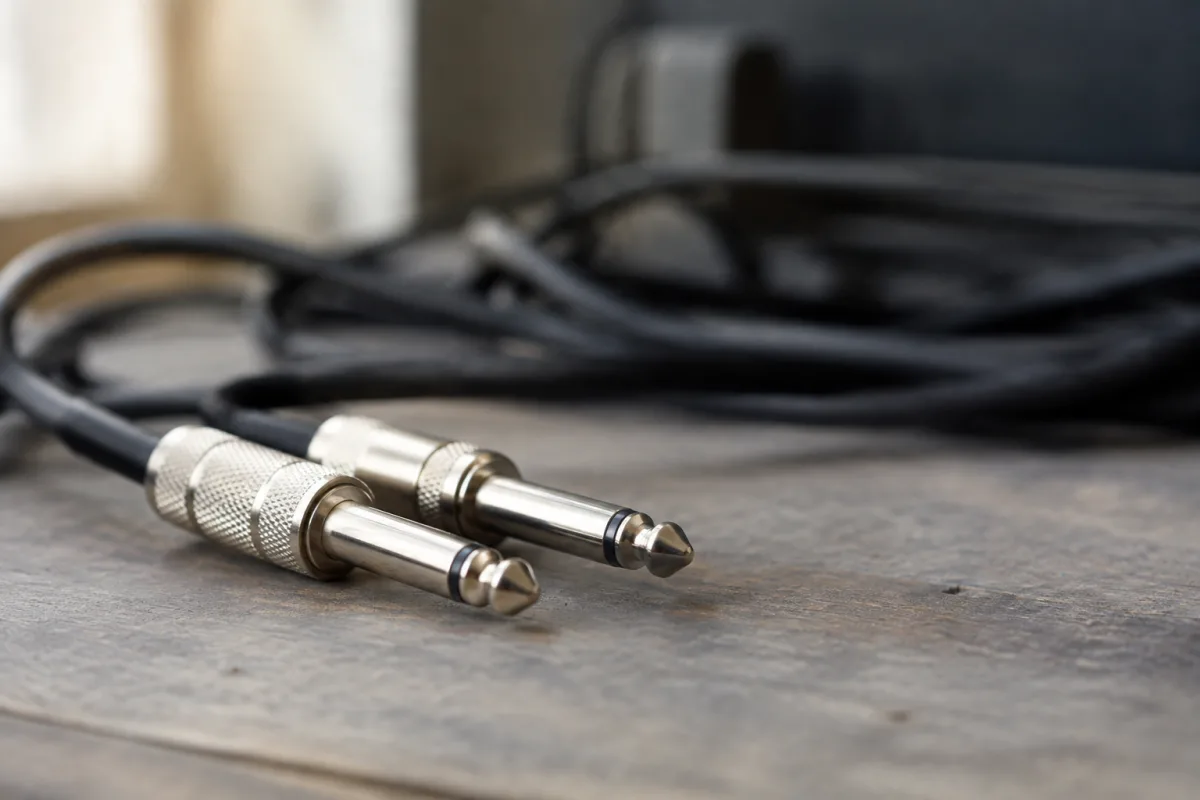
Audio jack cables are the unsung heroes of any guitarist's rig — they connect your guitar, pedals and effects to your amplifier with a reliability that directly affects your tone and performance. Whether you're playing a bedroom jam or a sold-out venue, understanding the differences between audio jack cable types, construction and shielding will help you make smart choices that keep your signal clean and your sound pristine.
What are Audio Jack Cables?
Audio jack cables are the connectors that transmit signals between instruments, amplifiers, pedals and other audio equipment. In the guitar world, they're the lifeline of your signal chain. An audio jack cable comprises three main elements: the jack connector itself, the internal conductor that carries the signal, and the outer shield that protects against electromagnetic interference. The most common audio jack connector in guitar rigs is the quarter-inch (6.35mm) TS (Tip-Sleeve) or TRS (Tip-Ring-Sleeve) jack, which appears on guitars, amps and most effects pedals.
The way an audio jack cable is constructed dramatically influences how it performs. A quality audio jack cable can preserve your tone and signal integrity, whilst a poor one introduces noise, signal loss and unwanted colouration. Understanding what distinguishes a great audio jack cable from a mediocre one is essential knowledge for any serious musician.
Types of Audio Jack Connectors
Quarter-Inch TS (Tip-Sleeve) Jacks
The TS jack is the workhorse of guitar rigs. This audio jack cable connector features two contact points: the tip (which carries the signal) and the sleeve (which is the ground). TS connectors are used for mono signals and are found on guitars, amplifiers and most conventional effects pedals. They're robust, inexpensive and universally compatible across the guitar world.
Quarter-Inch TRS (Tip-Ring-Sleeve) Jacks
TRS audio jack cables add an extra contact ring between the tip and sleeve, creating three connection points. This third ring allows TRS connectors to carry stereo signals or balanced audio. Whilst less common in traditional guitar setups, TRS audio jack cables have become increasingly important as guitarists incorporate stereo effects, loop switchers and mixing equipment into their chains.
RCA Connectors
RCA audio jack cables (with their distinctive red and white or left and right markings) were traditionally used for consumer audio equipment. Some vintage amplifiers and modern audio interfaces feature RCA connections, making RCA audio jack cables relevant for certain players. These connectors are larger and lower impedance than quarter-inch jacks, suited more to line-level signals than instrument-level audio jack cables.
Cable Construction and Quality
What separates premium audio jack cables from budget options lies in construction. A well-built audio jack cable features:
- Stranded copper conductor: Stranded construction flexes without breaking, making audio jack cables more durable than solid-core wire. The higher the strand count, the better the flexibility and longevity of your audio jack cable.
- Braided shielding: This outer layer protects the signal from radio frequency interference and electromagnetic noise. Tightly braided shielding on an audio jack cable blocks more interference than loosely woven versions.
- Connectors: Gold-plated or nickel-plated contacts ensure a reliable connection. Audio jack cable connectors with proper plating resist oxidation and maintain consistent contact pressure.
- Jacket material: The outer sleeve of an audio jack cable protects the internal elements. Flexible, durable jackets on quality audio jack cables withstand years of coiling and uncoiling without cracking.
Cable Length and Signal Integrity
The length of your audio jack cable matters more than many guitarists realise. Longer audio jack cables introduce greater capacitance, which can subtly reduce high-frequency content in your signal. For this reason, many professionals recommend keeping audio jack cables as short as practical — a typical 3-metre cable between your pedalboard and amplifier strikes a good balance between practicality and signal integrity. Audio jack cables exceeding 7 metres risk noticeable tone degradation in unshielded or poorly shielded setups.
Active audio jack cables (with onboard amplification) can extend reach without signal loss, though they require a battery or external power supply. For studio and live applications where you need longer audio jack cables, investing in properly shielded versions or active audio jack cables will preserve your tone.
Balanced vs. Unbalanced Audio Jack Cables
Most guitar audio jack cables are unbalanced — they use TS connectors and a single conductor. Unbalanced audio jack cables work perfectly for instrument signals over short to medium distances. Balanced audio jack cables (typically TRS or XLR) use two conductors and reject interference more effectively, making them ideal for longer runs or professional studio environments.
If you're running audio jack cables from a mixer to studio monitors, or from a wireless receiver to your amp in a large venue, balanced audio jack cables will deliver cleaner results. However, for typical pedalboard-to-amp connections and between effects in a chain, unbalanced audio jack cables are the standard and perfectly sufficient.
Choosing the Right Audio Jack Cable for Your Setup
Selecting audio jack cables requires considering your specific needs. Ask yourself:
- What length do I actually need? Shorter is better for tone preservation.
- Will these audio jack cables experience heavy use or rough handling? Professional-grade audio jack cables justify the cost if you gig regularly.
- Am I running stereo effects or a mono pedalboard? Stereo audio jack cables and TRS connectors are essential for stereo rigs.
- What's my budget? Budget audio jack cables work adequately for bedroom players; gigging musicians benefit from quality cable investment.
Budget audio jack cables (under £5) can work in a pinch, but they typically feature thinner shielding and less robust connectors. Mid-range audio jack cables (£10–20) offer solid construction and reliability for most players. Professional-grade audio jack cables (£20–50+) provide the best shielding, most durable connectors and longest lifespan — worthwhile for gigging musicians whose rigs take a beating.
Common Audio Jack Cable Problems
Even reliable audio jack cables can develop faults over time. Watch for these warning signs:
- Crackling or popping: Often caused by a loose connection in the audio jack cable connector. Try wiggling the plug gently whilst playing — if the noise changes, your audio jack cable or jack socket needs attention.
- Intermittent signal: A damaged audio jack cable conductor or worn connector contact causes dropouts. Test the audio jack cable on another device to confirm it's faulty.
- Excessive noise or hum: Poor shielding allows interference in. Check that your audio jack cables aren't routed near power supplies or other interference sources.
- Physical damage: Cracked jackets expose the shielding and conductor. Replace damaged audio jack cables — they're not worth the risk of catastrophic failure mid-performance.
The Bottom Line
Audio jack cables may seem like commodities, but they're actually precision tools that directly affect your tone and reliability. Investing in quality audio jack cables means fewer signal problems, more consistent tone and greater peace of mind during performances. Whether you're building a new pedalboard or upgrading your current rig, choose audio jack cables with proper shielding, reliable connectors and construction that matches your budget and needs. Your guitar and your audience will thank you.


Comments