


9v Battery Cable Buying guide
9V Battery Cable: A Complete Buyer's Guide
When choosing the right 9V battery cable, understanding connector types, cable quality, and specifications is crucial. This buying guide walks you through selecting the perfect 9V battery cable for your setup.
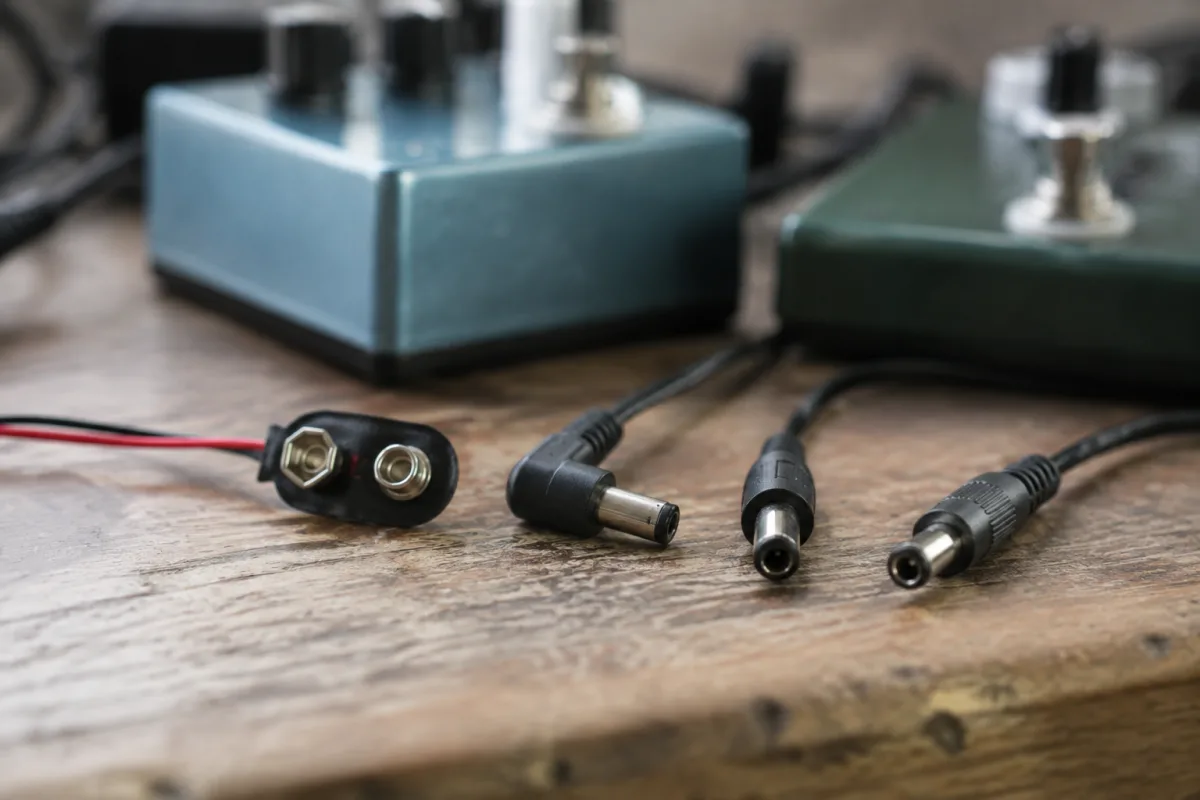
When it comes to powering your guitar pedals, amplifier effects, or other music equipment, choosing the right 9V battery cable is more crucial than most players realise. The seemingly simple question of "which 9V battery cable should I buy?" actually involves several important considerations—from connector types and cable quality to noise shielding and durability. This guide cuts through the confusion and equips you with the knowledge to select the perfect 9V battery cable for your setup, avoiding costly mistakes and ensuring reliable power delivery to your gear.
Understanding 9V Battery Cable Connector Types
The first decision when purchasing a 9V battery cable is understanding the connector standards. Not all 9V battery cable designs are identical, and using the wrong connector can damage your equipment or leave you unable to power your devices.
- Barrel Connectors (5.5mm x 2.1mm): The most common standard for guitar pedals and compact effects, the 9V battery cable with a 5.5mm outer diameter and 2.1mm inner pin fits the majority of modern pedals. When shopping for a 9V battery cable, verify that this is the standard size for your equipment before purchasing.
- Reverse Polarity (EIAJ): Some manufacturers use a reverse polarity 9V battery cable, where the inner conductor is negative instead of positive. Always verify your equipment's polarity requirements—using the wrong 9V battery cable polarity will instantly damage sensitive electronics.
- USB-C and Micro-USB Options: Modern 9V battery cable designs increasingly feature USB-C connectors, offering compatibility with contemporary devices and eliminating the need for separate charging cables. A 9V battery cable with USB-C is worth considering if your equipment supports it.
- Multiple Output 9V Battery Cable: Some professional setups benefit from a 9V battery cable with multiple outputs, allowing simultaneous powering of several devices. Select a 9V battery cable with multiple outputs if centralised power distribution aligns with your setup.
Cable Quality Markers: What Separates Good from Poor 9V Battery Cable
Beyond the connector, the actual 9V battery cable construction significantly impacts performance and longevity. When evaluating cable quality, pay attention to these factors:
- Gauge (AWG): A 9V battery cable with thicker gauge (lower AWG number) provides less voltage drop and better current delivery. Look for 18 AWG or lower (thicker) in your 9V battery cable for optimal performance, especially if powering multiple pedals simultaneously.
- Shielding: Quality 9V battery cable includes shielding to prevent electromagnetic interference and ground loops that cause buzzing and hum. A screened 9V battery cable with proper shielding maintains clean signal integrity even in electrically noisy environments.
- Connectors: The quality of the actual connector on your 9V battery cable matters immensely. Gold-plated connectors resist oxidation and maintain solid contact. Premium 9V battery cable manufacturers use nickel-plated or gold-plated connectors that last longer and perform better than bare metal alternatives.
- Cable Jacket Material: Your 9V battery cable's outer covering should be robust. PVC or polychloroprene jackets on quality 9V battery cable resist kinking, cracking, and UV damage better than cheap alternatives that degrade after months of use.
- Strain Relief: Look for reinforced strain relief at both ends of your 9V battery cable. This prevents the cable from breaking at the connector—one of the most common failure points in budget 9V battery cable designs.
Specifications to Check Before Buying Your 9V Battery Cable
Before committing to purchase, verify these specifications for your specific 9V battery cable needs:
| Specification | What to Look For | Why It Matters |
|---|---|---|
| Polarity | Check your equipment manual; match your 9V battery cable to the required polarity (centre positive or centre negative) | Wrong polarity will damage equipment instantly; this is the most critical specification when selecting a 9V battery cable |
| Connector Type | Verify the 9V battery cable connector fits your equipment's socket exactly | Forcing an incompatible 9V battery cable connector can damage both the cable and your device |
| Cable Length | Choose your 9V battery cable length based on your pedalboard layout; common lengths are 1.5m to 3m | Too short and your 9V battery cable won't reach your power source; too long adds clutter and voltage drop |
| Current Rating | Your 9V battery cable should support at least 500mA for individual pedals; multi-output 9V battery cable should support 2A or higher | Insufficient current in your 9V battery cable causes voltage sag and inconsistent pedal operation |
| Shielding | Shielded 9V battery cable is preferable to unshielded for noise-sensitive applications | Unshielded 9V battery cable can introduce hum and interference into your signal chain |
Common Buying Mistakes When Selecting a 9V Battery Cable
Learning from others' errors will save you both money and frustration. Here are frequent pitfalls when choosing a 9V battery cable:
- Ignoring Polarity Requirements: This cannot be overstated—verify your 9V battery cable polarity matches your equipment. One moment of carelessness with the wrong 9V battery cable polarity destroys gear instantly.
- Choosing Based on Price Alone: The cheapest 9V battery cable often becomes the most expensive when it fails after weeks of use or damages your equipment. Spend the extra few pounds on quality 9V battery cable from reputable manufacturers.
- Not Accounting for Setup Growth: If you're expanding your pedalboard, consider purchasing multi-output 9V battery cable or longer cables for future flexibility rather than buying minimal 9V battery cable solutions repeatedly.
- Overlooking Connector Quality: A loose connection from a poor-quality 9V battery cable connector causes more problems than a failed cable itself. Inspect connector build before purchasing your 9V battery cable.
- Assuming All Barrel Connectors Are Universal: Even standard 5.5mm connectors can have variations. Always physically verify your 9V battery cable connector fits snugly before final purchase.
Price Tiers and What to Expect from Each 9V Battery Cable Category
Understanding price segmentation helps you make informed decisions about your 9V battery cable investment:
- Budget 9V Battery Cable (£2-5): Basic unshielded cables with minimal strain relief. Suitable only for low-noise, stationary setups. Most budget 9V battery cable fails within 6-12 months.
- Mid-Range 9V Battery Cable (£6-15): Shielded cable with decent connectors and strain relief. This category offers the best value for most users. A mid-range 9V battery cable typically lasts 2-3 years with regular use.
- Premium 9V Battery Cable (£16-30): Professional-grade construction, often braided or double-shielded, with gold-plated connectors. Premium 9V battery cable is built for demanding touring musicians and studio use, with expected lifespan of 5+ years.
- Professional Multi-Output 9V Battery Cable (£30-80): Complex systems with multiple isolated outputs, surge protection, and professional-grade shielding. This type of 9V battery cable suits complex pedalboards and recording studios.
Brand Reputation and Warranty Considerations
When purchasing your 9V battery cable, manufacturer reputation matters. Established brands with strong track records typically offer better quality control and superior 9V battery cable designs. Check whether your 9V battery cable includes a warranty—quality manufacturers back their products with 1-2 year warranties, whilst budget 9V battery cable often offers no warranty whatsoever. Reading customer reviews specifically about 9V battery cable durability and connector reliability provides valuable insight before purchasing.
For additional technical information about powering guitar equipment, our complete guide to 9V battery cables explores construction methods, historical development, and advanced selection criteria.
Selecting the right 9V battery cable might seem straightforward, but attention to specifications, quality markers, and your specific equipment requirements prevents costly mistakes and ensures your gear runs reliably for years. Invest in a quality 9V battery cable from a reputable manufacturer, verify your polarity and connector type, and you'll have a power solution that supports your music for the long term. The small additional cost of choosing a quality 9V battery cable is money well spent.


Comments