


Fender Squier Acoustic Guitar Buying guide
Fender Squier Acoustic Guitar: A Complete Buyer's Guide
Shopping for a Fender Squier acoustic guitar? This guide covers model lines, construction quality, price ranges, and what to check when testing instruments.
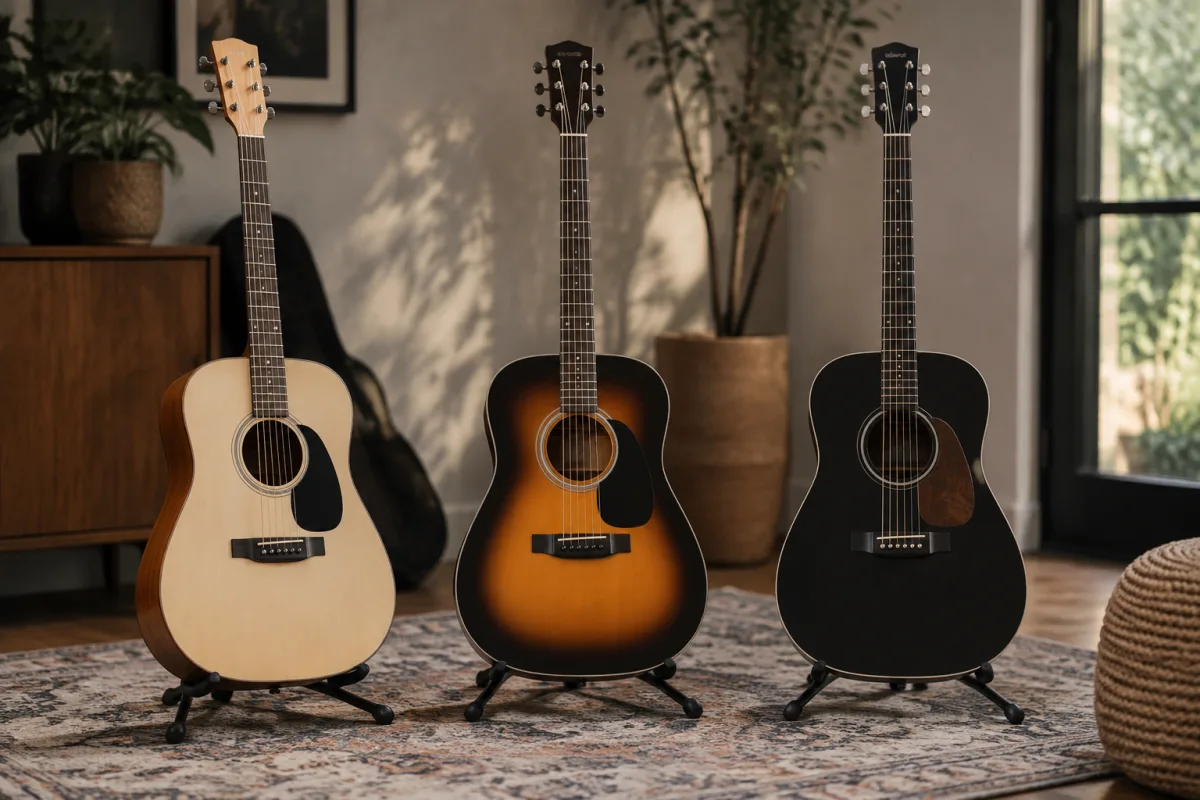
Choosing a Fender Squier acoustic guitar represents a significant decision—you're investing money and time in an instrument that will shape your musical journey. This guide helps you navigate the Fender Squier acoustic guitar range, understand what differentiates models, and make a purchase you'll genuinely enjoy. Whether you're a complete beginner or returning to guitar after years away, these practical considerations ensure you invest wisely.
Understanding Fender Squier Acoustic Guitar Model Lines
Fender Squier acoustic guitar models divide into several product lines, each serving different player levels and budgets. The Starter Pack line bundles a Fender Squier acoustic guitar with accessories at accessible prices (£150-250). These guitars sound reasonable and remain playable, though build quality is basic. The Dreadnought series offers full-size Fender Squier acoustic guitars with traditional Western guitar appearance and warm tone. The Parlor series features smaller body sizes, ideal for players with smaller hands or seeking more portable instruments. The Concert series fills a middle ground with moderate body size.
Understanding which line matches your needs prevents purchasing a Fender Squier acoustic guitar that doesn't fit your intentions. A touring musician requiring portable instruments needs different specifications than a bedroom player prioritising maximum volume and tone.
Key Specifications When Buying a Fender Squier Acoustic Guitar
Several specifications matter when evaluating Fender Squier acoustic guitar models. Body size affects tone, volume, and playability. Full-size dreadnoughts produce the loudest, most resonant tone; smaller concert or parlor models sound warmer and suit portable playing. Body material influences tone durability. Fender Squier acoustic guitars typically use spruce or other softwood tops (which sound brighter) paired with mahogany or similar tonewood sides and backs (which add warmth).
Neck width at the nut (the plastic piece holding strings at the headstock) varies slightly across Fender Squier acoustic guitar models. Wider necks suit players with larger hands; narrower necks favour smaller hands or faster players. Check this specification against your hand size—an uncomfortable neck width hinders progress. Fretboard material (usually rosewood or mahogany) matters less for sound than for durability. Action (string height above the fretboard) significantly affects playability—examine this during trials.
Price Tiers: What Different Budgets Provide
Fender Squier acoustic guitar pricing divides clearly by model line and construction quality:
- Budget range (£100-250): Starter packs and basic models, plywood bodies, simpler hardware. Adequate for beginners testing whether guitar appeals to you, but durability is limited and tone development is constrained.
- Mid-range (£250-500): Better construction quality, laminate or solid wood tops, improved hardware, better tone projection. Sweet spot for most players—solid instruments that rewards practice and sounds genuinely good.
- Premium range (£500+): Solid wood throughout, superior hardware, professional-grade construction, superior tone and playability. For serious musicians or those with specific tonal preferences.
Don't assume more expensive Fender Squier acoustic guitars are objectively superior. A £300 model often satisfies most players better than a £600 instrument designed for different purposes. Buy at the price point where build quality meets your actual needs.
Body Shape and Acoustic Tone Characteristics
Fender Squier acoustic guitar body shapes directly affect tone and volume. Dreadnoughts (full-size with straight waist) project maximum volume with bright, punchy tone—excellent for fingerstyle and strumming. Concert models (smaller with rounded waist) produce warmer, more intimate tone with less volume—perfect for bedroom playing and delicate fingerstyle. Parlor models (smallest) deliver focused mids with reduced bass—excellent for portable practice and finger-friendly playing.
Tone preference varies by playing style. Folk and country players prefer dreadnought brightness; classical and jazz players often prefer concert warmth. Your musical taste guides the right body shape. If unsure, try playing similar body shapes at shops before purchasing a Fender Squier acoustic guitar.
Woods and Construction Quality
Fender Squier acoustic guitar construction quality varies considerably across price points. Budget models use plywood (layered wood) throughout, which sounds flat and doesn't improve over time. Mid-range models use plywood sides and back with solid wood tops, offering better tone projection and improvement with age. Premium models use solid wood throughout, producing superior tone that genuinely improves as wood seasons.
Spruce tops (common on Fender Squier acoustic guitars) produce bright tone and age beautifully. Mahogany tops produce warmer tone immediately but age less dramatically. Both are legitimate choices—your preference determines which sounds better to your ears. Budget models use cheaper wood or plywood that lacks tonal development.
Hardware and Electronics Considerations
Fender Squier acoustic guitar hardware includes tuning machines, bridge hardware, and sometimes electronics. Better tuning machines hold tuning more reliably—important for practice sessions where frequent retuning disrupts learning. Bridge quality affects string vibration transfer. Cheap bridges dampen resonance; quality bridges let the body resonate fully.
Some Fender Squier acoustic guitars include built-in electronics (pickup systems) for amplification through speakers or amplifiers. These cost extra but enable performance venue usage. Evaluate whether you need amplification—bedroom players rarely do; performers absolutely do. Don't pay for features you won't use.
New vs Used Fender Squier Acoustic Guitar: Making Your Choice
Fender Squier acoustic guitars hold value reasonably well, making used purchases sensible. You can often save 30-40% buying used, which is substantial for starter instruments. However, inspect used models carefully. Play the instrument extensively—listen for buzzing frets, loose hardware, or tuning machine wear. Check the body for cracks or major damage. A well-maintained used Fender Squier acoustic guitar often outperforms a new cheaper model.
New Fender Squier acoustic guitars come with warranty protection, typically 1-2 years depending on the model. This matters if you're uncertain about quality—warranty coverage provides recourse if problems emerge. Reputable retailers offer return periods (often 14 days), letting you test a Fender Squier acoustic guitar in your own home environment.
Playability and Comfort: Testing Before Buying
A Fender Squier acoustic guitar might be beautifully constructed but uncomfortable for your specific hands and playing style. Try multiple models before purchasing. Sit down and play each one for 5-10 minutes. How does the neck width feel? Does the body shape suit your posture? Does the action (string height) require excessive finger pressure? Can you comfortably reach the frets? These physical details matter more than specifications.
Pay attention to your emotional response. Does the instrument excite you? Playing an instrument you find beautiful encourages practice. Conversely, an objectively fine instrument that doesn't inspire you creates resistance to practice. Trust your instincts—a Fender Squier acoustic guitar that feels right often is right.
Common Pitfalls When Buying a Fender Squier Acoustic Guitar
Experienced players identify predictable mistakes. First, buying based on appearance rather than playability. A gorgeous Fender Squier acoustic guitar that feels uncomfortable hinders progress. Second, ignoring string action—high action creates finger pain; low action creates buzz. Third, not trying before buying. Fourth, buying excessive features you don't need, inflating cost unnecessarily. Fifth, underestimating the importance of an initial professional setup—a £30-50 professional adjustment transforms playability.
Making Your Final Decision
Create a shortlist of 2-3 Fender Squier acoustic guitar models within your budget. Visit shops and play each one thoroughly. Ask salespeople about playability differences and ask to feel the difference between action heights. Watch YouTube videos of your shortlisted models being played. Read owner reviews from actual players, discounting fanboys and haters.
Consider total cost of ownership: the guitar itself, a case for protection, strings, and a professional setup (typically £30-50). Budget-conscious players who spend an extra £50 on professional setup often regret not doing it later. For comprehensive information about Fender Squier acoustic guitar models and specifications, detailed product comparisons exist to help you understand differences between specific models.
Your Fender Squier acoustic guitar purchase shapes your learning experience more than any other gear decision. Invest time understanding what you actually want, trial models thoroughly, and you'll buy an instrument that encourages practice rather than resisting it. Budget consciousness matters, but never at the cost of playability or build quality. A slightly more expensive Fender Squier acoustic guitar that feels wonderful transforms your musical journey versus a cheaper model that fights you constantly.


Comments