
Childs Acoustic Guitar article
The Complete Guide to Childs Acoustic Guitar
A child's acoustic guitar should match developing body size and provide quality sound to motivate practice and accelerate musical learning.
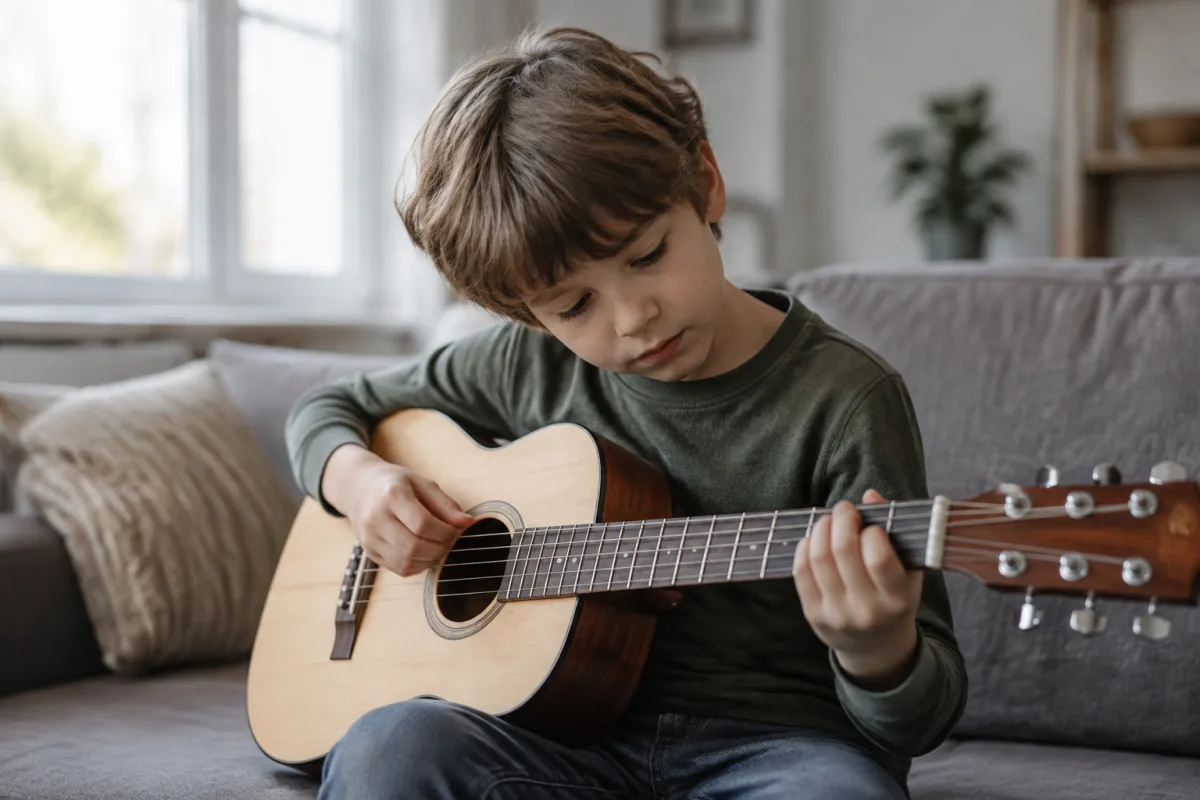
A child's acoustic guitar introduces young musicians to instrumental learning with appropriately-sized instruments designed for developing hands. Choosing the right child's acoustic guitar significantly impacts learning motivation, comfort, and long-term musical development. Quality matters at every price point when selecting a child's acoustic guitar for your young musician.
Why Size Matters for a Child's Acoustic Guitar
A child's acoustic guitar must match body size to developing physiques. Standard adult guitars overwhelm young learners, causing frustration and discouraging continued practice. A properly-sized child's acoustic guitar allows comfortable hand positioning, easier fretting, and more enjoyable playing experience. This physical comfort translates directly into motivation—children who find their child's acoustic guitar comfortable practise significantly more than those struggling with oversized instruments.
Child's Acoustic Guitar Sizes
| Size | Age Range | Body Length |
|---|---|---|
| 1/4 | 4-6 years | Approximately 48cm |
| 1/2 | 6-9 years | Approximately 53cm |
| 3/4 | 9-12 years | Approximately 58cm |
| 7/8 | 12-14 years | Approximately 62cm |
| Full size | 14+ years | Approximately 65cm+ |
Quality Considerations for a Child's Acoustic Guitar
Budget-conscious parents sometimes purchase cheap instruments thinking their child might not persist with music. However, a poor-quality child's acoustic guitar actually discourages continued learning—cheap guitars sound terrible, resist tuning, and hurt fingers to play. Investing in a decent entry-level child's acoustic guitar costs marginally more but dramatically improves the learning experience. A child's acoustic guitar costing £80-150 provides dramatically superior sound and playability compared to budget models under £50.
Quality child's acoustic guitar construction includes solid wood tops and proper hardware. Budget alternatives use plywood and cheap tuning pegs that won't stay tuned. When your child practises on a child's acoustic guitar with sound quality and stability, they develop ear training and musical skill faster than struggling with an inferior instrument.
Features to Look For in a Child's Acoustic Guitar
- Lightweight construction: A child's acoustic guitar should weigh sufficiently to produce good tone yet remain manageable for young arms.
- Proper neck thickness: Child's acoustic guitar necks must be slimmer than adult versions to accommodate developing hand size.
- Quality tuning pegs: Stable tuning machines on a child's acoustic guitar mean less frustration during practice.
- Proper action height: Strings should sit at appropriate height on a child's acoustic guitar, minimising finger discomfort during learning.
- Comfortable body contours: Well-designed child's acoustic guitar bodies support arms comfortably during extended playing sessions.
Acoustic Guitar Lessons Alongside Your Child's Acoustic Guitar
Providing a child's acoustic guitar without formal instruction rarely produces sustained learning. Professional lessons teach proper technique, preventing bad habits that become difficult to break later. A child's acoustic guitar and consistent lessons together create optimal learning conditions. Even casual weekly lessons make tremendous difference in skill development and confidence building.
Maintenance of a Child's Acoustic Guitar
Teaching children proper care of their child's acoustic guitar builds responsibility and extends instrument lifespan. Store the child's acoustic guitar in a protective case away from extreme temperature and humidity variations. Wipe down your child's acoustic guitar after playing to remove dirt and sweat. Change strings when they become dull or break during practice.
Transitioning From Child's Acoustic Guitar to Full Size
Most children transition to full-size guitars around age 12-14. Rather than viewing the child's acoustic guitar as temporary, recognise it as an essential developmental tool. The skills your child masters on their appropriately-sized child's acoustic guitar transfer perfectly to larger instruments. Many players maintain affection for their first child's acoustic guitar throughout life.
Budget-Friendly Child's Acoustic Guitar Options
Quality child's acoustic guitar options exist at every price point. Entry-level student models (£60-120) provide excellent value. Mid-range child's acoustic guitar options (£120-250) offer noticeably superior sound and playability. Premium children's instruments (£250+) rival many adult-level guitars. Most families find excellent value in the £100-150 range for a child's acoustic guitar balancing quality and affordability.
Conclusion
Selecting an appropriate child's acoustic guitar represents one of the most important decisions influencing your young musician's learning journey. A properly-sized, quality child's acoustic guitar with sound tone and stable tuning motivates practice and accelerates skill development. Whether your child becomes a lifelong musician or explores music casually, investing in a respectable child's acoustic guitar demonstrates commitment to their musical education and provides years of enjoyment and learning.



Comments