
Acoustic Guitar Hardware article
The Complete Guide to Acoustic Guitar Hardware
Every acoustic guitar depends on quality hardware. Discover what makes bridge pins, tuning machines and other components crucial to your instrument's sound and longevity.
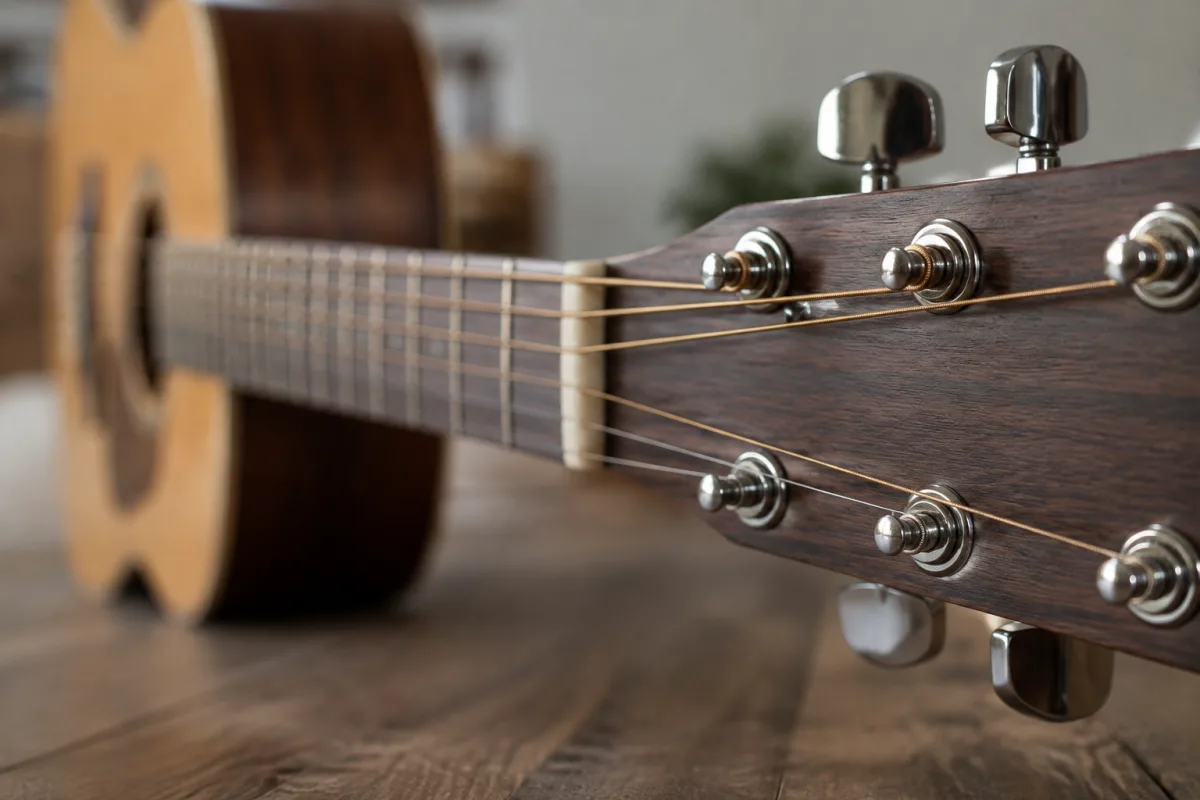
Acoustic guitar hardware forms the backbone of your instrument's playability, sound quality and longevity. From the tuning pegs that keep your strings in tune to the bridge that transfers string vibration to the soundboard, each component plays a vital role. Understanding what makes good acoustic guitar hardware and how to maintain it can transform your playing experience and help you get more out of your guitar, whether you're a beginner picking up your first instrument or an experienced player maintaining a treasured piece.
Understanding Bridge Pins and the Bridge Assembly
The bridge is perhaps the most crucial piece of acoustic guitar hardware, sitting at the lower bout where the strings anchor to the soundboard. The bridge pins—those small cylindrical pegs made from wood, plastic, bone, or ebony—hold the strings in place at the bridge.
Quality bridge pins make a surprising difference. Bone pins, typically more expensive, transmit string vibrations more efficiently than plastic, resulting in improved sustain and tonal clarity. Ebony pins offer similar acoustic benefits with an attractive appearance. When replacing worn bridge pins, match the material and fit carefully; a pin that's too tight can damage the bridge, while one too loose will allow strings to slip.
The bridge itself requires attention too. Acoustic guitar bridges are glued to the soundboard, and over years of string tension, they can warp or crack. Regular inspections help catch problems early. Some players use a capo—a clamping device placed across the fretboard—to reduce string tension whilst making repairs or storing the guitar for extended periods.
Tuning Pegs and Machine Heads
Tuning pegs—the mechanical devices at the headstock that wind and unwind the strings—are where most players interact with their hardware daily. Acoustic guitars typically feature sealed or slotted tuning machines.
Sealed tuning pegs are enclosed in a plastic or metal casing that prevents dust and moisture from entering the gears, making them more reliable and weather-resistant. They generally hold tuning stability better, especially valuable for players in humid or dusty environments. Slotted tuning pegs are more traditional and lighter, appealing to vintage enthusiasts, though they require occasional maintenance.
Look for tuning pegs with a low gear ratio—something like 14:1 or 16:1—which means finer control over tuning adjustments. Worn tuning pegs will slip or feel grinding; replacement machines are readily available and relatively inexpensive to install, making this a practical upgrade for older guitars.
Nuts and Saddles: The String Path
The nut—the small piece at the headstock end of the fretboard—and the saddle at the bridge work together to define the strings' path across the guitar. Both are traditionally made from bone, though plastic nuts are common on budget instruments.
A bone nut offers superior sustain and tonal clarity compared to plastic, as it transmits vibrations more completely to the headstock. The nut's slots must be cut precisely; if they're too tight, strings bind and tuning becomes difficult; too loose, and the strings rattle or slip. A properly cut nut requires the skills of a qualified luthier.
The saddle works similarly at the bridge end, bearing the full downward force of the strings. A compensated saddle—shaped to account for the fretboard's radius—ensures consistent intonation across all strings. Like the nut, bone saddles outperform plastic, and proper replacement demands expert work to ensure accurate measurements and fitting.
Frets, Fretboard and Machine Hardware
Whilst less commonly thought of as "hardware," frets and the hardware that holds them deserve mention. Frets are thin metal strips embedded into the fretboard, and they wear with use. Professional fret dressing—levelling and re-crowning frets—maintains playability without requiring fret replacement unless severely worn.
The fretboard itself, typically rosewood or Indian rosewood on quality instruments, benefits from regular oiling. A fretboard conditioner applied every few months prevents drying and cracking, especially important in cold, dry climates. This simple maintenance extends the life of your instrument significantly.
Strap Buttons and Hardware Durability
Small hardware like strap buttons shouldn't be overlooked. A quality strap button is properly seated and won't pull free during vigorous playing. Worn or loose buttons can lead to dropped guitars, a hazard both for your safety and your instrument's soundboard.
Stainless steel hardware resists corrosion better than regular steel, particularly important if you play outdoors or in humid environments. Check all visible hardware periodically—tuning peg bushings, strap buttons, and any internal bracing hardware visible through the soundhole—and tighten anything loose.
Maintenance and Longevity
Proper maintenance keeps acoustic guitar hardware functioning optimally. Store your guitar in a stable environment with moderate humidity; extreme dryness can shrink the wood and stress all hardware, whilst excessive moisture promotes rust and mould.
After playing, wipe down the strings and body to prevent corrosion. If strings feel sluggish or dull, new strings cost little and restore brightness immediately. When hardware does wear—and it will over years of playing—don't hesitate to upgrade. Professional installation ensures everything functions correctly and sounds its best.
Understanding and maintaining acoustic guitar hardware ensures your instrument stays playable, sounds great and lasts for decades. Whether you're performing, recording or simply playing for pleasure, quality hardware is an investment in your musical future.


Comments