
Acoustic Guitar and Stand article
The Complete Guide to Acoustic Guitar And Stand
A quality acoustic guitar stand protects your instrument whilst keeping it accessible during practice. Learn which stand type suits your setup and playing style.
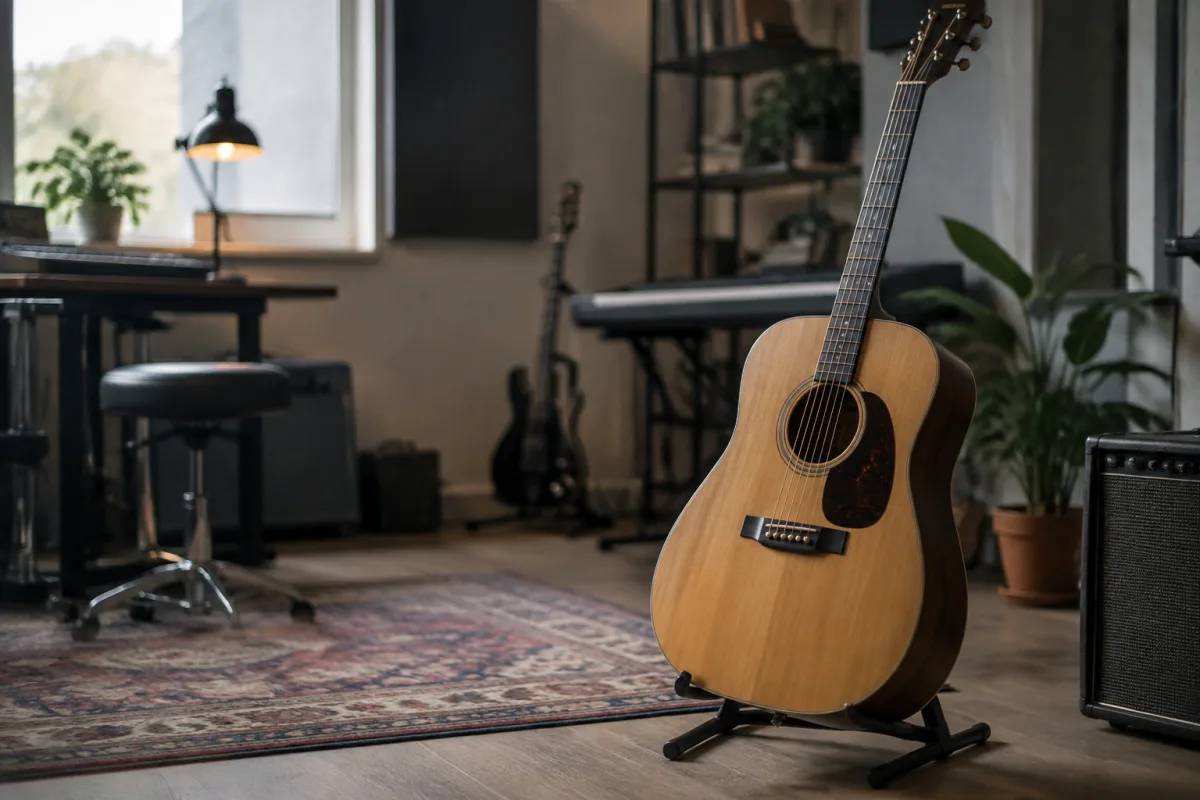
Acoustic Guitar and Stand: Setting Up Your Workspace
An acoustic guitar deserves a proper stand. Whether you're a casual player leaving your instrument within arm's reach or a serious musician organizing a home studio, choosing the right stand and positioning makes a genuine difference to your playing experience and the guitar's longevity.
Why Your Acoustic Guitar Needs a Stand
Leaning your acoustic guitar against furniture or walls risks damage to the finish, headstock, and body. An acoustic guitar stand protects your investment whilst keeping your instrument accessible during practice sessions. Beyond protection, using an acoustic guitar stand encourages regular playing — instruments you see daily get played more often than those stored in cases.
Professional musicians and recording studios always use dedicated acoustic guitar stands during active work. The right acoustic guitar stand allows quick repositioning for different playing positions, easy access to the headstock for tuning adjustments, and protection from accidental knocks and falls.
Types of Acoustic Guitar Stands
The A-frame acoustic guitar stand represents the classic choice. This simple, stable design positions the guitar at a slight angle, providing excellent support whilst keeping the body and neck fully visible. Most A-frame acoustic guitar stands fold compactly for storage or transport, making them ideal for gigging musicians.
The tripod acoustic guitar stand offers a more compact footprint than A-frame designs. This style of acoustic guitar stand works particularly well in smaller spaces or corners, providing stable support whilst taking up minimal floor space. Many players appreciate tripod acoustic guitar stands for practice areas or bedroom studios.
Wall-mounted stands provide elegant storage solutions for guitars displayed as décor. These options free up floor space and showcase your instrument beautifully, though they're less practical for frequent playing. Ensure any wall mount uses proper installation and quality hardware to safely support your guitar's weight.
Hangers and wall hangers position guitars vertically, ideal for display purposes. These space-saving solutions work best for guitars you're not actively playing daily.
Essential Stand Features
Padding protects your guitar from the stand itself. Quality stands use rubber or foam padding on all contact surfaces—the neck cradle, body rest, and base feet. This padding prevents finish damage and provides stable grip regardless of your guitar's finish type.
Stability matters tremendously, particularly if you have curious pets or children. The stand's base should be wide enough to prevent tipping when you lean in to play. A wobbling stand creates an unsettling playing experience and threatens your instrument's safety.
Adjustability allows accommodation of different guitar sizes and shapes. Some stands feature adjustable neck support or body cradles, useful if you own multiple instruments or occasionally host other guitarists.
Portability becomes relevant if you gig frequently or move your stand between rooms. Lightweight stands are easier to transport, though the most durable options sometimes weigh more. Balance weight against durability when choosing an instrument you'll move regularly.
Workspace Setup and Positioning
Position your stand in a well-lit area where you can see your fretting hand and body clearly. Natural window light works beautifully for practice sessions, though a dedicated task light ensures consistent visibility regardless of time of day.
Keep your stand away from direct heat sources, radiators, and sunlight exposure over extended periods. These environmental factors cause wood stress and finish degradation, even though the guitar remains protected on a proper stand.
Proximity to your seating area matters greatly. Your stand should position the guitar within one step of your chair, allowing quick access without awkward reaching. Alternatively, some players keep the stand behind their chair for convenient grabbing during songwriting or practice breaks.
Consider cable management if you're amplifying your guitar. Quality stands allow room for microphone stands, audio cables, and other studio equipment without creating tangled mess or accidental disconnections.
Specific Stand Recommendations by Use Case
For bedroom and home practice, a simple A-frame stand offers excellent value and stability. Lightweight models are easily moved to different rooms when needed, and the compact storage footprint suits small spaces perfectly.
Recording studio and home studio setups benefit from dedicated instrument stands designed for professional environments. These often feature microphone compatibility and robust construction for intensive daily use.
Live gigging musicians need portable stands that transit easily and set up quickly during soundchecks. A-frame and tripod designs both work well for this application, with choice depending on your technical setup and stage space constraints.
Display and aesthetic purposes call for attractive wall-mounting solutions that showcase your guitar as furniture and décor. These should be installed professionally and only for guitars you're not regularly playing.
Maintenance and Care
Regular stand inspection prevents hidden problems. Check that padding remains intact, rubber feet haven't become slippery or damaged, and all support structures feel stable. Replace worn padding promptly—it's inexpensive and prevents finish damage.
Clean your stand monthly, removing dust and grime that accumulates on the contact surfaces. For rubber-padded stands, gentle cleaning with a damp cloth keeps padding supple and provides better grip.
Tighten any adjustable components periodically. Neck cradles, height adjusters, and other moving parts loosen gradually with regular use and temperature changes. A few twists with the appropriate tool keeps your stand secure and reliable.
Budget Considerations
Quality stands range from approximately £20 to £150 depending on features and materials. Entry-level stands provide basic protection and stability suitable for casual players. Mid-range options (£40–£80) offer better durability and features for serious hobbyists. Professional-grade stands exceed £100 and provide exceptional durability for touring musicians and studios.
Invest in a stand quality appropriate to your guitar's value. An expensive acoustic guitar deserves padding and stability protection that justifies modest stand investment. Budget guitars work fine with basic stands that still provide essential protection.
Final Considerations
Your acoustic guitar stand is a small purchase that yields outsized benefits. Quality stands protect your instrument, encourage regular playing, and organize your practice space professionally. Whether you're practising in your bedroom or maintaining a professional studio, the right stand transforms how you interact with your guitar daily.


Comments