


Guitar and Ukulele Stand article
Guitar And Ukulele Stand for Beginners: A Complete Guide
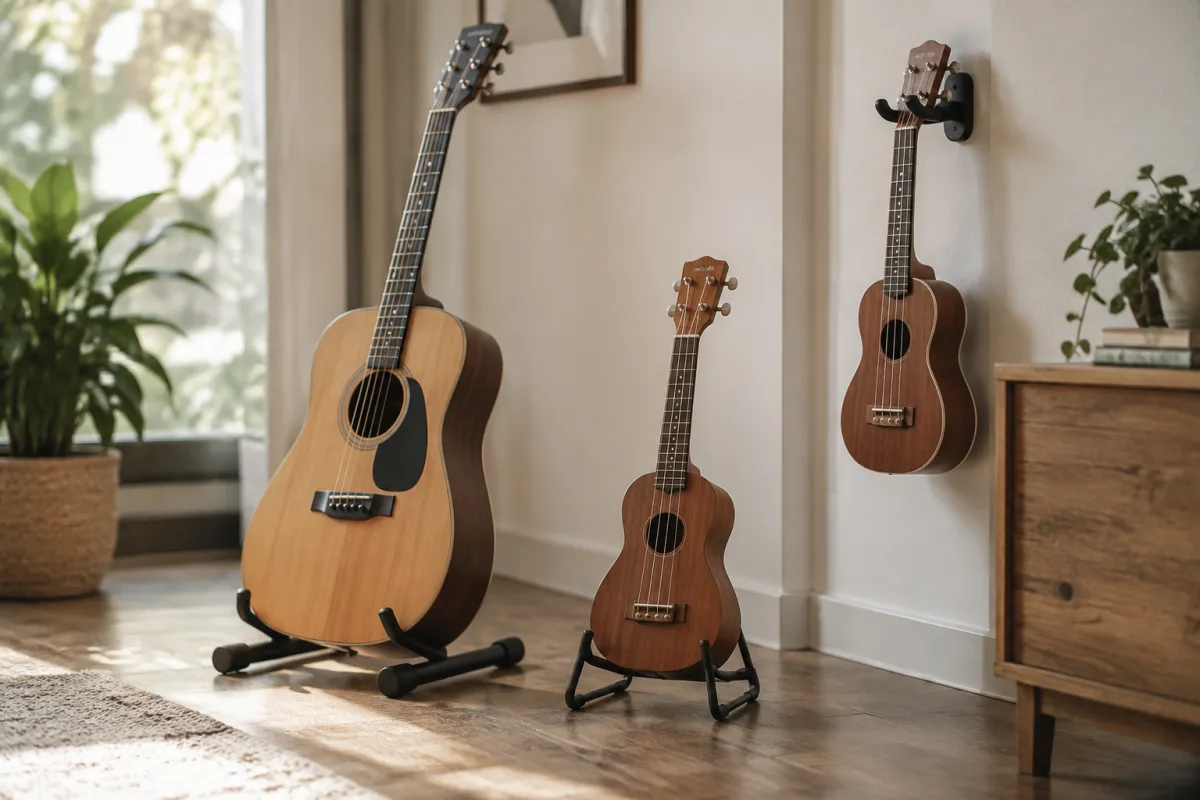
Your first guitar or ukulele feels precious, and the thought of setting it down somewhere safe between playing sessions probably worries you more than it should. A guitar and ukulele stand transforms that anxiety into confidence, providing secure, convenient storage that keeps your instrument safe and accessible. If you're new to instrumental musicianship, understanding stands might seem unnecessarily complicated—yet choosing the right guitar and ukulele stand is straightforward once you understand the basics. This guide addresses the nervous beginner's concerns, walking you through everything you need to know about selecting, using, and maintaining a stand that protects your instrument whilst making daily practice more convenient.
Why A Guitar And Ukulele Stand Matters More Than You Think
Leaning your guitar or ukulele against a wall seems harmless, but it creates unnecessary risk. Instruments can fall, get knocked over, or slide slowly across surfaces, causing dings, dents, or worse. A proper guitar and ukulele stand eliminates this worry entirely, providing stable support that keeps your instrument upright and secure. Beyond safety, a stand makes your instrument more accessible—it sits ready for quick practice sessions rather than requiring you to retrieve it from a case or closet.
Beginners often underestimate convenience benefits. Having your guitar and ukulele stand in a visible location encourages regular practice. You're more likely to grab quick five-minute sessions when your instrument sits right there waiting. This accumulated practice time genuinely improves your progress faster than sporadic longer sessions. A simple stand becomes an unexpected practice motivator, transforming your learning experience in subtle but meaningful ways.
Different Types Of Guitar And Ukulele Stands Explained
Several stand designs exist, each suited to different circumstances and preferences:
- A-frame stands: The most popular design, featuring two angled supports forming an A-shape. A-frame stands work for guitars and ukuleles, offering excellent stability and compact footprint. They're affordable and reliable, making them ideal for beginners.
- Tripod stands: Three-legged bases provide exceptional stability and adjustable height. Tripod stands work for multiple instrument sizes and suit performers who might need to access instruments quickly on stage.
- Wall-mounted stands: Hook-style mounts fastening directly to walls save floor space, perfect for bedrooms or small practice areas. They require wall installation and suit players who practice in fixed locations.
- Guitar hangers: Simple wall-mounted hooks designed specifically for guitar necks. These minimalist solutions save space but require confident instrument handling and secure wall installation.
- Multi-instrument stands: Some stands accommodate both guitars and ukuleles simultaneously, useful if you play both instruments regularly.
For beginners nervous about instrument safety, A-frame stands provide the best balance—stable, affordable, easy to use, and requiring no installation. They're genuinely worry-free, addressing the primary concern of nervous new players.
Essential Features For Beginner Safety And Comfort
When evaluating a guitar and ukulele stand, certain features matter significantly to anxious beginners:
Padded contact points: Cheap stands feature bare metal that can scratch instrument finishes. Padded or felt-covered contact points protect your instrument's appearance, eliminating cosmetic damage worries. This alone justifies modest price increases over bare-metal alternatives.
Stable base design: Wobbly stands cause anxiety about falling instruments. Weight, base width, and balance all affect stability. Test stands before committing—they shouldn't sway when gentle pressure is applied. Good stability eliminates constant worry about your instrument's security.
Appropriate neck support: The stand's neck-holding mechanism should support your instrument securely without excessive pressure. Guitar and ukulele neck geometries vary, so stands designed for your specific instrument work better than generic options.
Easy positioning: A stand should securely hold your instrument in a natural playing position without requiring gymnastics or excessive adjustments. You should place and retrieve your instrument smoothly without fussing with mechanisms.
Common Beginner Concerns Addressed
Will a stand damage my instrument's finish? Quality stands with proper padding pose virtually no risk. Cheap stands with bare metal contact points damage finishes over time. Invest slightly more in padded stands and eliminate this concern entirely.
How secure is my instrument on a stand? Properly designed stands hold instruments extremely securely. A-frame designs can't tip accidentally if positioned correctly. Standard usage poses no danger—stands only become problematic with intentional abuse or extremely poor design.
Will leaving my instrument on a stand warp the neck? No—a minute of standing between sessions causes no damage. Instruments can sit safely on stands for weeks. Neck warping comes from prolonged exposure to humidity extremes or forcing instruments into extreme positions, not normal stand usage.
Isn't a stand just unnecessary expense? Genuinely no. Insurance against accidental damage, convenience encouraging regular practice, and peace of mind justify modest cost. Most beginners wish they'd purchased stands earlier.
Choosing The Right Guitar And Ukulele Stand For Your Situation
Consider your living situation first. Bedroom practice? A compact A-frame stand fits anywhere without dominating space. Shared living space? Wall-mounted options keep instruments out of the way. Multiple practice locations? Lightweight stands transport easily. Your specific circumstances guide appropriate selection better than generic recommendations.
Think about what reassures you most. If stability concerns worry you, invest in sturdy tripod or heavy A-frame options. If aesthetics matter, look for attractive stands that fit your home decor. If space is limited, wall-mounted solutions work well. Honest self-assessment prevents purchasing stands that don't match your genuine needs.
Budget appropriately. Beginner-friendly A-frame stands cost £15-40 and provide years of reliable service. Spending more adds luxury features you might not need, spending less risks cheap stands that wobble or scratch instruments. Mid-range pricing usually indicates sensible value.
Installing And Using Your Stand Safely
A-frame stands require no installation—just unpack and use. Wall-mounted options need secure installation into wall studs or concrete. Take time with wall-mounted solutions; failed installation causes falling instruments and property damage. If you're uncertain about wall installation, ask someone experienced to help.
Place your stand on level flooring away from edges or areas where people might trip. A visible instrument location helps you remember it's there, preventing accidental collisions. Position your stand for comfortable instrument access without awkward reaching or bending.
Handle instruments confidently when placing or removing them from stands. Fumbling nervously increases dropping risk more than stands do. Practice smooth placement and retrieval until movements feel natural and confident. Your stand should build confidence, not undermine it.
Long-Term Care And Maintenance
Quality stands require minimal maintenance. Periodically wipe metal components with a dry cloth, removing dust and humidity residue. Check padding occasionally for wear, though quality stands maintain padding integrity for years. Inspect wall-mounted stands annually for secure fastening, ensuring mounting hardware hasn't loosened.
Position stands away from direct sunlight to prevent finish fading. Store stands indoors rather than humid garages if you don't use them regularly. These simple habits keep stands functional indefinitely without special equipment or expertise.
Building Confidence With Your Instrument
A guitar and ukulele stand represents your first step toward professional instrument handling. Rather than worrying about where to put your instrument safely, a stand removes that concern entirely. You can focus on playing rather than storage anxiety. This seemingly minor convenience actually improves your learning experience by eliminating unnecessary stress.
For comprehensive information about different stand styles, comparison details, and technical specifications, explore our complete guide to guitar and ukulele stands, which covers advanced considerations and detailed comparisons. For beginners focusing on basic safety and peace of mind, selecting a sturdy A-frame stand with good padding provides everything you need. Your instrument deserves proper care, and a stand makes providing that care simple and affordable.


Comments