
Kalimba Thumb Piano article
The Complete Guide to Kalimba Thumb Piano
The kalimba thumb piano is an accessible, portable African percussion instrument with warm, melodic tones—perfect for beginners and expressive in the hands of advanced musicians.
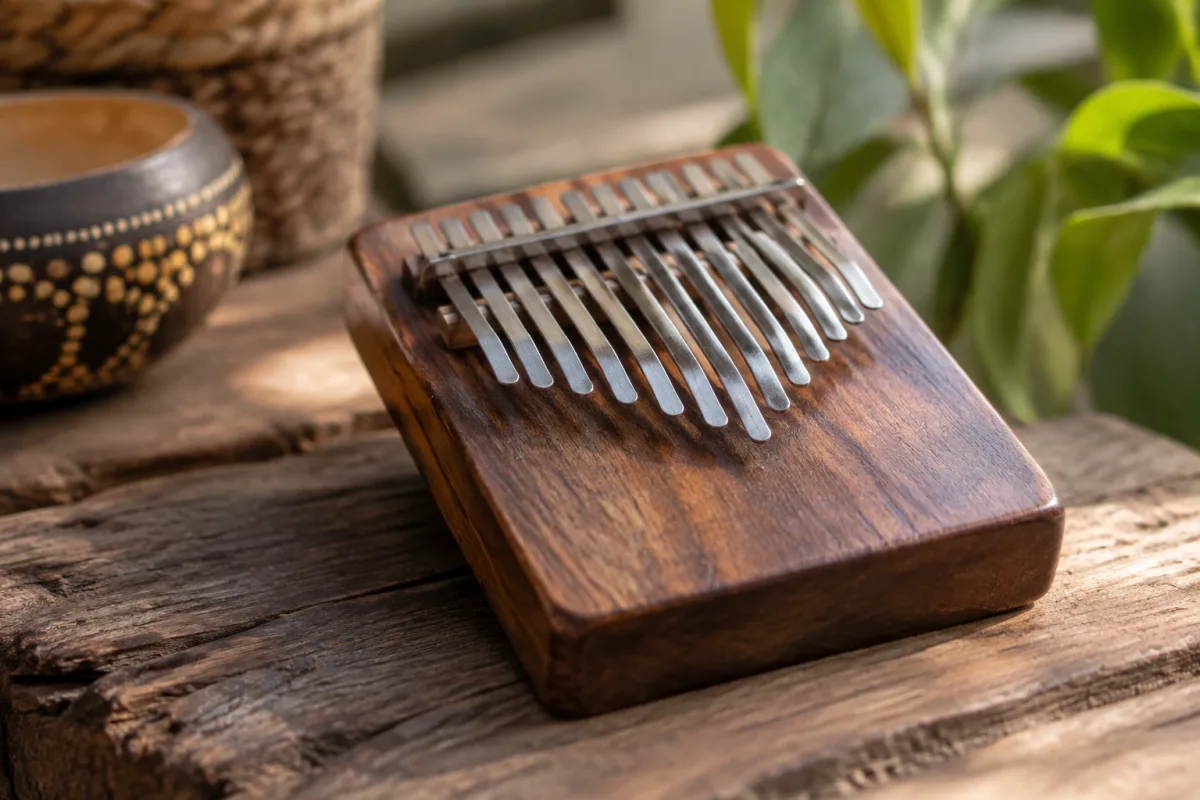
The kalimba, known in English as a thumb piano, is a captivating African percussion instrument that produces warm, melodic tones from a deceptively simple design. Originating from southern and central Africa, the kalimba thumb piano has enchanted musicians and listeners worldwide with its portable charm and meditative sound character. Unlike drums or horns, which demand physical strength and precise technique, the kalimba welcomes beginners and rewards casual exploration whilst offering sophisticated musicians profound expressive potential. The instrument's rise in popularity over the past decade reflects a global hunger for accessible, mindful musical experiences.
What Is a Kalimba Thumb Piano?
The kalimba thumb piano is a hand-held percussion instrument consisting of a wooden soundboard with metal tines—typically between 8 and 21 tines—tuned to specific pitches. The player holds the instrument in both hands and uses both thumbs to pluck the metal tines, producing mellow, bell-like tones. The soundboard is often mounted on a resonating chamber underneath, which amplifies and colours the vibrations, giving the kalimba thumb piano its characteristic warm, organic voice.
The term "kalimba" derives from the Bantu word for "little finger," reflecting how players traditionally played similar instruments. The English name "thumb piano" describes the playing technique precisely—a thumb-operated piano requiring no training or strength. Unlike a conventional piano, which demands proper posture and significant force, the kalimba invites relaxed, joyful playing from day one.
History and Cultural Significance
The kalimba's ancestors span centuries of African musical tradition. Early versions, known as "mbiras," appear in historical records from Zimbabwe and other southern African nations dating back hundreds of years. The modern kalimba thumb piano, with its standardised tuning and portable design, emerged in the 1960s when a Zimbabwean inventor named Hugh Tracey adapted traditional mbira designs to appeal to international audiences.
In African communities, the kalimba remains a culturally significant instrument used in ceremonies, celebrations and storytelling. Contemporary musicians across the globe have embraced the kalimba thumb piano, incorporating it into genres ranging from world music and classical compositions to electronic music and film scores. Its presence in streaming meditation apps and wellness studios speaks to the instrument's role in modern mindfulness culture.
How a Kalimba Thumb Piano Sounds
The kalimba thumb piano produces a sound that professional musicians describe as warm, mellow and inherently musical—each note rings with clarity and sustain. The tone sits somewhere between a music box, a steel drum and an acoustic guitar, with an ethereal quality that encourages contemplative listening. Because the sound emerges from the interplay between the metal tines and the wooden resonating chamber, each kalimba thumb piano sounds subtly unique—a characteristic that endears the instrument to players who develop deep attachments to their individual instruments.
The dynamic range of the kalimba is more nuanced than percussive. Soft playing produces gentle, whispering tones perfect for intimate settings, whilst stronger plucking generates brighter, more energetic sounds suitable for ensemble playing. A skilled kalimba player can express considerable emotion through dynamics and phrasing, making the instrument far more expressive than many beginners assume.
Kalimba Tine Count and Tuning Systems
Kalimba thumb pianos come in various configurations, most commonly 8, 10, 15, 17 or 21 tines. Beginner models often feature 8 or 10 tines, limiting the note range but making it immediately rewarding—virtually any finger movement produces pleasant-sounding results. Intermediate and advanced instruments typically have 15, 17 or 21 tines, expanding the playable range and allowing for more sophisticated compositions.
Most modern kalimba thumb pianos are tuned to a diatonic scale—the white keys of a piano—making them naturally suited to Western melodies. Some manufacturers offer pentatonic-tuned versions (five notes, like a blues scale), which encourage improvisational, non-goal-oriented playing. A few specialised instruments use fully chromatic tuning, offering every note available in Western music but requiring more advanced playing technique.
Playing Technique and Learning
The beauty of the kalimba thumb piano is its accessibility. A complete beginner can sit down, hold the instrument in their hands, and begin making music within minutes—no prior musical training required. The most basic playing technique involves alternating thumbs, plucking tines from outside to inside in a rhythmic pattern. Most introductory melodies follow a simple thumb-alternation pattern that feels natural almost immediately.
Learning progression is remarkably quick. Within a week of casual practice, a beginner can play simple, complete melodies. Within a month of regular playing, a motivated learner can tackle moderately complex pieces. Unlike piano or guitar, which demand months of frustrating finger-strength development before producing anything recognisable, the kalimba rewards effort almost instantly.
Intermediate techniques include using fingers in addition to thumbs, creating rhythmic patterns on multiple tines simultaneously, and developing fingering patterns that exploit the kalimba's tonal characteristics. Advanced players develop remarkable dexterity and expressive capability, bending notes with finger vibrato, creating harmonies through careful tine selection and dynamics, and combining multiple rhythmic layers.
Kalimba Quality Tiers and Materials
The kalimba thumb piano market spans from budget tourist instruments selling for £15–30 up to professional-grade handcrafted kalimbas costing £200–500 or more. Beginner kalimbas use lightweight woods, often with plastic or lower-grade metal tines. These instruments sound acceptable and serve introductory purposes adequately, though tones are typically thinner and less resonant than higher-quality instruments.
Mid-range kalimbas (£50–150) typically feature better-quality wood, precisely tuned steel tines and superior soundboards. These instruments produce noticeably warmer, clearer tones and maintain tuning stability through hours of playing. For someone committed to developing real skill, a mid-range kalimba thumb piano offers excellent value.
Professional kalimbas employ premium hardwoods—often African wenge or mahogany—handcrafted soundboards and meticulously tuned steel or even bronze tines. These instruments possess remarkable tonal depth and sustain, with each note ringing with complexity and resonance. A professional-grade kalimba thumb piano is a lifetime investment, capable of producing professional recordings and concert performances.
Kalimba Size and Portability
One of the kalimba's defining advantages is its compact, portable design. A standard 17-tine kalimba weighs approximately 500 grams and measures roughly 25 centimetres across. It fits easily into a backpack, gig bag or even a large coat pocket. This portability makes the kalimba ideal for travellers, buskers, meditation facilitators and anyone who wants access to music anywhere without burdening themselves with heavy equipment.
Smaller 8 or 10-tine models are even more diminutive—light enough for children to hold comfortably and portable enough for pocket carry. Larger professional instruments with 21 tines are still remarkably transportable compared to pianos, harps or even guitars.
Tuning, Maintenance and Care
A quality kalimba thumb piano holds its tuning remarkably well, sometimes for years with casual playing. When tuning does drift—typically from temperature changes, shipping or heavy use—adjusting tine length back to precise pitch requires a special tuning hammer (often supplied with the instrument). Most mid-range and professional kalimbas include a tuning hammer and instructions for basic maintenance.
Care is straightforward: keep the kalimba away from extreme heat, moisture and direct sunlight, which can warp the wooden soundboard. Occasional wiping with a soft cloth keeps the instrument clean. The metal tines rarely require maintenance beyond occasional gentle dusting. A well-maintained kalimba thumb piano will sound consistently for decades.
Kalimba in Modern Music
Contemporary musicians have embraced the kalimba as a bridge between acoustic and electronic music. Its warm, instantly recognisable tone has appeared in numerous film soundtracks, television scores, meditation recordings and music streaming playlists. Producers incorporate kalimba recordings into ambient, electronic and hip-hop productions, valuing its organic warmth against synthesised textures.
The kalimba thumb piano has also become associated with mindfulness and wellness culture. Meditation apps feature kalimba recordings, and wellness facilitators use the instrument in yoga classes and sound baths. This cultural positioning reflects a broader search for authentic, mechanical sound in an increasingly digital musical landscape.
Conclusion
The kalimba thumb piano stands as a testament to simplicity and musical beauty. Its accessible design welcomes complete beginners while offering sophisticated expressive potential to serious musicians. Portable, affordable and instantly rewarding, the kalimba invites anyone curious about music to explore their creativity without intimidation or years of technical study. Whether you're seeking a meditative practice, a portable musical companion or your entry point into active music-making, the kalimba thumb piano rewards your exploration with warmth, charm and genuine musical satisfaction.


Comments