
Harp String Instruments article
The Complete Guide to Harp String Instruments
Harp string instruments offer beautiful tones and surprising accessibility for beginners. Discover folk, concert, and orchestral harps—finding the perfect instrument for your musical goals.
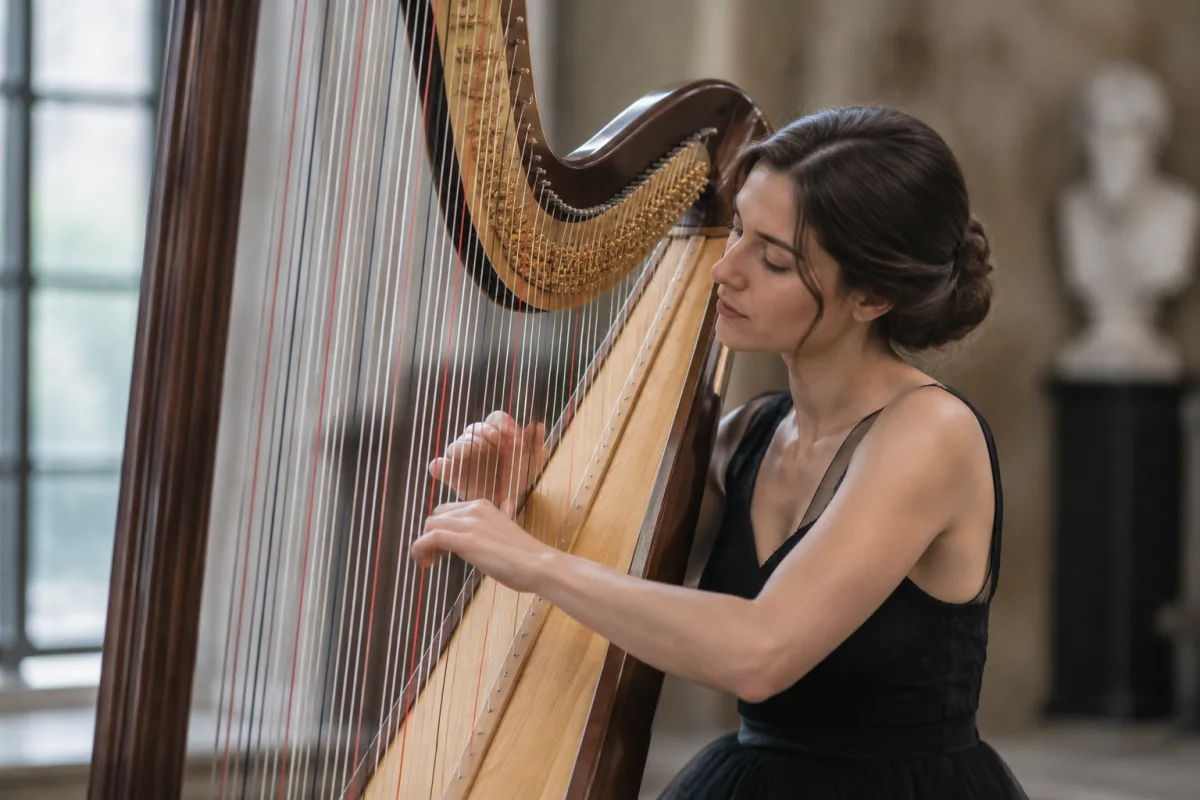
The harp, one of humanity's most ancient string instruments, continues captivating musicians and audiences with its ethereal, shimmering tones and elegant visual presence. Harp string instruments span an enormous range of sizes, tuning systems, and playing techniques, from small Celtic folk harps that individual musicians carry comfortably to concert grand orchestral instruments requiring substantial space and specialized technique. Whether you're attracted to the contemplative, meditative qualities of folk harps, the brilliant crystalline tones of concert instruments, or the innovative possibilities offered by modern electric harps, understanding harp string instruments—their construction, tuning systems, and playing methodologies—opens access to a rich musical tradition spanning millennia and cultures worldwide.
Understanding Harp String Instruments
Harp string instruments are defined by their distinctive frame construction, with numerous strings stretched between a soundboard and a bridge or tuning bar, played by plucking individual strings with the fingers or thumbs. Unlike guitars or lutes which employ fretboards allowing players to modify pitch through finger positioning, harp string instruments produce fixed pitches determined by string length, thickness, and tension—each string sounds a single predetermined note. This fundamental difference defines both the appeal and the challenge of harp string instruments: they offer immediate access to naturally pleasing harmonic tones without complex finger positioning techniques, yet require more strings to achieve chromatic versatility compared to fretted instruments.
The tonal characteristics of harp string instruments derive largely from their construction materials and size. Larger harp string instruments with longer strings produce fuller, warmer tones with greater sustain, whilst smaller models deliver brighter, more delicate sounds. The materials used—typically gut, nylon, or wire for strings, combined with wood for the frame and soundboard—significantly influence tone colour and projection. Quality harp string instruments employ resonant wood and carefully balanced construction producing tones sufficiently rich and projecting to perform acoustically in concert settings.
Major Types of Harp String Instruments
Pedal Orchestral Harps
The largest and most mechanically complex harp string instruments are orchestral pedal harps, featuring seven pedals enabling chromatic playing through mechanical systems altering string length and tension. These concert-grade instruments stand approximately 1.9 metres tall and produce brilliant, powerful tones suitable for concert halls and professional orchestral contexts. Pedal harp string instruments represent centuries of refinement, enabling sophisticated musical expression and rapid key changes through pedal manipulation. Due to their substantial size, weight, and cost, pedal harps remain specialist instruments for professional musicians.
Folk and Celtic Harps
Folk harp string instruments represent the most accessible entry point for aspiring harpists, typically featuring 22–36 strings tuned to a diatonic scale requiring no pedal mechanisms. These smaller, lighter instruments travel easily and produce lovely tones without professional concert hall requirements. Celtic and folk harp string instruments remain diatonic—playing in a single key per configuration—requiring manual retuning or lever adjustments to change keys. This simplicity makes folk harp string instruments genuinely manageable for beginners and recreational players while remaining capable of expressing genuine musicality and emotional depth through sensitive playing.
Concert Grand Harps
Larger than folk models but lacking the pedal mechanisms of orchestral instruments, concert grand harp string instruments offer substantial size and sound projection ideal for venues between intimate concert halls and major performing spaces. These typically feature 46–47 strings and weight management between folk and pedal designs, making them practical for professional travelling musicians unwilling to manage full orchestral instrument complexity. Concert harp string instruments deliver impressive tone quality and volume while remaining transportable compared to pedal instruments.
Lever Harps
Lever-action harp string instruments employ small mechanical cranks adjusting individual string tension, enabling key changes without complete retuning. These sit between simple diatonic folk harps and complex pedal orchestral models, offering flexibility approximating chromatic playing with considerably more simplicity and affordability than pedal harps. Lever harp string instruments attract intermediate players seeking expanded technical possibilities without committing to professional pedal mechanisms.
Essential Specifications and Features
| Specification | Considerations for Harp String Instruments |
|---|---|
| Number of Strings | Determines pitch range and playable note density; more strings provide greater octave span and chromatic flexibility |
| String Material | Gut, nylon, or wire strings influence tone character; wire produces brightness, gut warmth, nylon clarity |
| Soundboard Construction | Resonant wood selection and thickness dramatically influence projection and tonal richness of harp string instruments |
| Overall Size and Weight | Larger harps project better; weight affects portability for travelling musicians seeking practical harp string instruments |
| Tuning System | Diatonic (simple), lever-adjusted (flexible), or pedal-driven (complex but fully chromatic) |
Playing Technique and Learning
Harp string instruments prove remarkably accessible for beginners compared to many instruments requiring years developing finger strength and complex technique. Basic plucking technique—drawing fingers across strings to produce sound—develops naturally with guidance, and simple melodies become playable within hours of instruction. Unlike keyboards requiring two-handed independence across multiple octaves, harp string instruments engage both hands in complementary motion, making bilateral coordination development more intuitive. This accessibility makes harp string instruments genuinely attractive for adult learners and children approaching music study.
Advanced harp string instruments technique encompasses sophisticated approaches like glissandos (finger runs across multiple strings), ornamentations, and complex rhythmic patterns producing rich musical expression. Professional harpists develop considerable finger dexterity and strength, controlling dynamics and articulation with precision rivalling other classical instruments. The learning trajectory from beginner to professional competence spans years requiring consistent dedication, yet the instrument's accessibility at beginner levels makes this commitment genuinely approachable.
Musical Repertoire and Applications
Harp string instruments feature across numerous musical contexts. Classical orchestral repertoire incorporates harps in dramatic passages and elegant interludes; considerable solo concerto literature exists for pedal and concert harps. Traditional folk music—Celtic, Mediterranean, and world traditions—features harp string instruments as primary voices. Contemporary and popular music increasingly incorporates harps in recording studios and performances, from rock albums to film soundtracks. The instrument's tonal versatility and visual appeal make harp string instruments attractive across genres where their distinctive sound adds character and elegance.
Investment and Acquisition
Quality student-level folk harp string instruments range from approximately £400–1,000, providing adequate instruments for serious beginners. Intermediate concert harps cost £2,000–6,000; professional pedal orchestral harps exceed £15,000. Second-hand harp string instruments often represent excellent value, particularly for players uncertain about commitment levels. Rental options exist in areas with active music communities, allowing trial periods before purchase commitment. Regardless of investment level, quality harp string instruments prove remarkably durable—many instruments remain functional for decades with proper care.
Maintenance and Care
Harp string instruments require regular maintenance preserving functionality and tone quality. String replacement occurs periodically as strings wear and lose elasticity—typically every 1–3 years depending on usage. Environmental stability proves important; extreme temperature or humidity fluctuations cause wood movement affecting playability and structural integrity. Protecting harp string instruments from direct sunlight, maintaining stable room conditions, and performing routine cleaning extends instrument lifespan substantially. Professional maintenance and regulation services, available through specialist harp luthiers, keep instruments optimally adjusted.
Conclusion
Harp string instruments represent one of humanity's most enduring and beautiful instruments, accessible to beginners yet sophisticated enough to sustain lifelong musical exploration. Whether pursuing folk traditions, orchestral contexts, or contemporary applications, harp string instruments offer distinctive tonal character and immediate accessibility that few instruments match. The combination of manageable initial technique requirements, gorgeous natural tones, and rich musical traditions make harp string instruments genuinely worthy of serious musical consideration. For musicians seeking instruments that reward patient development whilst delivering immediate gratification through beautiful tones, harp string instruments offer a genuinely compelling path into rewarding musical expression.


Comments