


Metal Snare Drum article
Metal Snare Drum for Beginners: A Complete Guide
Metal snare drums produce impressive sounds immediately. We'll teach you proper technique, basic rudiments and how to build genuine drumming skills from the start.
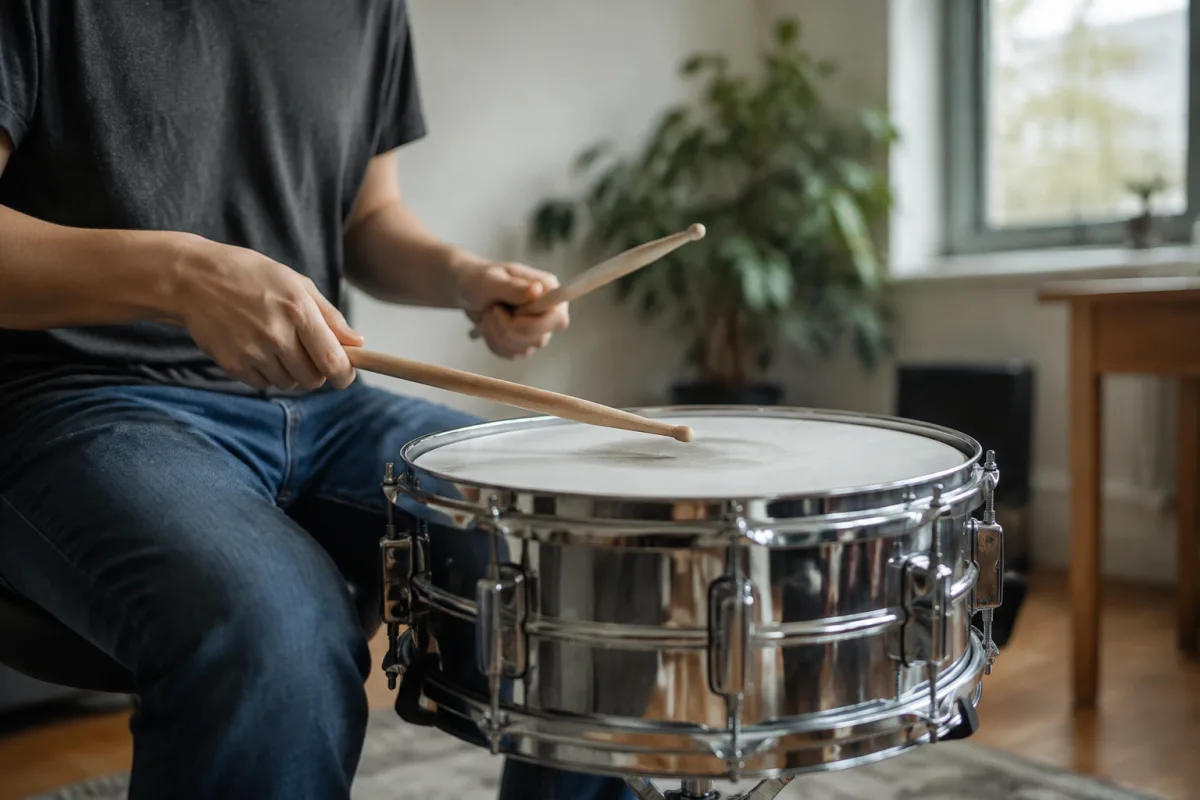
Learning to play metal snare drums is thrilling because they produce bright, cutting tones immediately. Don't worry if you're starting from zero – metal snares are genuinely forgiving instruments and you'll create impressive sounds in your first session. I'm going to walk you through the basics, show you the best beginner technique and help you avoid the common mistakes that trip up new players.
Understanding Metal Snare Drums
A metal snare drum is simply a drum with metal snares (thin wires) stretched underneath. When you strike the top head, the snares buzz against the bottom head, creating that distinctive cracking snare sound. Metal snares are often brass or steel, and the snares can be tightened or loosened to control the amount of buzz.
Metal snares produce bright, cutting tones that cut through musical mixes effortlessly. This is why they're genuinely popular for rock, jazz, funk and nearly every modern music style. The metal quality gives snare drums their characteristic presence and clarity.
Holding and Positioning Your Snare
Sit comfortably with your snare drum positioned between your knees at approximately waist height. You want to reach the drum naturally without hunching. The drum tilts slightly toward you so you can access both sides comfortably during learning.
Hold your sticks (or hands if practising without sticks) with relaxed grips. Tension travels up your arms and actually dampens your sound. Loose, relaxed holding produces better tone and means you can play longer without fatigue.
Basic Snare Techniques for Beginners
Here are the fundamental techniques that form the foundation of snare playing:
- Single strokes: Strike the drum once with each stick alternately: left, right, left, right. This builds basic hand independence and coordination.
- Double strokes: Strike twice with each stick: left-left, right-right, left-left. Doubles develop speed and control.
- Rolls: Rapid alternating strokes that create a smooth, flowing sound. Rolls sound impressive but are simply fast single or double strokes.
- Accents: Play some strokes louder than others to create rhythmic patterns. Accents make your playing sound musical rather than mechanical.
- Ghost notes: Very quiet strokes between main beats. These create texture and keep your hands busy during quieter passages.
Developing Your Basic Rudiments
Drum rudiments are basic sticking patterns that form the foundation of all drum playing. Beginners don't need to learn dozens; just master a few:
The single paradiddle (right diddle-diddle-dack left diddle-diddle-dack) sounds complicated but is genuinely just organised hand-switching. Learning one paradiddle gives you tools for countless rhythms.
Flams (striking the drum with both sticks almost simultaneously, creating a distinct grace note) add expression and dynamics to basic patterns.
Start with single strokes and doubles. Spend two weeks on each, practising slowly with a metronome. Speed develops naturally through repetition; rushing ruins your technique foundation.
Common Beginner Mistakes
Holding sticks too tightly. Tension travels through your arms and dampens your tone. Relax your grip – the sticks won't slip away, and your sound improves immediately.
Practising too fast too soon. Beginners often rush to play quickly before their hands genuinely understand the motions. Slow practice with a metronome at 60 BPM is actually faster learning than rushed chaotic playing.
Ignoring posture and hand position. Bad habits form immediately and become infuriatingly difficult to break. Invest a few weeks in proper technique foundation. You'll progress far faster than learning bad habits then retraining.
Not using a metronome. Some beginners resist metronomes as limiting. Actually, metronomes develop timing accuracy that's impossible to achieve otherwise. Your future self will thank you.
Forgetting to actually listen. New players often focus entirely on hand movements and stop listening to what they're creating. Make time to listen without thinking about technique. This develops your musical ear.
Building a Regular Practice Routine
Fifteen minutes of focused daily practice beats occasional long sessions. Consistency matters far more than duration. After just one week of daily practice, you'll be shocked at your improvements.
Structure your practice: five minutes warming up with simple single strokes, five minutes working on one new technique, five minutes playing for fun without thinking about skill. This balance keeps learning fresh and maintains musical enjoyment.
Enjoying the Learning Journey
Metal snare drums are genuinely exciting instruments. The bright, cutting tone means every improvement is obvious and rewarding. After just a week you'll play recognisable rhythms; after a month you'll amaze yourself with actual musical sophistication.
Don't compare your beginning to someone else's intermediate playing. Every professional started exactly where you are now. Your progress matters, not their expertise. For detailed techniques and musical applications, check our complete guide to metal snare drums.


Comments