
Handpan Drum Instrument article
The Complete Guide to Handpan Drum Instrument
The handpan drum is a modern percussion instrument producing warm, resonant tones through direct hand playing. Learn about this captivating instrument's construction, tuning systems and why musicians worldwide are embracing it.
The Handpan Drum: Exploring This Captivating Modern Instrument
The handpan drum instrument has captivated musicians and audiences worldwide since its invention in the early 2000s. This modern percussion instrument combines ancient tuning philosophies with contemporary design, producing warm, resonant tones that sound simultaneously otherworldly and deeply human. Whether you're drawn to world music, meditation sounds or simply seeking an instrument offering immediate musicality, understanding the handpan drum instrument's origins, construction and playing techniques will deepen your appreciation of this remarkable addition to the percussion family. The instrument's surge in popularity reflects a broader search for organic, tactile music-making experiences in an increasingly digital world.
What Is a Handpan?
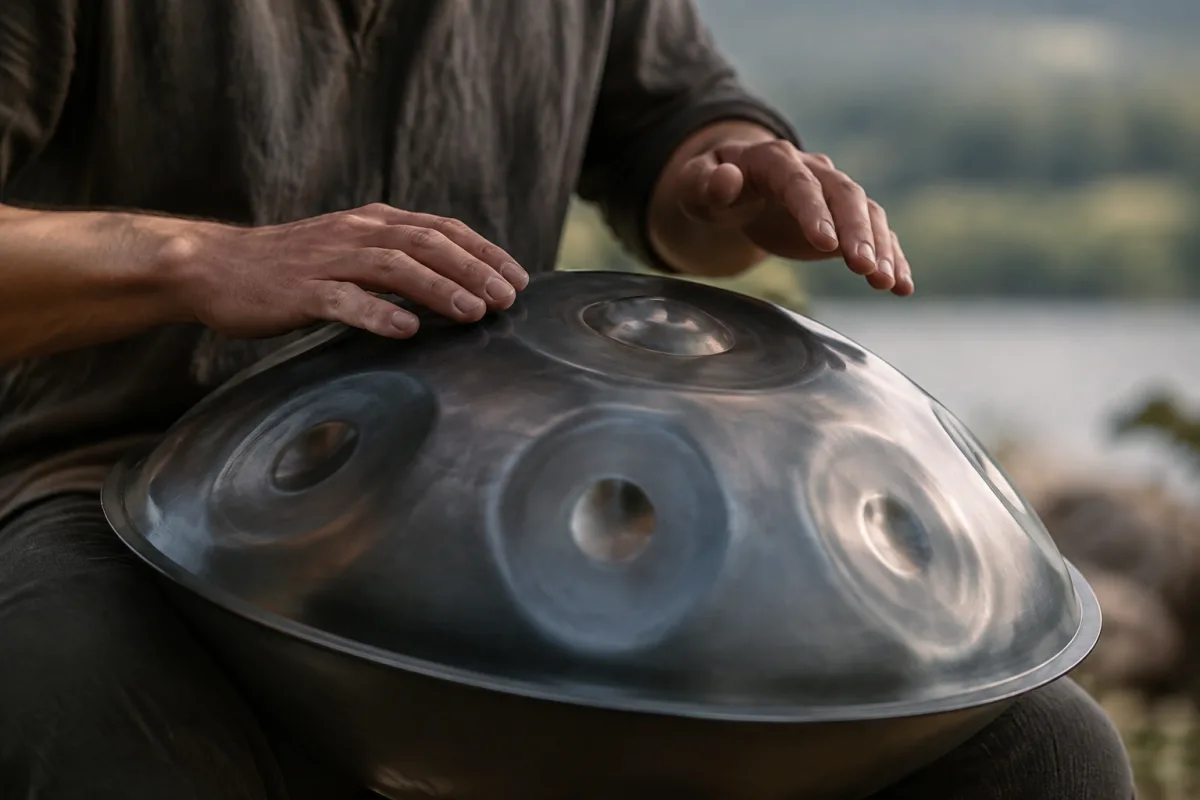
A handpan drum—also called a hang or tongue drum—is a struck percussion instrument consisting of two steel hemispheres welded together, creating a sealed drum cavity. The top surface contains one or more notes arranged in concentric circles around a central note, whilst the bottom surface features a sound hole. Unlike mallet-based percussion, handpans are exclusively played with hands and fingers, allowing direct tactile connection with the instrument. This direct contact profoundly influences how players interact with their instrument and how audiences perceive the musical experience.
The handpan drum instrument emerged in Switzerland around 2000 when Sabina Schütz and Felix Rohner created the original Hang. The name derives from a Swiss-German word meaning "hand," perfectly describing the playing method. Since then, countless builders have designed variations, creating a diverse market of handpan-style instruments with different tuning systems and construction approaches.
Handpan Construction and Tuning
Creating quality handpan drum instruments requires exceptional metalworking skill. Builders start with steel sheets, hammer and shape them into hemispheres, then carefully tune individual note areas by striking and reshaping the metal. This labour-intensive process explains why handpans remain relatively expensive—typically £800 to £3000 for quality instruments. Tuning philosophy varies significantly between builders; some follow the original Hang's tuning system, whilst others develop proprietary scales serving different musical traditions or contemporary aesthetics.
The two primary handpan drum instrument tuning families are:
- Ding System: Features a central ding note surrounded by eight or nine other notes, typically tuned to various scale systems (pentatonic, major, minor).
- Tone Field System: Uses a single large playing surface featuring a continuous tone field rather than distinct notes, producing glissando effects and atmospheric tones.
Each approach creates entirely different musical possibilities, fundamentally affecting how musicians interact with their instruments.
Musical Characteristics of Handpan Drum Instruments
The sound produced by handpans is immediately recognisable—warm, resonant tones with natural sustain and harmonic complexity. Unlike pitched percussion that decays rapidly, the handpan drum instrument's sealed chamber allows notes to ring and bloom, creating rich harmonic environments even from simple melodic lines. This characteristic tonal warmth explains the instrument's popularity across diverse musical contexts from contemporary world music to ambient and electronic music production.
Dynamic control distinguishes excellent players. Varying strike position, hand shape and force creates dramatic tonal variations—from delicate, whisper-quiet sounds to explosive, full-bodied tones. This dynamic responsiveness rewards technique development and enables expressive playing approaching that of melodic instruments.
Learning and Playing Handpans
A remarkable advantage of handpan drum instruments is immediate musicality; even beginners produce pleasing sounds within minutes. The instrument naturally encourages relaxed, intuitive playing—there are no wrong notes if you choose instruments in appropriate scales. This accessibility explains the handpan's popularity for meditation, sound healing and casual music-making alongside more serious musical pursuits.
Developing advanced technique requires patient study. Accomplished players combine multiple playing techniques including:
- Single finger strikes (for clarity and precision)
- Hand rolls (producing dramatic dynamic swells)
- Melodic sequences combining different notes
- Drone techniques creating bass resonance
- Rim strikes producing percussive effects
The learning curve for basic competence is shallow; the path to mastery is appropriately deep.
Handpan Drum Instruments Across Musical Genres
Beyond world music and meditative contexts, contemporary musicians incorporate handpans into diverse genres. Electronic music producers use handpan sounds as textural elements and percussion loops. Jazz musicians explore the instrument's rhythmic possibilities. Singer-songwriters add handpans to acoustic arrangements, adding harmonic richness. This genre flexibility reflects the instrument's essential musicality transcending specific traditions.
Comparing Handpan Variants
| Variant | Tuning System | Characteristics | Best For |
|---|---|---|---|
| Original Hang | Ding System | Warm, complex harmonics, defined notes | Melodic playing, world music, recording |
| Tone Field | Continuous Field | Glissando effects, atmospheric tones, ethereal | Meditation, ambient, sound healing |
| Budget Alternatives | Simplified Scales | Good value, adequate tone, variable quality | Beginners, casual players, budget-conscious |
| Handpan Variations | Custom Scales | Specialized tuning for specific traditions | Adventurous players seeking unique sounds |
Purchasing and Maintaining a Handpan
Quality matters significantly with handpan drum instruments. Renowned builders have extensive waiting lists; purchasing directly often requires patience. Secondary markets exist, though prices remain high. Budget alternatives from lesser-known manufacturers are available at lower costs, though quality consistency suffers. Maintenance is straightforward—keep the instrument dry, store at stable temperatures and avoid extreme humidity. Many players oil their handpans occasionally to prevent rust, though this is optional depending on playing frequency and climate.
The Global Handpan Community
Handpan enthusiasm has created vibrant global communities. Festivals dedicated to the instrument occur worldwide, bringing players together for performances, jam sessions and celebrations. Online communities share playing techniques, recordings and instrument recommendations. This communal aspect enriches the handpan drum instrument experience beyond the instrument itself, connecting players across cultures and musical backgrounds.
Bottom Line
The handpan drum instrument represents something increasingly rare in modern music—an acoustic instrument delivering immediate musicality, deep learning potential and genuine artistic expression without requiring years of technical study. Whether you approach it as a meditation tool, a serious musical instrument or simply a captivating sound source, the handpan offers remarkable value and satisfaction. The instrument's warmth, responsiveness and beauty make it one of contemporary music's most rewarding additions to the percussion family, well deserving its rapidly growing global popularity.


Comments