
Roland V Drums Electronic article
The Complete Guide to Roland V Drums Electronic
Electronic drums from Roland's V-Drums line offer responsive playability, realistic feel and silent practice—perfect for any space. Discover which tier suits your budget and goals, from beginners to touring professionals.
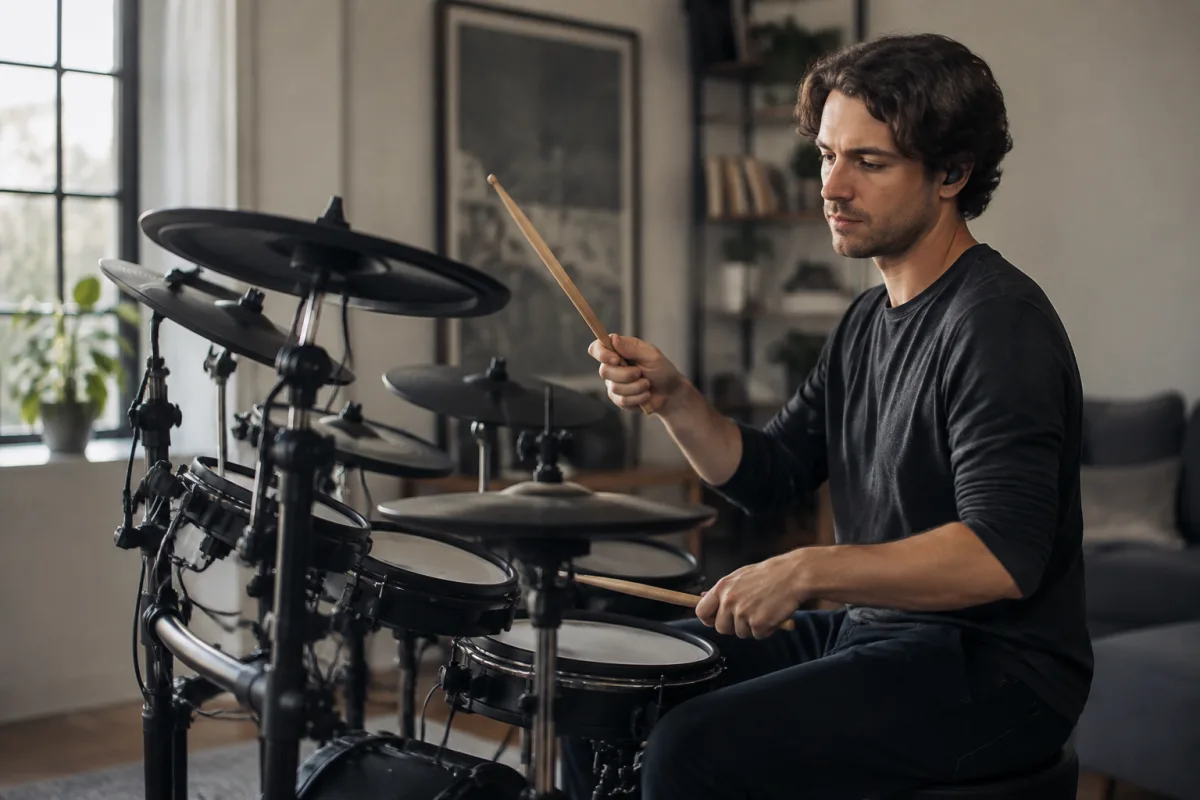
Electronic drums represent three decades of percussion innovation in the V-Drums line. From bedroom practisers to touring professionals, these kits have become synonymous with realistic feel, responsive pads and studio-quality sounds. This guide explores what makes them distinctive, how they compare to alternatives, and whether a V-Drums kit suits your playing style and budget.
What Are Roland V-Drums Electronic?
These kits are acoustic-style instruments built on the principle that electronic drums should feel and respond like acoustic drums. Unlike pad-based controllers, they feature individual drum and cymbal pads that mimic a traditional kit's layout and playability. Roland's technology generates sounds that capture the subtle dynamics and decay of real drums.
A typical setup includes a kick pad, snare, tom pads, cymbal pads (crash, ride, hi-hat), and a module that houses the sounds and connectivity. The module is the brain—it triggers sounds in response to strikes, provides routing and mixing, and connects to amplification and external equipment.
Key Characteristics of Roland V-Drums Electronic
Responsiveness and Feel
Roland V-Drums electronic kits prioritise responsive, natural feel. The pads detect velocity (how hard you strike) with precision, enabling dynamic playing that rivals acoustic kits. Dual-trigger pads on drums allow crossstick or rim-click sounds. Cymbal pads respond to choke—a quick muting motion on the pad to stop the sound, mimicking how you dampen a real cymbal. This responsiveness is why many drummers value Roland V-Drums electronic kits for practising real technique rather than just making noise.
Sound Quality and Customisation
Roland V-Drums electronic kits come with hundreds of drum kits and sounds drawn from decades of Roland's acoustic drum sampling and synthesis libraries. You can layer sounds, adjust pitch, tune individual drums, and edit effects in real time. Modern Roland kits include Bluetooth connectivity for adding backing tracks or metronome through a phone or tablet, and USB connectivity for recording or triggering software sounds.
Quiet Performance and Practice Value
Since Roland V-Drums electronic kits produce minimal noise from the pads themselves (only the quiet tap of a stick), they are invaluable for apartment dwellers and night-time practisers. Headphone monitoring lets you play silently whilst hearing full drum sounds. This has made Roland V-Drums electronic kits popular in home studios and teaching environments.
Roland V-Drums Electronic: Product Tiers
| Tier | Example Model | Price Range | Best For | Key Features |
|---|---|---|---|---|
| Entry level | Roland TD-1KPX | £200–£400 | Beginners, home practice | Compact, portable, essential sounds and features |
| Mid-range | Roland TD-17 | £500–£1,000 | Serious amateurs, gigging musicians | High-quality sounds, deep editing, Bluetooth, strong pad feel |
| Professional | Roland TD-50X, VAD307 | £1,500–£3,500+ | Professional touring drummers | Premium sound library, highest pad responsiveness, sophisticated effects |
Advantages of Roland V-Drums Electronic Kits
These kits excel at several things. They are quiet—essential for shared living spaces. They are portable—breaking down into individual pads and a module for easy transport. They demand technique—playing dynamically and with feel is rewarded with responsive, expressive sounds. They offer unlimited sounds in one kit—no need for multiple setups. They integrate well with recording—USB connectivity makes it trivial to record MIDI or audio.
For drummers transitioning from acoustic kits to electronic performance, these systems bridge the gap by prioritising realistic play feel over novelty features.
Limitations and Trade-offs
These kits are not perfect. Pad feel, no matter how good, is not identical to striking a vibrating drum head. Cymbals require learning new technique (a crash pad must be struck at the edge, not the centre, and choked by hand—different from acoustic cymbals). The initial investment is substantial (entry-level options start at £200+; professional kits exceed £3,000). Repair and replacement parts can be costly. For players seeking the pure acoustic experience, acoustic drums remain unmatched.
Choosing the Right Kit
Consider your budget, space, and playing goals. If space and noise are constraints, these systems are liberating. If you're gigging, invest in mid-range or professional tiers for reliability and sound quality. If you're learning, a compact entry-level option teaches fundamentals inexpensively. Test a kit in-store if possible—pad feel is personal, and what suits one drummer may not suit another. Many music schools use these systems for practise rooms precisely because they balance playability, reliability and value.
Maintenance and Longevity
Electronic drums require less maintenance than acoustic kits. Keep pads clean and dry, and avoid exposing the module to moisture. Replacement pads are available if one wears out with heavy use. The electronics are durable—many Roland V-Drums electronic kits perform reliably for a decade or more with basic care. Replace power supplies if they fail, or have a technician service the module if connectivity issues arise.
Conclusion
These kits have earned their reputation as the gold standard of home and gigging electronic drums. They combine responsive, satisfying playability with silent practice capability, unlimited sounds and practical connectivity. Whether you're a beginner learning in a small flat, an amateur seeking a quiet practice setup, or a touring professional, a system sized to your needs and budget delivers the expressiveness and reliability that makes playing drums rewarding.


Comments