
Music Notes Drums article
The Complete Guide to Music Notes Drums
Reading music notes for drums enables drummers to collaborate with other musicians, study formal materials, and interpret complex rhythmic patterns with consistency across ensemble contexts.
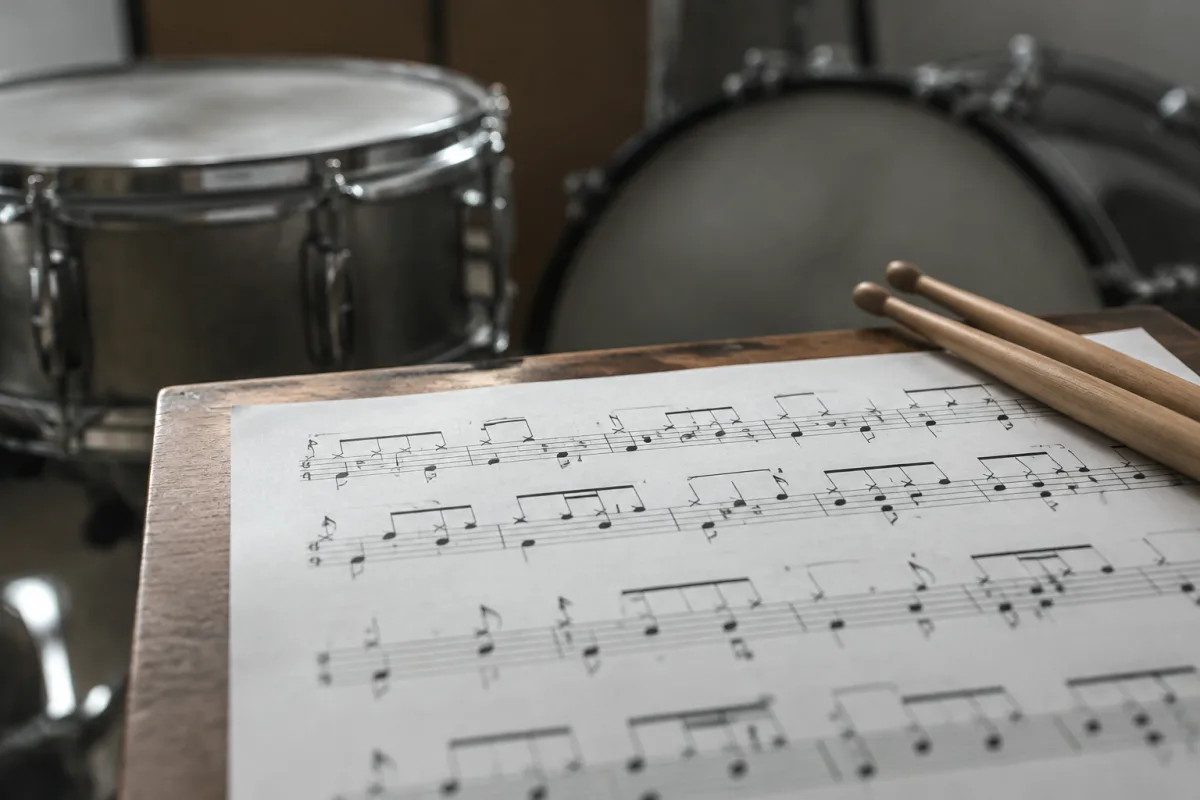
Reading music notes for drums represents a fundamental skill for drummers who intend collaborating with other musicians, studying formal training materials, or participating in ensembles where written notation communicates rhythmic intentions. Music notes for drums employ specialised notation conventions adapted specifically for percussion instruments, enabling precise communication of which drum surfaces to strike, when to strike them, and how to execute complex rhythmic patterns with consistent interpretations across multiple performers. Understanding drum notation significantly accelerates learning, enables seamless collaboration with other musicians, and opens access to vast libraries of written material spanning popular music arrangements through classical percussion compositions.
Drum Staff Notation Fundamentals
Drum notation employs a five-line staff identical to music used for other instruments, though the vertical position of notes carries distinct meaning compared to pitched instruments. Rather than representing specific pitches, the vertical positions on a drum staff represent specific drum surfaces—the snare drum, kick drum, hi-hat cymbals, tom-tom drums, and other percussion elements typically played simultaneously within a drum kit arrangement.
A standardised drum notation convention assigns consistent staff positions to specific drums and cymbals across the industry. The kick drum occupies the bottom staff position, the snare drum occupies the middle of the staff, and hi-hat cymbals appear at the top. Tom-toms typically occupy intermediate positions between snare and hi-hat, arranged from low to high toms as staff positions ascend. This standardised arrangement enables drummers reading music notes for drums to immediately identify which drum surface they should strike at any given rhythmic moment.
Note Heads and Rhythmic Values
Music notes for drums utilise note head shapes conveying rhythmic duration information. Whole notes—large hollow ovals—span an entire bar in common 4/4 timing. Half notes—hollow ovals with vertical stems—occupy half a bar. Quarter notes—filled-in ovals with stems—represent single beats in 4/4 timing, the most common rhythmic unit in popular music patterns.
Eighth notes and sixteenth notes—progressively smaller rhythmic units with connected beam or flags—appear in rapid passages requiring quick alternation between drum strikes. Triplet figures—three notes occurring in the space of two notes of equivalent value—enable syncopated rhythmic patterns creating swing and groove sensations characteristic of jazz and contemporary music styles. Music notes for drums employ these same rhythmic conventions as notation for pitched instruments, enabling drummers to apply identical rhythmic reading skills regardless of instrumental context.
Accents and Dynamic Markings
Beyond rhythmic information, music notation for drums includes dynamic markings indicating how forcefully to strike drums and cymbals. Accent marks—small V-shaped symbols above note heads—indicate that particular strikes should receive emphasis, producing louder, more prominent sounds compared to unaccented strokes. Multiple accent levels enable composers and arrangers to create dynamic variation and phrasing within drum patterns.
Fortissimo (ff) and pianissimo (pp) markings appear alongside music notes for drums indicating specific dynamic levels. These markings remain constant across sections until a different dynamic marking supersedes them, enabling consistent dynamic interpretation throughout extended passages. This dynamic control—the ability to produce varied volume levels rather than uniform hitting—separates expressive drummers from those merely striking drums at constant intensity levels.
Sticking Patterns and Hand Assignments
Many drum notations include letter markings—R and L—beneath note heads indicating Right and Left hand assignments. These sticking patterns guide how drummers should physically execute written patterns, proving particularly valuable for developing proper technique and building specific hand-control capabilities. Following written sticking patterns ensures consistent physical approach across repeated rehearsals, preventing the habit inconsistencies that develop when drummers devise their own finger coordination strategies.
Professional music notation for drums often includes detailed sticking patterns alongside standard notation, particularly in educational materials and technique-focused publications. Following these sticking suggestions accelerates learning efficiency and prevents developing poor technical habits that become difficult to correct later in a drummer's development.
Rests and Silence
Just as pitched instrument notation includes rest symbols indicating silent passages, music notes for drums include corresponding rest symbols. Whole rests, half rests, quarter rests, and eighth rests communicate precisely how long drummers should remain silent, preventing rushed entries or mistimed drum strikes that compromise ensemble coordination.
Proper rest interpretation proves particularly important in ensemble contexts. A drummer who incorrectly interprets a rest marking might begin playing before the intended moment, throwing off the entire ensemble's timing. Careful attention to rest notation ensures seamless coordination with other musicians.
Special Notation Symbols for Percussion
Drum-specific notation conventions supplement standard musical symbols. Cross-note heads—X-shaped symbols rather than standard ovals—indicate closed hi-hat cymbals, distinguishing them visually from other drum sounds within music notes for drums. Open hi-hat symbols—circles with crosses—indicate the hi-hat pedal should be released, producing the characteristic sizzling open cymbal sound.
Ghost notes—very light, barely audible drum strikes—appear as smaller note heads in musical notation. These grace notes appear frequently in snare drum patterns, particularly in funk and contemporary styles. Reading ghost notes correctly enables drummers to capture the rhythmic subtlety and groove pocket that characterises professional playing across popular music styles.
Time Signatures and Rhythmic Complexity
Music notes for drums employ time signatures—notations indicating the rhythmic framework within which patterns occur. Common time (4/4)—four quarter-note beats per measure—dominates popular music. Waltz time (3/4)—three quarter-note beats per measure—appears in ballads and formal musical contexts. Contemporary music sometimes employs unusual time signatures like 5/4 or 7/8, creating rhythmic complexity that distinguishes experimental or progressive music styles.
Understanding time signatures enables drummers to anticipate rhythmic patterns, count measures accurately during multi-bar rests, and maintain ensemble synchronisation with other musicians maintaining the same time signature. Misunderstanding time signatures leads to significant timing problems and ensemble coordination failures.
Fills and Transitions
Music notation for drums frequently includes drum fills—brief rhythmic flourishes occurring between verse and chorus sections in songs. Fills typically occupy one or two measures, providing rhythmic punctuation and maintaining audience interest through rhythmic variation. Written drum fills appear in music notation with identical rhythmic notation as standard patterns, though they may contain more rapid note values and greater dynamic variation.
Proper interpretation of written fills requires clear dynamic understanding and awareness of where fills should sit rhythmically relative to other ensemble elements. A poorly executed fill disrupts ensemble timing or overshadows vocal phrases that should retain prominence.
Reading Music as a Development Tool
Drummers who develop proficiency reading music notes for drums gain significant advantages within musical contexts. Reading ability enables participation in session work, collaboration with composers, and understanding how drum patterns should support and complement other musical elements. Professional drummers universally maintain music reading ability as a core competency, recognising that written communication represents the standard within formal musical contexts.
Early exposure to music notation, combined with structured practice reading drum patterns, builds confident sight-reading ability that accelerates learning of new material. Drummers comfortable with notation can learn complex arrangements in single rehearsal sessions, significantly increasing their professional marketability and creative collaboration possibilities.
Conclusion
Music notes for drums represent an essential skill for drummers engaged in ensemble playing, formal training, or professional musical contexts. Contemporary drum notation conventions enable precise communication of rhythmic intentions, dynamic interpretations, and technical execution strategies. Whether you're learning to play drums formally, collaborating with other musicians within ensembles, or expanding your professional capabilities, developing proficiency with drum notation opens significant creative and professional opportunities throughout your musical journey.



Comments