
Electronic Drum Speakers article
The Complete Guide to Electronic Drum Speakers
Electronic drum speakers amplify and reproduce your electronic kit's sound accurately and powerfully. Discover what to look for in a speaker, from wattage to portability, and find the right setup for practice or performance.
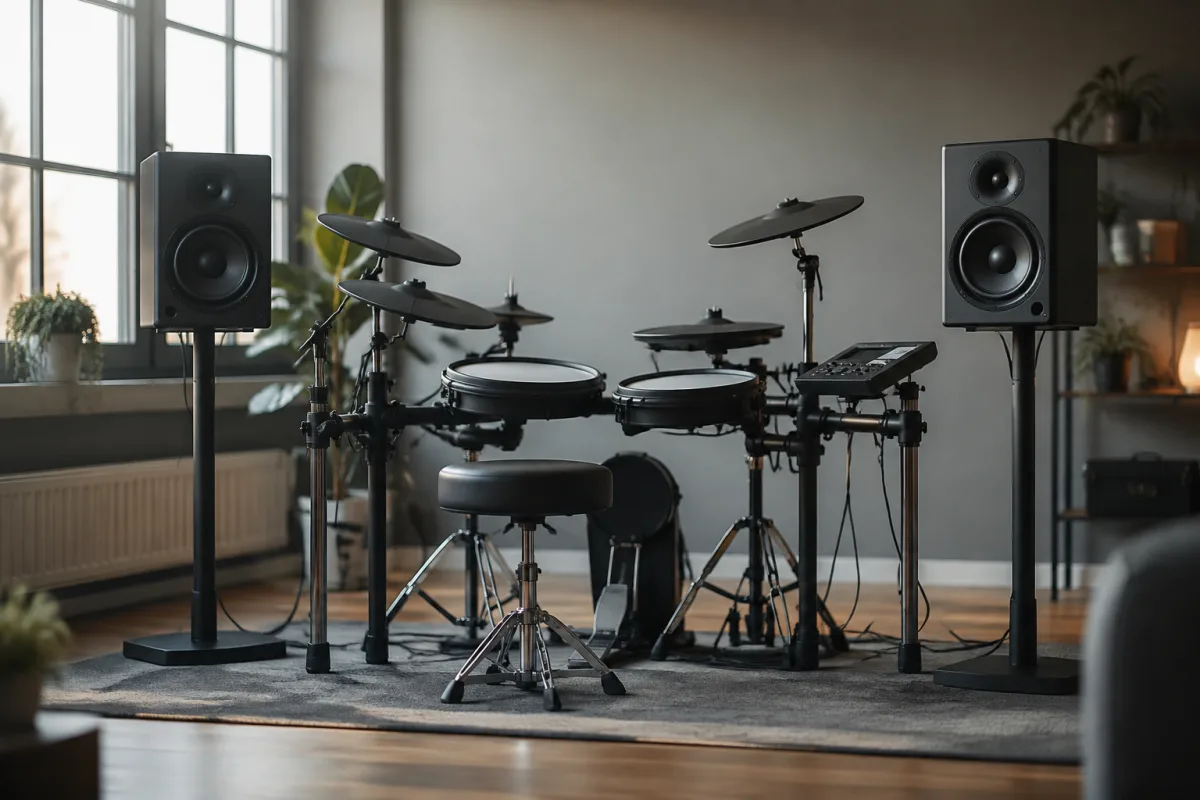
Electronic drum speakers transform your electronic drum kit from a personal practice tool into a fully realised instrument capable of delivering powerful, engaging sound to an audience or filling your practice space with professional-quality audio. Unlike acoustic drums that project sound naturally through the air, an electronic drum kit produces electrical signals that require amplification—a task electronic drum speakers perform. Whether you are a bedroom drummer seeking clarity during practice, a working musician performing venues, or someone building a complete electronic kit setup, selecting appropriate electronic drum speakers is essential for realising your electronic drums' full sonic potential. This guide explores electronic drum speakers, what makes them suitable for electronic kits, and how to choose speakers that match your needs and budget.
Why Electronic Drum Speakers Are Different from Standard Speakers
Standard PA speakers or studio monitors are designed for general audio purposes—music listening, speech reinforcement, or professional recording. Electronic drum speakers are optimised specifically for electronic drum kits. This means they reproduce the sharp transients, punchy attacks, and wide frequency range that electronic drums demand. A quality electronic drum speaker captures the crisp snap of a snare hit and the deep power of a kick drum with equal clarity.
Electronic drum speakers also tend to be more portable and affordable than full PA systems, making them practical for rehearsal spaces and smaller venues. Many are also designed with electronics practice in mind, producing adequate volume for a single drummer without the power drain or cost of a full stage PA.
Powered vs. Unpowered Speakers
A powered electronic drum speaker contains an integrated amplifier within the speaker cabinet itself. You connect your electronic drum module's output directly to the powered speaker via a cable, and the speaker amplifies and reproduces the signal. Powered speakers are convenient, requiring minimal additional equipment and taking up limited space—ideal for rehearsal spaces and small venues.
An unpowered (passive) speaker requires a separate external amplifier to power the speaker. This approach offers flexibility—you can use a high-quality amplifier of your choice and easily swap components if needed. However, passive speakers require more equipment and space, and unpowered speakers are less common for electronic drums than powered models.
For most drummers, powered electronic drum speakers offer the best balance of convenience, sound quality, and cost.
Speaker Size and Wattage
Electronic drum speakers range from small, 50-watt personal monitors to large, 500+ watt PA systems. A 50–150 watt powered speaker suffices for bedroom or rehearsal space practice, providing adequate volume for a drummer to hear their kit clearly without disturbing neighbours excessively. A 200–400 watt speaker delivers volume suitable for small venues, rehearsal studios, and live performances in cafés or small clubs.
Large venue and touring applications require 500+ watt speakers or multiple speaker cabinets, but these are beyond the needs of most electronic drummers unless performing regularly in large spaces.
Driver Configuration and Frequency Response
Electronic drum speakers typically feature multiple drivers (speaker cones) of different sizes to reproduce the full frequency spectrum of electronic drums accurately. A single 12-inch woofer handles low-frequency kick drum power, whilst a tweeter reproduces high-frequency detail in snare and cymbal sounds. This multi-driver approach creates balanced, full-spectrum sound that showcases electronic drums properly.
Single-driver speakers (a single 12-inch or 15-inch cone handling all frequencies) are simpler and cheaper but often lack the detail and balance of multi-driver designs. For electronic drums, a two-way speaker (woofer plus tweeter) represents an excellent compromise between cost and sound quality.
Connection Options and Flexibility
Quality electronic drum speakers include multiple input options—stereo 3.5mm aux input, 1/4-inch instrument cables, and often XLR balanced inputs. This connectivity allows you to connect not only your electronic drum module but also keyboard synthesisers, backing tracks from a phone or computer, or a mixer feeding multiple sound sources into a single speaker.
Multiple outputs allow you to daisy-chain speakers or send signal to an external mixer or PA system, providing flexibility for growing setups. Simple electronic drum speakers may offer only a single 1/4-inch input, which is adequate for basic setup but limits future expansion.
Portability Considerations
Most electronic drummers value portability—the ability to transport speakers from home to rehearsal space or venue. Lightweight (under 30 pounds), compact electronic drum speakers with built-in handles are far more practical than heavy, unwieldy cabinets. Many modern electronic drum speakers feature integrated handles, rugged construction for transit, and cable management to keep cables organised.
If you gig regularly, consider speaker weight and size carefully. A lightweight, compact 150-watt powered speaker is far more practical than a larger cabinet that requires two people to move.
Budget Ranges for Electronic Drum Speakers
Budget electronic drum speakers (£50–150) provide adequate sound for bedroom practice and simple setups. Mid-range options (£200–500) deliver good sound quality, durability, and features suitable for rehearsals and small venue performances. Professional-grade electronic drum speakers (£500–2,000+) offer exceptional sound, extensive features, and the reliability needed for touring and frequent use.
For most drummers, a mid-range powered speaker (£300–400) represents excellent value—quality sound, adequate volume, and built-in features without excessive cost.
Using Electronic Drum Speakers in Different Settings
In a bedroom or home practice space, a single 100–150 watt powered speaker positioned in front of you provides adequate monitoring. In a rehearsal space, you may want a more powerful speaker (200+ watts) to fill the room and hear your drums clearly amongst other band members. For live performance, speaker placement becomes critical—the speaker should project sound to the audience rather than primarily back at the drummer.
Many touring drummers use wedge-shaped monitor speakers angled toward themselves, allowing them to hear their performance independently of the front-of-house system delivering sound to the audience.
Pairing Speakers with Your Electronic Drum Module
Ensure your electronic drum module's output level matches your speaker's input sensitivity. Most electronic drum modules produce line-level outputs (typically 0 to +4dBu) suitable for mixing consoles and powered speakers. Consult your module's specifications and your speaker's input sensitivity specifications to ensure proper level matching, which prevents distortion and maximises sound quality.
Many drummers use a simple mixing console between their module and speaker, allowing control of multiple audio sources, independent track volumes, and connection of backing tracks or metronome signals—valuable for band practice or live performance.
Choosing Your Electronic Drum Speakers
Assess your primary use: bedroom practice, rehearsal space, or live performance. Choose a powered speaker with adequate wattage for your environment (100–150 watts for home, 200–400 watts for venues). Prioritise speakers with multi-driver designs for balanced sound, multiple input options for flexibility, and lightweight construction for portability. Within your budget range, audition speakers if possible to ensure sound quality aligns with your preferences.
A quality electronic drum speaker is an investment that transforms your electronic drumming experience, making practice more enjoyable and allowing performances that showcase your kit properly.


Comments