
Steel Pan Drum article
The Complete Guide to Steel Pan Drum
The steel pan drum is a melodic percussion instrument born in Trinidad and Tobago, crafted from repurposed steel barrels. Discover its fascinating history, acoustic properties and role in global music.
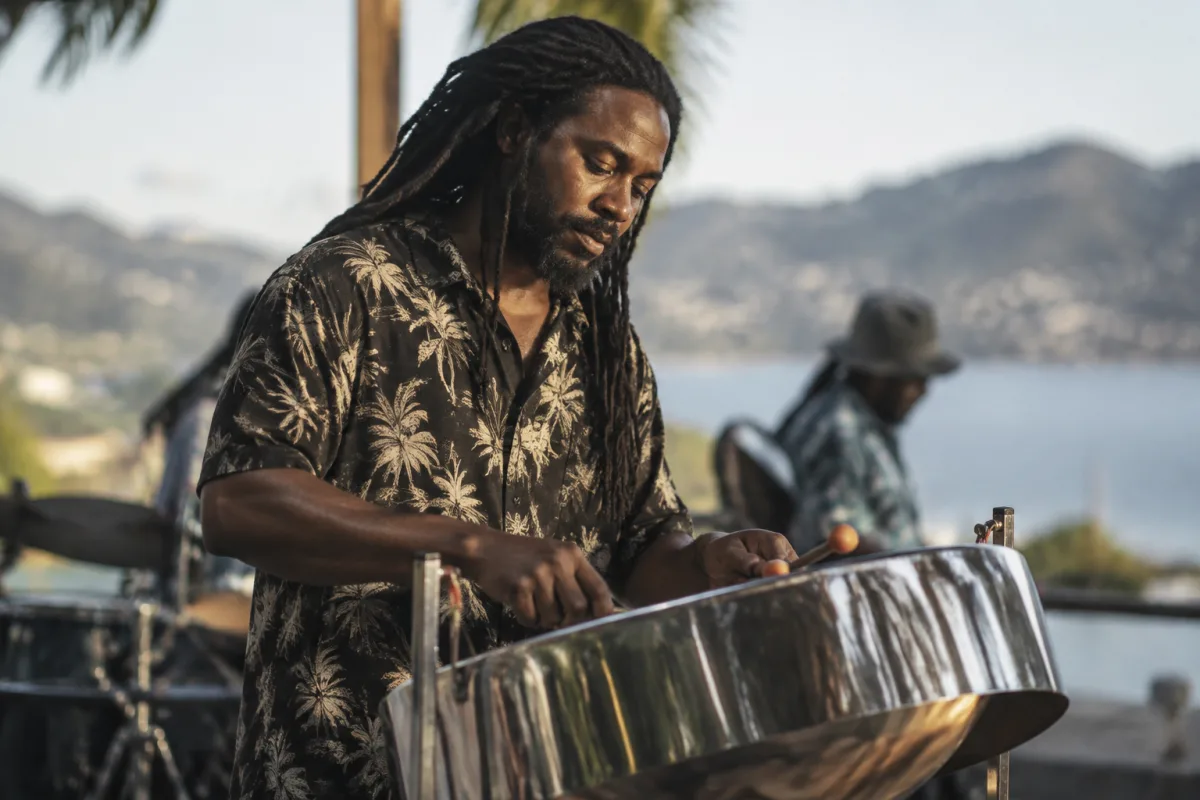
A steel pan drum is a melodic percussion instrument created from a recycled steel barrel, producing pitched notes across its surface that range from bass to treble depending on the drum's tuning and construction. Born in Trinidad and Tobago in the early 20th century, the steel pan drum represents a remarkable story of musical invention: from street musicians repurposing discarded oil drums into instruments capable of full chromatic scales, to contemporary steel orchestras performing classical symphonies and contemporary compositions. Whether you're drawn to the instrument's Caribbean warmth and resonance, curious about its unique acoustic properties, or interested in learning to play, understanding the steel pan drum reveals why this instrument has captivated musicians worldwide and earned recognition as one of the 20th century's most significant musical innovations.
What Is a Steel Pan Drum?
A steel pan drum is a percussion instrument constructed from a barrel—traditionally a 55-gallon steel oil drum—whose head has been carefully shaped, tuned and marked with note areas (called "note fields" or "pans") that produce distinct pitches when struck with mallets. Unlike drums that produce unpitched sounds, each steel pan drum is tuned to specific frequencies so that different areas of the drum's head produce different notes. The combination of multiple steel pan drums creates a steel band—an ensemble capable of performing melody, harmony and rhythm parts similar to a traditional orchestra.
The steel pan drum's range, timbre and complexity depend on its construction and size. Tenor steel pan drums produce high, bright notes; mid-range pans (cello pans) provide harmonic support; and bass pans deliver the ensemble's foundational frequencies. The sound is warm, mellow and distinctly tropical—instantly recognisable and deeply connected to Caribbean culture.
History and Origins of the Steel Pan Drum
The steel pan drum's invention is one of music's most remarkable grassroots stories. In 1930s Trinidad, street musicians created instruments from discarded oil drums, initially producing single, unpitched notes. Through experimentation, trial and refinement over several decades, musicians gradually learned to create multiple pitched note areas on a single drum head. By the 1950s, the steel pan drum had evolved into a sophisticated instrument capable of playing full melodies and complex harmonies.
The instrument emerged from a practical necessity (affordable music-making tools for marginalised communities) and evolved into an art form. Steel bands became central to Trinidadian carnival culture, eventually recognised by the Trinidadian government as the national instrument. Today, steel pan drums are taught in schools, performed in concert halls and enjoyed across the Caribbean diaspora and globally.
Types of Steel Pan Drums by Range
A steel band typically comprises several types of steel pan drums, each tuned to a specific range and performing a distinct musical role:
- Soprano/Tenor pans: High, bright tones. Typically carry the melody in a band arrangement. The most "singing" sound.
- Double seconds: Similar range to tenor but with a larger drum head, producing a richer tone and greater volume.
- Double tenors: Extended upper range; used in larger orchestrations for additional melodic voices.
- Cello pans: Mid-range instruments providing harmonic accompaniment and counter-melodies. Warm, mellow tone.
- Guitar pans: Mid-to-high range with a brighter, more percussive attack. Often used for rhythmic accompaniment.
- Bass pans: Lowest range; provide the foundational bass notes. Deep, resonant tone that anchors the ensemble.
- Quadrophonic/six-bass pans: Extended bass range, often using four or six barrels to cover the lowest frequencies.
A full steel band typically includes several pans of each type, allowing full orchestral voicing across melody, harmony and bass.
How a Steel Pan Drum Is Constructed and Tuned
Constructing a steel pan drum is a skilled craft combining metallurgy, acoustics and artistic intuition. The basic process involves:
- Drum preparation: A 55-gallon steel barrel is cut to the desired height (typically 60–75 cm).
- Sinking (shaping): The barrel head is heated and hand-hammered from beneath to create an inverted dome shape, which increases the head's stiffness and acoustic properties.
- Note marking: The tuner marks out areas on the dome where individual notes will be created, considering the desired range and tuning scheme.
- Grooving: Steel grooves (called "note lines" or "gutters") are hand-cut into the drum head between note areas to define and isolate each note's vibration.
- Tuning: Each note area is individually struck and adjusted by re-hammering to achieve the correct pitch. This is the most labour-intensive and skill-demanding step.
- Finishing: The drum is tuned to a specific concert pitch (usually A440 Hz), then cleaned, burnished and often painted or treated to protect against rust.
A skilled pan maker can spend 20–40 hours tuning a single steel pan drum to concert pitch. The craft requires years of training and ear development; master tuners are highly valued and respected within the steel band community.
The Sound and Acoustic Properties of Steel Pan Drums
The steel pan drum's distinctive warm, mellow sound arises from several acoustic factors: the curved steel head's vibration mode, the barrel's acoustic resonance, and the damping provided by the metal's thickness and the player's hand placement. Unlike pitched percussion instruments (xylophone, vibraphone) that use distinct bars, a steel pan drum's notes blend harmonically because they emanate from the same vibrating surface. This creates a unified, warm tone quality.
The instrument's dynamic range is impressive: striking the note area firmly produces a strong attack and long sustain; striking gently produces a softer, more lyrical tone. Skilled players use hand damping and mallet technique to shape phrasing and articulation, making the steel pan drum capable of considerable musical expression despite its percussion classification.
Playing Technique and Mallets
Steel pan drummers use specially designed mallets with soft heads (typically rubber or yarn-wound) to strike the note areas. The mallets' design is crucial: too hard and the tone becomes harsh; too soft and the attack is weak. Players hold mallets in both hands (typically two mallets per hand) and strike the note areas in patterns, reading scores or playing by ear.
Technique involves:
- Mallet control: Precise hand positioning and mallet trajectory to strike intended note areas accurately, especially on high-speed passages.
- Dampening: Using the fingers and palm to mute previous notes, creating rhythmic clarity and preventing muddy tone buildup.
- Dynamics: Varying strike force to shape volume and expression across a phrase.
- Ensemble coordination: Maintaining timing and balance within a steel band's collective sound.
Learning steel pan drum requires a good ear, hand-eye coordination and musical foundation. Most serious players train with experienced tuners or band leaders, as the instrument's techniques and repertoire are traditionally taught through apprenticeship rather than formal notation alone.
Steel Pan Drum Repertoire and Music
Steel pan drums perform a remarkably diverse repertoire: traditional Trinidadian calypso and soca, classical transcriptions (symphonies, concertos), contemporary compositions, jazz adaptations and popular music arrangements. The instrument's melodic capability means steel bands regularly perform Bach, Gershwin and other classical composers alongside Caribbean standards.
| Repertoire Category | Examples/Characteristics | Typical Setting |
|---|---|---|
| Traditional Caribbean | Calypso, soca, reggae, bossa nova | Carnival, street performances, festivals |
| Classical Transcriptions | Symphonic excerpts, concertos, chamber music | Concert halls, competitions, formal performances |
| Jazz and Blues | Standards, improvisations, swing arrangements | Clubs, festivals, jam sessions |
| Contemporary Composition | Original works by steel pan composers | Concert performances, educational settings |
| World Music Fusions | African rhythms, Indian classical, electronic elements | World music festivals, contemporary ensembles |
Learning and Accessibility
Steel pan drum education is increasingly available worldwide. Universities in the Caribbean, North America and Europe now offer steel pan drum programmes. In the UK, steel bands operate in cities with Caribbean communities (London, Birmingham, Manchester) and increasingly in schools as cultural education initiatives. Most teach through group band settings rather than private lessons, reflecting the instrument's ensemble heritage.
Cost is a consideration: a decent student steel pan drum costs £400–£800; professional instruments exceed £1,500. Steel bands often provide instruments for learners, reducing the barrier to entry. The instrument's learning curve is moderate: basic melodies are playable after weeks of practice, whilst mastery of technique and repertoire takes years.
Conclusion
The steel pan drum stands as a testament to human creativity and cultural resilience. From oil-drum origins to concert-hall prominence, this instrument represents a unique convergence of engineering, craft, artistry and cultural pride. Whether experienced as a Caribbean carnival soundscape, a classical performance, or a personal musical pursuit, the steel pan drum offers warmth, beauty and a connection to a rich musical heritage. For anyone drawn to percussion, world music or simply the pure joy of melodic sound-making, the steel pan drum is an instrument worthy of discovery and study.
Frequently Asked Questions
Q: Where can I learn to play the steel pan drum?
A: Steel bands and cultural organisations in UK cities with Caribbean communities offer group tuition. Some universities include steel pan in music programmes. Online resources and YouTube tutorials provide introductory guidance, but learning in a band ensemble is the traditional and most effective approach.
Q: How much does a steel pan drum cost?
A: Student instruments range from £400–£800. Professional concert-quality pans cost £1,500–£3,000+. Starter bands often provide instruments for learners, making participation more accessible initially.
Q: How long does it take to learn the steel pan drum?
A: Basic competence (playing simple melodies) typically requires 3–6 months of regular practice. Ensemble playing and intermediate technique takes 1–2 years. Mastery and professional-level playing demands years of dedicated study.
Q: Can you play the steel pan drum solo, or is it only for ensembles?
A: Both. Whilst the steel pan drum is traditionally an ensemble instrument, solo performances and recordings exist. However, the ensemble context brings out the instrument's full potential and is how most musicians engage with it.
Q: How do you maintain and care for a steel pan drum?
A: Protect from extreme temperature changes and moisture. Store indoors; the steel will rust if exposed to weather. Periodically wipe down and apply a light oil to prevent corrosion. Professional maintenance and re-tuning may be needed over time as the metal naturally shifts.
Q: What is the range of a steel pan drum?
A: The full steel band spans roughly 4–5 octaves collectively. Individual pans typically cover 1–2 octaves depending on type (tenor pans span roughly an octave and a fifth; bass pans cover lower frequencies).
Q: Is the steel pan drum used in any non-Caribbean music genres?
A: Yes. Contemporary classical composers, jazz musicians and world music performers incorporate steel pan drums. Reggae, soca and Jamaican music also feature steel pans. The instrument's warm tone and melodic capability make it adaptable across genres.
Q: Can a steel pan drum be transported easily?
A: Tenor and mid-range pans are relatively portable—they weigh 20–40 kg and fit in a vehicle. Bass pans are heavier and more challenging to move. Touring steel bands typically transport instruments in custom cases and trailers.


Comments