


Synth Rack Mount Buying guide
Synth Rack Mount: A Complete Buyer's Guide
A quality synth rack mount keeps your gear organised, powered reliably, and properly cooled. This buying guide explains the specs that matter, which features you actually need, and mistakes that cost money down the line.
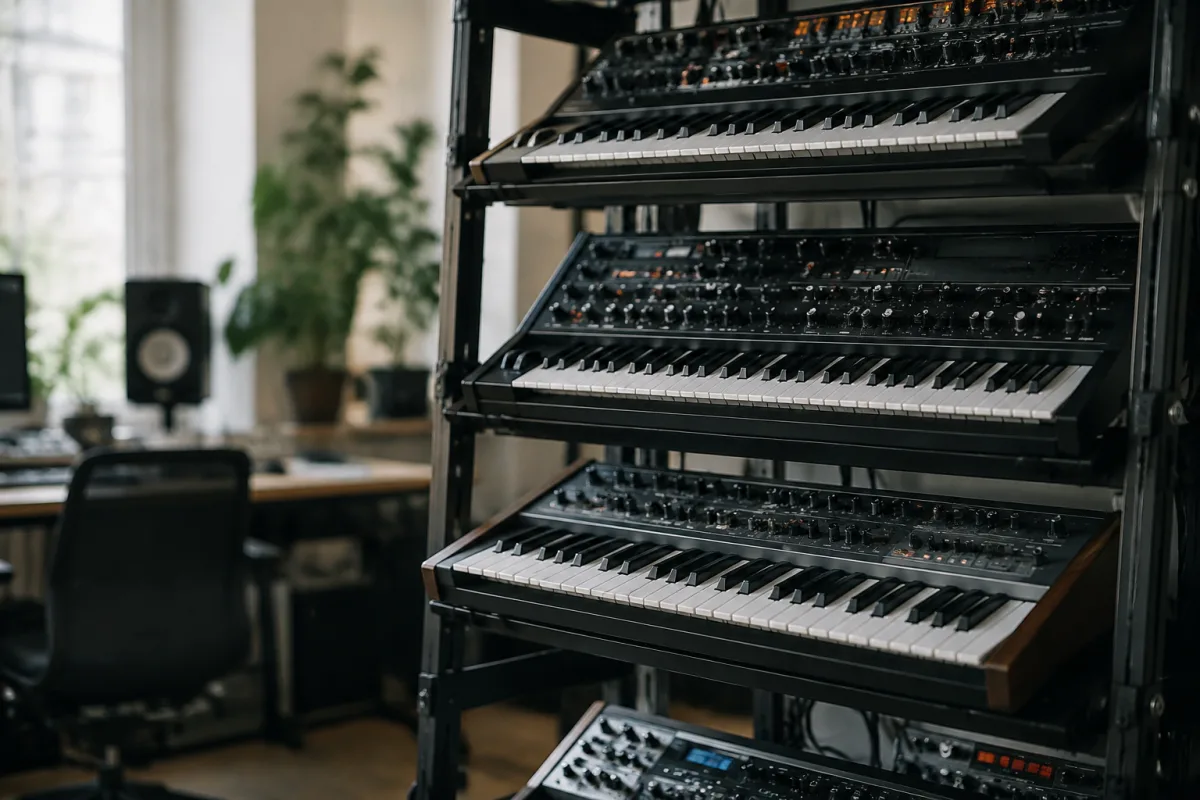
If you own multiple synthesizers or rack-mounted gear, a quality synth rack mount transforms chaos into an organised, professional system. But the market is confusing—varying depths, power solutions, cooling options, and price points make choosing overwhelming. This guide cuts through the complexity and tells you exactly what matters when buying a synth rack mount, which features you actually need, and what mistakes cost money down the line.
Why a Dedicated Synth Rack Mount Matters
You might assume you can mount synthesizers on any equipment rack. In theory, yes. In practice, a poor synth rack mount choice creates real problems: inadequate power distribution fails to supply demanding gear, insufficient cable management creates troubleshooting nightmares, poor cooling causes equipment overheating and failure, and weak structural integrity wobbles during performance.
A quality synth rack mount keeps your gear stable, organised, powered reliably, and properly cooled. For producers or performers running multiple synths, this isn't luxury—it's infrastructure that protects investment and workflow.
Core Specifications That Drive Buying Decisions
Rack Depth and Space
Synth rack mounts come in standard depths (typically 400mm, 600mm, 800mm, or deeper). Measure your synthesizers and any other gear you plan to mount. Depth matters enormously because deep racks are more expensive and take more physical space, but shallow racks might not accommodate your actual equipment. Don't guess—measure before buying.
Unit Height Capacity
Racks measure space in U (rack units), where 1U equals 44.45mm of height. Synths vary—some occupy 1U, others 2U or more. Calculate your total height needs. Buying a 15U rack when you need 25U is false economy. Similarly, buying 40U when you only need 20U is wasteful spending.
Weight Capacity
Synthesizers are heavy. A stack of synths can easily weigh 50–150+ kg. Your synth rack mount must handle that weight confidently. Cheap racks flex or wobble under load; quality racks feel absolutely solid. Check the stated weight capacity and add 20% safety margin.
Power Distribution
This is critical. Does the rack include built-in power strips? How many outlets? Are they EU or UK standard? Can you integrate power conditioning? Quality racks include robust power distribution; cheap ones are bare skeletons requiring external solutions. Proper power management prevents hum, noise, and equipment damage.
Cooling and Ventilation
Heat kills synthesizers. Look for racks with ventilation slots, fan support, or cable routing that promotes airflow. If your rack will house heat-producing gear (synths, amplifiers), cooling matters. Poor ventilation leads to equipment failure and costly repairs.
Cable Management
Quality racks have channels, tie-down points, and routing designed to keep cables organised. Poor cable management creates tangled messes that slow troubleshooting and look unprofessional. This isn't superficial—it's functional infrastructure.
Synth Rack Mount Types and Price Tiers
- Desktop/Tabletop Racks (£150–£400) – Compact, fixed-height racks designed for small synthesizer collections. Typically 8–15U capacity. Limited power distribution. Suitable for home studios with modest gear. Poor cable management on budget models.
- Portable Racks (£400–£1,000) – Lightweight, collapsible racks with handles for touring. Often 20–30U capacity. Good balance of portability and functionality. Adequate power and cable management. The sweet spot for many gigging musicians.
- Fixed Studio Racks (£800–£2,000) – Heavy-duty, permanently installed racks with excellent power distribution, cooling, cable management, and weight capacity. Typically 20–50U. Built for long-term studio use where durability matters more than portability.
- Premium/Custom Racks (£2,000+) – Specialised solutions with advanced power conditioning, custom sizing, integrated monitoring, and boutique construction. Most musicians never need this tier.
Most synth players benefit from portable or studio racks in the £400–£1,200 range. You get genuine quality, functionality, and durability without boutique pricing.
Fixed vs. Adjustable Racks: Which Do You Need?
Fixed Racks
All gear mounted permanently. Less expensive, completely stable, simpler. If you know your final configuration and never reconfigure, fixed is fine.
Adjustable Racks
Shelves or mounting rails adjust vertically, accommodating different equipment sizes and allowing reconfiguration. Cost more but offer flexibility. If your setup changes or you experiment with gear layouts, adjustability is valuable.
Rule of thumb: if your synth setup is static, fixed is perfectly fine. If you ever add, remove, or rearrange gear, adjustable saves headaches later.
Portable vs. Permanent Setup Considerations
Gigging/Mobile
Weight matters significantly. Portable racks use lighter materials and prioritise transportability. Cable management should be tight for quick breakdown. Handles and wheel support are essential. Power should be robust but self-contained.
Studio/Permanent
Weight is irrelevant. Heavy-duty construction matters. Power distribution should be excellent. Cooling matters if your synths run hot. Invest in a fixed rack designed for permanence.
Matching your rack type to your actual usage prevents wasted money and future frustration.
Power Considerations: Don't Compromise Here
Poor power is the silent killer of synthesizer setups. A synth rack mount with inadequate power distribution or no power at all forces hacky external solutions that create noise, risk equipment damage, and look unprofessional.
Look for racks that include:
- Multiple power outlets (minimum 4–8 for a typical setup)
- Power conditioning or filtering to eliminate hum and noise
- Circuit protection (breakers or fuses) to prevent damage from power surges
- Adequate cable routing to prevent power cable tangling
If a rack doesn't have built-in power, budget for a quality external power solution. This costs extra but is non-negotiable.
Common Buying Mistakes with Synth Racks
- Underestimating space needs – Most people buy smaller racks than they actually need. A year later, they're out of space and regret it. Buy slightly larger than your current needs; growth is inevitable.
- Ignoring power distribution completely – Cheap racks have no built-in power. You'll spend more on external solutions and deal with noise and compatibility issues.
- Choosing weight over stability – Portable racks should feel rock-solid even when light. If portability is compromising stability, you've chosen wrong.
- Overlooking cable management – Racks with poor cable routing are frustrating to use. You'll spend hours untangling, troubleshooting, and reorganising. This matters.
- Not planning for airflow – Heat-producing gear overheats if the rack doesn't ventilate. This causes equipment failure and expensive repairs.
- Assuming all racks fit all gear – Depth, height, and mounting compatibility vary. Verify your specific synths fit before buying.
Installation and Setup Reality Check
Assembly matters. Quality racks come with clear instructions and robust assembly. Budget racks often require frustrating improvisation. Factor assembly time and difficulty into your choice. Some retailers offer assembly services for a fee—worth considering for complex setups.
Also verify mounting hardware is included. Some racks sell the frame but require separate purchase of rails, shelves, and mounting brackets. Factor these extras into total cost.
Making Your Choice
When buying a synth rack mount, prioritise stability, adequate power distribution, thoughtful cable management, and sufficient space for growth. Don't compromise on these fundamentals for cost.
Match the rack type to your actual usage: portable for gigging, fixed for studios, desktop for small home setups. Buy slightly larger than your current needs; your collection will grow.
For deep dives into specific rack models, integration techniques, and advanced power solutions, our complete guide to synth rack mounts covers the full landscape. But the practical advice here gives you everything needed to make a choice that supports your music now and accommodates growth later.


Comments