
Electronic Digital Drum Pad article
The Complete Guide to Electronic Digital Drum Pad
Electronic drum pads have democratised percussion performance and production, offering unmatched versatility and silent practice capability. Whether you're a producer, drummer or live performer, discover what these instruments offer and how to integrate them into your setup.
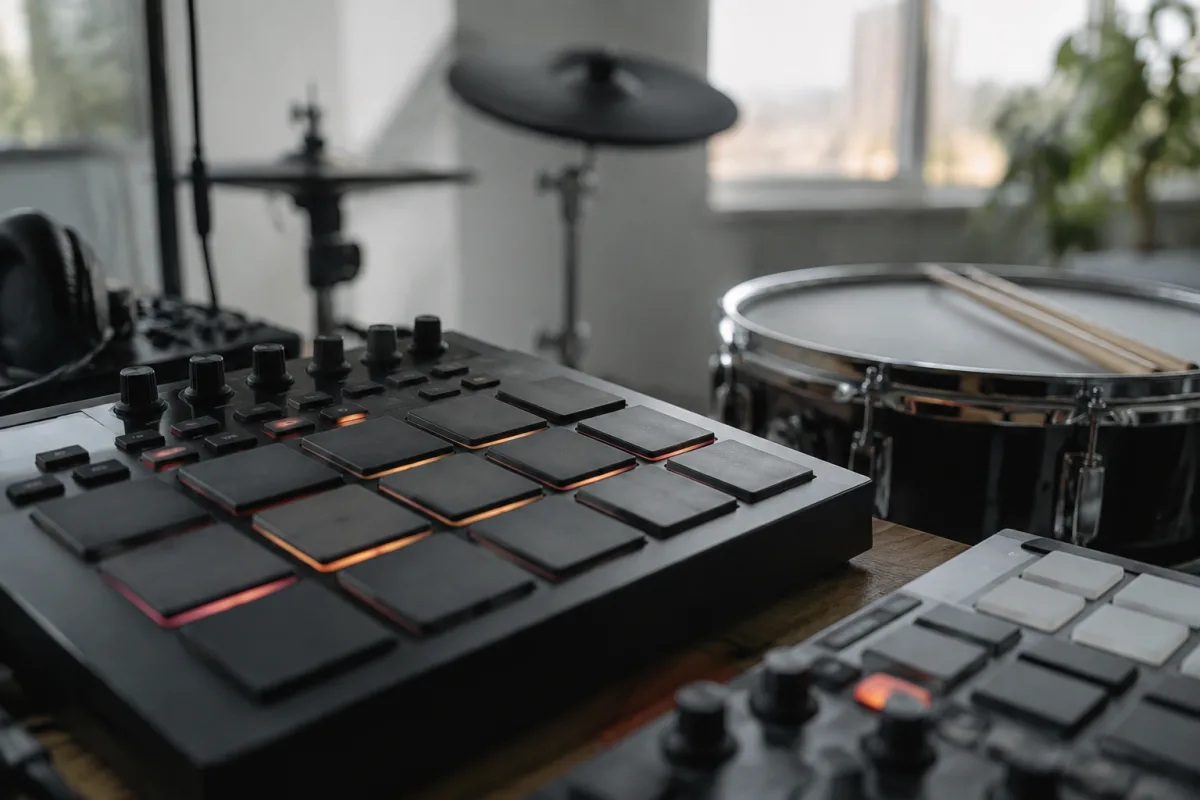
Electronic drum pads have become an essential tool for modern percussionists, producers and bedroom musicians alike. Whether you're exploring electronic music production or looking to expand your live performance setup, understanding what these instruments offer is the first step toward making an informed choice. This guide breaks down the essentials of how they work, and what makes them different from traditional acoustic drums.
What Is an Electronic Drum Pad?
An electronic drum pad is a percussion interface with one or more pressure-sensitive playing surfaces that respond to strikes with digital sounds. Unlike acoustic drums, which produce sound through vibrating membranes, an electronic drum pad triggers sampled or synthesised sounds stored in an onboard sound module or connected device. Each pad fires a MIDI note or audio sample when struck, giving you instant access to hundreds of drum kits, percussion instruments and sound effects from a single, portable device.
Electronic drum pads range from simple USB controllers designed for music production software to standalone units with built-in sounds, effects and sequencers. The playing surface itself is usually made of rubber, silicone or a textured synthetic material designed to mimic the feel of traditional drum heads whilst remaining sensitive to precise velocity and strike detection.
Core Features of Electronic Drum Pads
Modern electronic drum pads share a common set of capabilities that shape how you play and produce with them:
- Velocity sensitivity: The pad registers how hard you strike it and translates that into volume and tone variations, allowing for expressive playing with natural dynamics.
- MIDI compatibility: Most pads send MIDI data via USB or 5-pin DIN, allowing you to control third-party drum kits and production software.
- Onboard sounds: Standalone models come loaded with drum kits, percussion sounds and effects. Entry-level pads may have fewer options, whilst premium units offer thousands of sounds.
- Pressure and aftertouch: Some pads detect continued pressure after the initial strike, letting you shape notes in real time.
- Built-in sequencers and loops: Certain models let you programme drum patterns and sequences directly, useful for practice, live performance layering, and composition.
- Triggering sensitivity adjustments: Most allow you to tweak how easily a pad fires, essential for comfortable practice and avoiding accidental triggers.
How Electronic Drum Pads Differ From Acoustic Drums
Whilst traditional acoustic drums produce sound through physical vibration, an electronic drum pad is fundamentally a controller. You're striking a trigger surface, not resonating a drumhead. This has several practical implications.
First, electronic drum pads are nearly silent to play—the pads themselves produce only a soft tap. All sound comes from a speaker, headphones or monitor system. This makes them ideal for practice in shared spaces, apartments or studios where volume is restricted. Second, you have instant access to any drum sound without retuning or swapping physical instruments. Switch from a rock kit to a jazz kit to Latin percussion in seconds. Third, the setup is compact and portable; a single electronic drum pad can replace an entire drum kit's worth of gear.
Acoustic drums excel at projection and the tactile feedback of resonant membranes; electronic pads win on versatility, portability and neighbour-friendly volume control.
Types of Electronic Drum Pads
Electronic drum pads come in several formats, each suited to different needs:
| Type | Best For | Typical Price Range | Key Advantage |
|---|---|---|---|
| Pad controllers (USB) | Music production, software control | £60–£300 | Lightweight, software integration, affordable |
| Standalone drum machines | Live performance, practice, beatmaking | £200–£1,500 | Onboard sounds, no computer needed |
| Sampler pads | Sample triggering, experimental sounds | £150–£800 | Load custom samples, complex workflows |
| Finger pad controllers | Beat-making, finger drumming | £80–£500 | Compact, responsive, expressive for finger playing |
| Full drum kits (electronic) | Gigging drummers, serious practice | £800–£3,000+ | Multiple pads, cymbals, kick pedal integration |
Playing Technique and Response
The touch differs noticeably from acoustic drums. Pads have minimal recoil or "bounce"—each strike is absorbed almost immediately by the sensor. This means you must rely on stick control and wrist technique rather than the pad's natural resilience to generate rolls and quick patterns. Drummers transitioning from acoustic kits often find this adjustment takes a few weeks of focused practice.
The best models offer configurable strike sensitivity, so you can adjust the threshold for what registers as a hit. Too sensitive and accidental touches trigger sounds; too high and quick articulations get missed. Learning your pad's sweet spot for sensitivity is essential for comfortable, expressive playing.
Integrating Electronic Drum Pads Into Your Setup
These pads work in several configurations. A USB controller can connect to a computer or tablet and trigger sounds from production software like Ableton, Logic or Cubase. Standalone drum machines operate independently, allowing you to play and compose away from a desk. Some performers layer one alongside acoustic drums for hybrid setups, using it to add synth hits, percussion textures or backing loops that would be impossible to play acoustically.
For live performance, reliability is crucial. Test your pad's connectivity, latency and sound stability well before a gig. Ensure you have backup power, spare USB cables and a clear understanding of your monitor mix.
Maintenance and Longevity
Compared to acoustic drums, electronic drum pads require less maintenance. Rubber pads wear over time with heavy use, but most models allow you to replace individual pads without replacing the entire unit. Keep the pads free of dust and moisture, avoid striking them with excessive force at the edges (where the sensor sensitivity is most vulnerable), and store the pad in a stable environment away from extreme heat or humidity.
Conclusion
Electronic drum pads have democratised percussive performance and production. They offer unmatched versatility, silent practice capability and a path into composition and beatmaking for those without space for a full acoustic kit. Whether you're a producer exploring electronic music, a drummer seeking a compact practice tool, or a live performer adding textural elements to your setup, one of these instruments delivers practical value. Understanding their capabilities, playing feel and integration options ensures you choose and use a model that genuinely serves your musical goals.


Comments