
Roland Digital Drum Kit article
The Complete Guide to Roland Digital Drum Kit
Roland electronic drums offer unlimited sound possibilities and compact portability for modern musicians. Explore responsive pad technology, sophisticated sound engines and how to choose the right electronic drum kit for recording, performance or bedroom production.
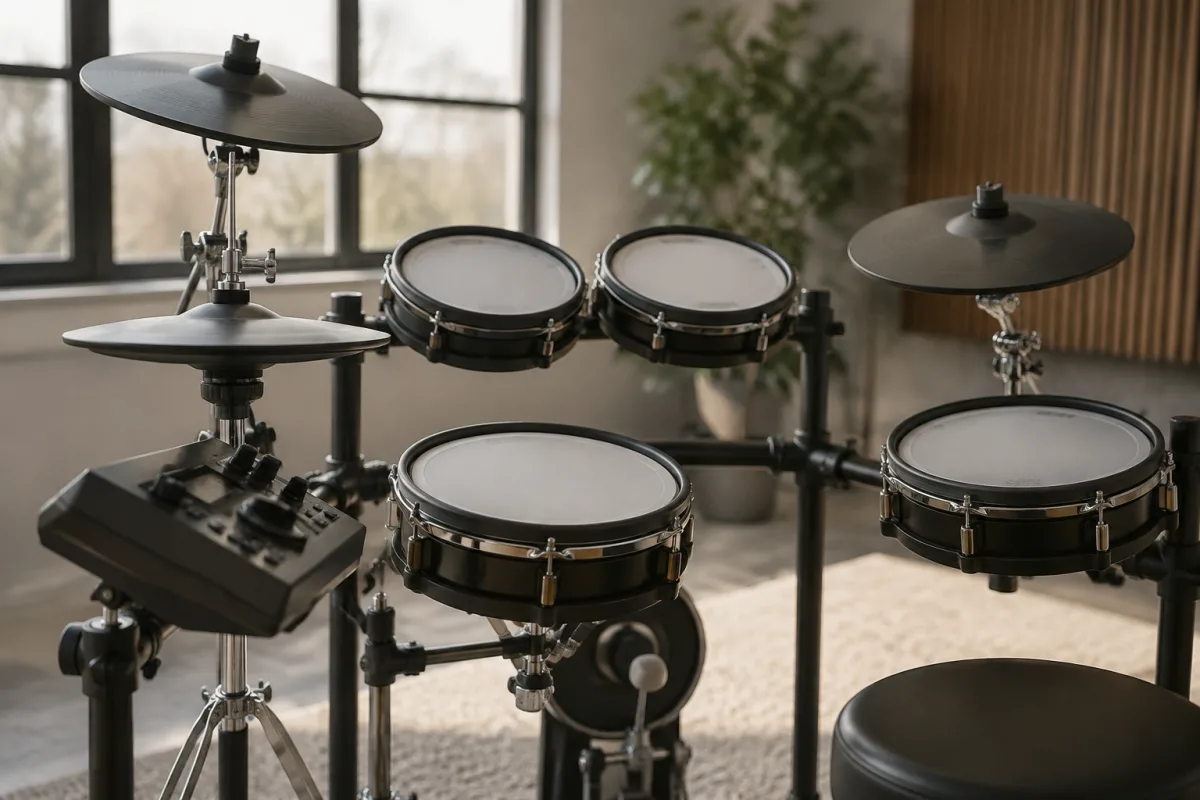
Roland electronic drums have revolutionised percussion performance, offering unlimited sound possibilities, compact portability and contemporary integration with modern music production. Whether you're recording in tight bedroom studios, performing electronic music on stage, or exploring hybrid acoustic-electronic setups, a Roland kit delivers professional-quality sounds and responsive playing feel. This guide explores everything you need to know about these instruments, their features, popular models and how to choose the right system for your musical goals.
What Makes Roland Digital Drums Special
A Roland electronic drum kit uses rubber or mesh pads that trigger digital sound samples stored in the module — the brain of the system. Unlike acoustic drums producing sound through physical vibration, these pads produce any sound imaginable: authentic drum samples, melodic sounds, percussion textures or synthesised tones.
This sonic flexibility transforms how musicians compose and perform. A single kit can provide thousands of sounds accessible through pad assignment and module programming. Musicians switch between acoustic drum emulations for realistic playing feel and electronic textures for contemporary music. This versatility makes electronic drums essential for modern production and performance.
Understanding Electronic Drum Components
A typical setup comprises several components. Pads are touch-sensitive triggers mounted on a frame. Struck with sticks or hands, they send velocity-sensitive signals to the module. Quality pads respond naturally to playing dynamics, offering responsiveness comparable to acoustic drums.
The module contains sound engines, processing and connectivity. Professional modules feature vast sound libraries, effects processing, recording capabilities and USB connectivity for seamless studio integration. Entry-level modules offer core functionality; premium modules provide deeper editing and more advanced features.
A hi-hat controller allows dynamic opening and closing of cymbal sounds. High-quality controllers respond smoothly to foot pressure, enabling authentic cymbal articulation. Kick pedals trigger bass drum sounds.
Popular Roland Electronic Drum Models
The Roland TR-808, though not a full drum kit, deserves mention as an iconic electronic percussion instrument that shaped hip-hop and electronic music. The V-Drums TD-27 represents Roland's premium consumer offering, delivering excellent sound quality and extensive customisation.
The TD-17KVX balances features and affordability, perfect for intermediate players and recording musicians. The TD-07 targets budget-conscious beginners, delivering solid functionality without premium features. For portable performance, the SPD-ONE is a compact pad instrument triggering electronic sounds.
High-end options like the TD-50X offer professional-grade sound engines, extensive connectivity and deep editing capabilities favoured by touring musicians and studio professionals.
Sound Quality and Sound Engine Technology
Modern Roland modules use sophisticated sound engines combining sampled drums, acoustic modelling synthesis and layered samples. The Supernatural Sound Modeling Technology creates responsive, dynamic sounds that respond intuitively to playing dynamics.
Quality modules include meticulously recorded acoustic drum samples from premium instruments, producing authentic tone without obvious electronic character. Professional modules offer multiple drum kit variations — vintage kits, contemporary kits, electronic textures — all immediately accessible.
Effects processing within modules allows pitch shifting, reverb, compression and distortion, enabling creation of highly customised tones. This sound shaping capability rivals dedicated effects units, empowering musicians to create signature tones.
Responsiveness and Playing Feel
Electronic drums demand responsive pads and intelligent triggering algorithms that distinguish intentional strikes from accidental pad contact or rebound. Premium Roland kits excel at this, with sophisticated pad technology detecting genuine strikes versus false triggers.
The Positional Sensing technology detects strike location on the pad, allowing different sounds at different pad positions. A kick pad struck near the rim produces a different tone than the centre, mimicking acoustic drum playing nuance. This positivity makes electronic drums feel genuine rather than mechanical.
Quality feel matters enormously. Inferior electronics feel unresponsive and frustrating; quality systems respond immediately to playing dynamics, encouraging natural, expressive performance.
Studio Integration and Connectivity
Modern Roland kits include USB connectivity for seamless integration with digital audio workstations (DAWs). This allows direct MIDI export to recording software, enabling hybrid approaches combining electronic drums with other instruments.
Professional modules include audio inputs for triggering external sounds through microphone input, expanding sonic possibilities beyond the module's internal sounds. MIDI connectivity allows control of external synthesisers and effects processors.
Space and Portability Advantages
Electronic drums require dramatically less space than acoustic kits — a compact setup fits in small rooms whilst providing the same sound possibilities as bulky traditional kits. For apartment dwellers, students and bedroom producers, this compactness is transformative.
Portability extends to performance contexts. Load-in becomes manageable; a compact kit transports easily to venues, studios and jam sessions. This practical advantage encourages more frequent rehearsal and performance engagement.
Cost Considerations and Value
Entry-level complete Roland kits cost £400–£700, offering functional playability and decent sound quality for beginners. Mid-range systems run £1,500–£3,000, balancing features and affordability. Professional touring kits exceed £5,000. Rental options cost £50–£100 monthly for exploratory players.
Conclusion
Roland electronic drums represent modern percussion innovation combining authentic playing feel with limitless sonic possibility. Whether you're bedroom producer, touring musician or contemporary composer exploring hybrid acoustic-electronic approaches, a Roland kit empowers artistic expression whilst solving practical constraints of acoustic drumming. With responsive pads, sophisticated sound engines and seamless studio integration, Roland electronic drums remain the professional choice for serious contemporary musicians.


Comments