


Drum Bags Buying guide
Drum Bags: A Complete Buyer's Guide
Buying drum bags that protect your kit properly doesn't have to be complex. This guide explains the key features to look for, price ranges, common mistakes, and how to match bags to your needs.
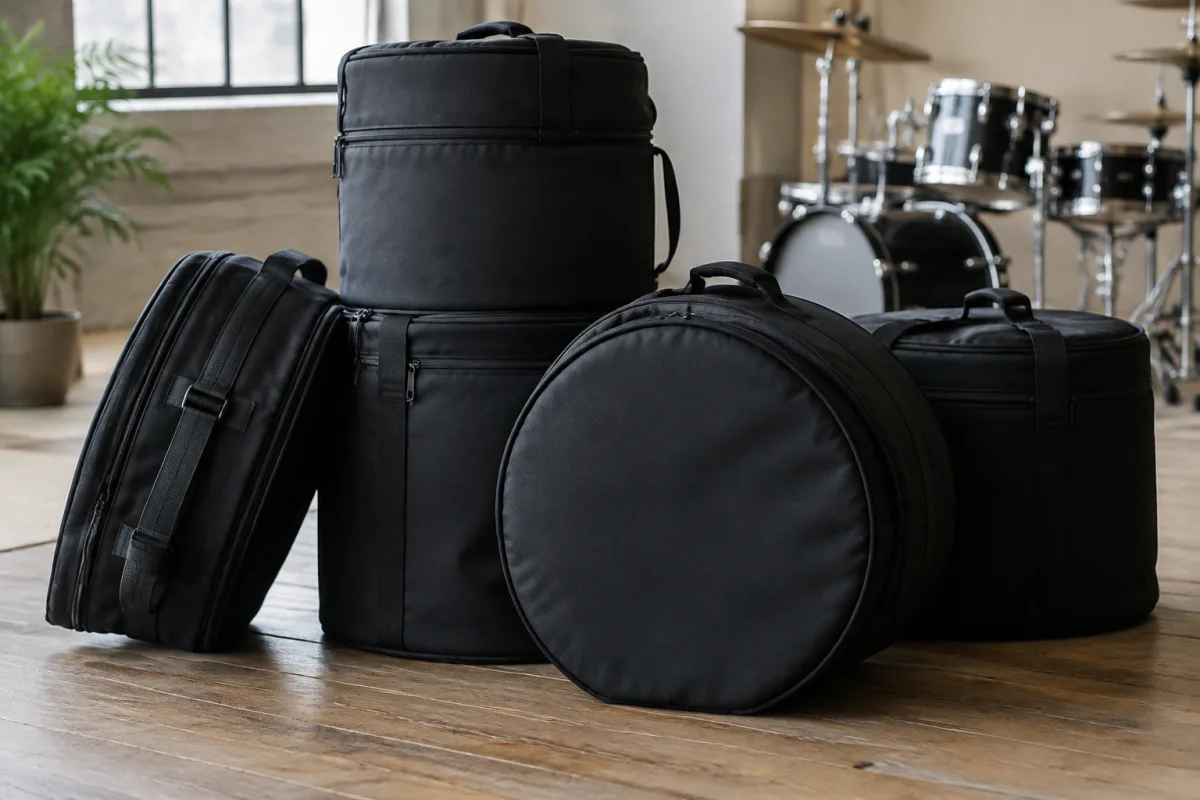
Decide What You're Protecting
Before shopping for drum bags, clarify exactly what you need to transport. Are you protecting a full acoustic kit, individual drums and cymbals, or a lightweight electronic setup? The size and protection level required differ dramatically. Touring professionals hauling a four-piece kit plus cymbals need different drum bags than bedroom musicians moving a practice pad. Knowing your load makes everything else straightforward.
Consider how you'll transport them. Will drum bags fit in your car boot, or do you need compact, stackable designs? Are you flying with your drums, in which case checked baggage regulations and weight limits apply? Will you be changing venues weekly or leaving your kit set up at a rehearsal space? Your travel pattern shapes which drum bags make sense.
Understanding Protection Levels
Drum bags vary wildly in protection. Basic designs offer minimal padding—they're really just bags that keep dust off. Mid-range drum bags add 5–10mm of padding, protecting against minor bumps during transport. Premium drum bags feature 15–20mm of padding plus hard-shell reinforcement, treating your drums like flight cases.
Here's the trade-off: more protection in drum bags means more weight and less portability. A lightly padded bag for your 10-inch tom weighs far less than a heavily padded case but offers minimal impact protection. A hard-shell case for the same drum is nearly indestructible but hefty. Match the protection to your situation—touring drummers justify the weight; local players might not.
Bag Styles and What They're For
Different drum bag types serve different needs. Soft cases are the traditional choice—affordable, lightweight, and adequate for careful handling. Hardware bags store stands, pedals, and tuning keys separately. Cymbal bags protect cymbals with individual slots or soft pouches. Bass drum cases keep your largest drum safe. Practical drummers often mix types rather than buying one "universal" bag.
Backpack-style drum bags have become increasingly popular because they distribute weight comfortably across both shoulders. They're brilliant for gigging drummers who walk to venues or carry equipment over distance. Traditional shoulder bags concentrate weight on one side, which can be tiring but still work well for stationary rehearsal spaces or short distances.
Rolling cases on wheels solve the weight problem entirely but sacrifice portability in cars with small boots and stairs. They're ideal for touring and stationary setups where you'll push rather than carry. For flexibility, many drummers own both—a rolling case for travel and soft bags for compact storage and easy loading.
Material Quality Matters
The exterior fabric determines durability and weather resistance. Nylon is standard—affordable, reasonably tough, and reasonably water-resistant. Canvas is heavier, more premium-feeling, and genuinely more water-resistant but costs more. Some drum bags use ballistic nylon, a heavy-duty military-grade material that's nearly indestructible but adds significant weight.
Check the zippers and handles. Cheap drum bags often fail at these stress points. Look for heavy-duty zippers (ideally YKK or similar quality brands) and reinforced stitching where handles attach. A burst zipper or torn handle render the whole bag useless even if the protective padding is fine. The padding inside matters, but the hardware keeps the bag actually functional.
Seams are worth inspecting. If edges are simply glued rather than stitched, drum bags won't last through regular use. Quality drum bags have double-stitched seams, especially around high-stress areas. This sounds like detail, but a single seam failure during transport is a disaster.
Size and Capacity Considerations
Drum bags come in standard sizes matching common drum dimensions—10-inch, 12-inch, 14-inch, 16-inch, 18-inch, and larger for bass drums. Some bags are adjustable, fitting a range of sizes, which works but usually accommodates poorly compared to size-specific bags. If you're buying bags for a fixed kit, size-specific drum bags offer better protection and efficiency.
Consider stackability. Cylindrical bags stack neatly; oddly-shaped bags don't. If you're carting a kit regularly, stackable drum bags save space in your car. In a stationary rehearsal space, this matters less. Some drummers prefer dedicated hard cases that stack like flight cases; others prefer flexible soft bags that compress when needed.
Budget Tiers and What You Get
Budget tier (£20–£50): Basic bags with minimal padding. Adequate if you're moving drums carefully over short distances or storing them in a safe space. Not suitable for frequent transport or gigging. These drum bags save money but don't protect against real impact.
Mid-range tier (£50–£150): The practical choice for most gigging musicians. Decent padding (5–10mm), durable materials, quality zippers, and comfortable carry options. A £80–£120 set of drum bags covers a complete kit with solid protection and reasonable portability. This is where drum bags balance price and protection.
Premium tier (£150–£400+): Heavy padding (15–20mm), hard-shell components, premium materials, and exceptional build quality. These drum bags treat your drums like irreplaceable instruments. Worth considering if you're touring, flying regularly, or own high-end drums you're protecting obsessively. Premium drum bags are also investment pieces—they last decades.
Features Worth Prioritising
Multiple handles make loading easier. Drum bags with handles on the top and sides offer more flexibility than bags with a single handle. Look for drum bags with padded handles that won't dig into your hands on long carries.
Internal organisation matters. Some drum bags have dividers, pockets, or straps to keep hardware from rattling around. Others are just empty shells. Well-organised drum bags protect your drums from impact between components and make packing and unpacking faster.
Portability features vary. Shoulder straps convert bags to backpack-style carry. Wheels and handles enable rolling. Some drum bags offer both, giving you flexibility. If you're undecided on carry style, choose drum bags with multiple carry options.
Water resistance is worth checking, especially if you'll be transporting drums in wet weather or storing them in damp spaces. Quality drum bags at least resist light rain; premium options are more thoroughly water-sealed.
Common Mistakes When Buying Drum Bags
Don't buy drum bags based on aesthetics alone. A beautiful bag that fails at the zippers after six months is a waste. Focus on materials, stitching, and hardware first; colour is secondary.
Don't assume universal bags fit everything perfectly. Generic "one size fits all" drum bags work poorly for specific drum sizes. A 14-inch tom in a 16-inch bag has space to shift and knock around. Size-specific drum bags fit snugly and protect better.
Don't ignore the cymbal bag question separately. Throwing cymbals in drum bags made for drums causes them to slide and potentially crack. Dedicated cymbal bags with individual slots are a cheap investment that protects expensive cymbals properly.
Don't prioritise lightness over protection if you're gigging. A feather-light bag protects poorly; a professional drummer choosing between a light bag and adequate protection should choose protection. You can develop arm strength; you can't rebuild a dented drum.
Practical Buying Strategy
Measure your drums and cymbals before shopping. Know your exact drum sizes and the largest cymbal you own. This lets you specify drum bags accurately rather than guessing "medium" or "large."
Read reviews from gigging musicians, not just reviewers. Look for mentions of real-world durability—do the zippers hold up? Do the handles tear after a year? Are the seams reliable? Reviewers who actually gig with their drum bags have credibility.
Consider buying a mixed set rather than all matching bags. Some drummers pair a premium hard case for their snare drum (the most valuable piece) with mid-range bags for toms, and a hardware bag for stands and pedals. This strategy protects what matters most while keeping total cost reasonable.
For more detailed information about drum bags and their features, check our complete guide to drum bags for comprehensive coverage.
Conclusion
Choosing the right drum bags protects your investment and makes gigging practical. Focus on padding quality, material durability, and realistic protection for your transport situation. A solid mid-range set of drum bags serves most gigging musicians well—they balance protection, portability, and cost. Invest thoughtfully and your drums stay safe whilst you focus on playing instead of worrying about damage. Good drum bags are working gear you'll appreciate every time you load your kit.


Comments