
Roland Sampler 404 article
The Complete Guide to Roland Sampler 404
The Roland sampler 404 is a legendary portable sampling device that has shaped hip-hop production and electronic music for over two decades through hands-on creative control.
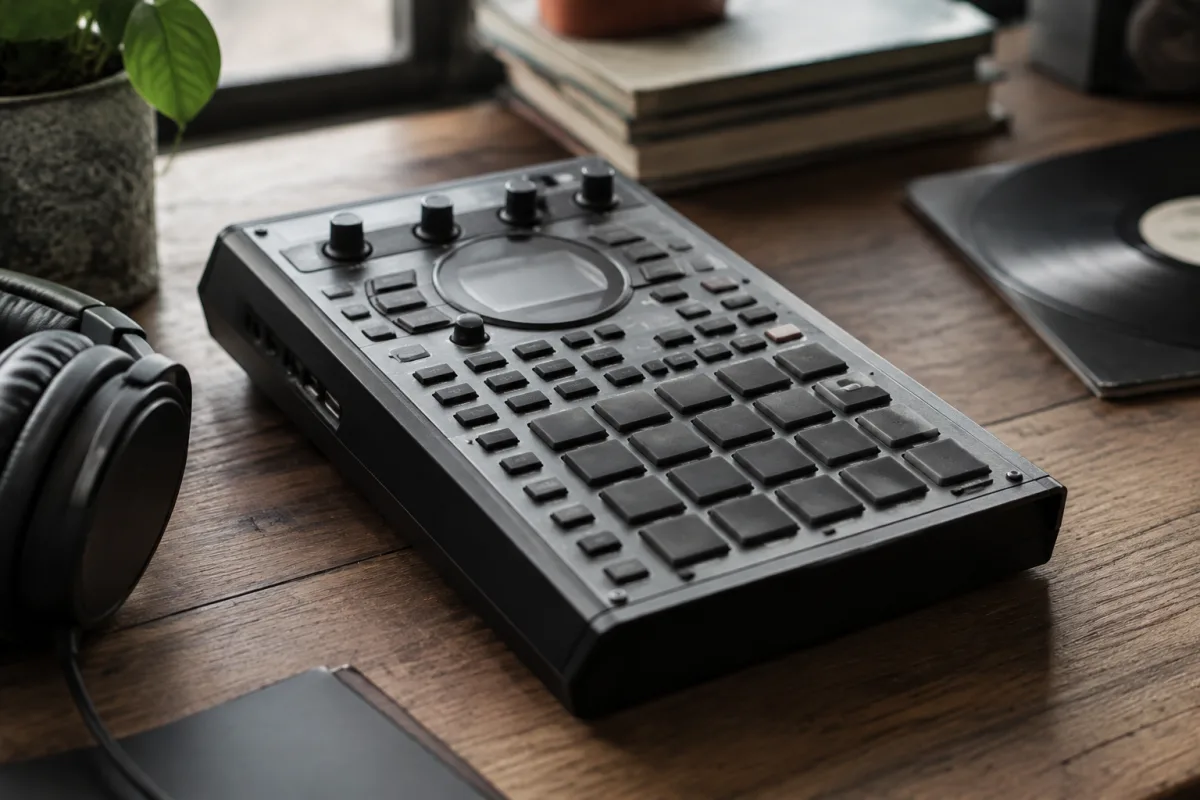
The Roland sampler 404 is a legendary portable sampling device that has shaped hip-hop production, electronic music, and experimental sound design for over two decades. With its combination of portability, intuitive interface, and distinctive character, the Roland sampler 404 remains essential equipment for producers, beat makers, and musicians seeking hands-on creative control and spontaneous musical exploration.
Understanding the Roland Sampler 404
The Roland SP-404 (released in 2002) is a compact solid-state sampler designed for portability and creative immediacy. Unlike studio samplers requiring complex setup and computer integration, the Roland sampler 404 fits in a backpack and operates independently with its own speakers and battery power. This accessibility transformed sampling from a studio-based process into a mobile, spontaneous creative tool that producers could use anywhere—at home, in clubs, on the street, or during live performance.
The Roland sampler 404 combines sampling capability (recording and manipulating audio), on-board sound effects and filters, loop sequencing, and MIDI control into a single integrated instrument. The straightforward workflow—record, process, loop, perform—makes the Roland sampler 404 accessible to beginners whilst offering sufficient depth to sustain serious producers' creative practice for years.
Key Features of the Roland Sampler 404
The original Roland sampler 404 featured a 3.7-inch LCD screen for visual feedback, 16 pads for triggering samples and patterns, onboard sound effects (reverb, delay, distortion, filtering), and approximately 1.4 MB of sample memory—enough for roughly 30 seconds of monaural recording at high quality. A large rotary encoder simplified menu navigation, and battery power (six AA batteries or AC adapter) enabled true portability.
- Sampling and Recording: Line-in audio input allows recording samples directly into the device. A simple record interface captures samples quickly, making spontaneous field recording practical.
- Sample Manipulation: Playback control offers pitch shifting, time stretching, reverse playback, and loop definition, allowing creative sound design without computer assistance.
- Effects Processing: Built-in effects including reverb, delay, distortion, and filtering add character and dimension to samples. The effects are simple enough for quick experimentation but sufficient for serious sound design.
- 16-Pad Grid: Velocity-sensitive pads trigger samples and patterns, enabling rhythmic sequencing and live performance manipulation. The pads respond to playing intensity, adding expressiveness to performances.
- Loop Sequencer: A basic pattern sequencer allows programming drum and melodic patterns, then looping them during performance. The interface is intuitive enough for quick beats yet flexible enough for complex arrangements.
- MIDI Compatibility: MIDI input allows external keyboards, controllers, and computers to trigger samples or sync timing with other devices.
Generations and Variations of Roland Sampler 404
Roland released several iterations of the sampler 404 design. The original SP-404 (2002) established the form and function that endures today. The SP-404SX (2009) expanded memory significantly, offered improved effects, and introduced Phrase Sampling for longer recordings. The SP-404A (2019) modernised the interface, improved connectivity with USB audio I/O, and refined the sampling algorithm. Most recently, the SP-404EX continues the legacy with enhanced effects, greater sample memory, and modern conveniences like rechargeable batteries and Bluetooth audio input.
Despite iterations, each Roland sampler 404 variant maintains the core philosophy: portable sampling and looping device with immediate creative control. Feature additions improve workflow, but the fundamental experience remains consistent across generations.
Why Producers Love the Roland Sampler 404
The Roland sampler 404 appeals to producers for several compelling reasons. Portability enables creative capture anywhere—field recordings, environmental sounds, conversations—that can become musical material. The simplicity paradoxically provides creative freedom; there are so few options that every choice feels intentional rather than paralysed by menu diving. The tactile interface—physical pads, a rotary knob, immediate audio feedback—makes the Roland sampler 404 feel like a musical instrument rather than a computing device.
Hip-hop producers embraced the Roland sampler 404 because it encouraged the exploratory, spontaneous approach that characterises the genre's creative aesthetic. Rather than planning arrangements in advance, producers could record a sample, immediately manipulate it into interesting variations, layer loops, and construct pieces organically. This workflow aligned perfectly with hip-hop's emphasis on creative iteration and sonic experimentation.
Electronic musicians and experimental producers appreciate the Roland sampler 404's character—it imparts a distinctive sonic footprint that distinguishes tracks produced on the device. The device's limitations (sample memory, processing power) force creativity within constraints, often yielding distinctive results that elaborate studio tools cannot match.
The Roland Sampler 404 in Professional Production
Despite being consumer-grade hardware, the Roland sampler 404 has appeared on professional recordings and live performances by accomplished artists across genres. Producers use the device in hybrid workflows, combining its portability and tactile control with computer-based production tools. Some use the Roland sampler 404 exclusively for beat-making fundamentals, then refine arrangements in DAW software. Others integrate the device into live performance, using the 16 pads to trigger samples and effects in real-time.
The cultural weight of the Roland sampler 404—its association with hip-hop, its two-decade legacy, its distinctive character—makes it a symbolic instrument even among producers using more advanced technology. Owning and using a Roland sampler 404 signals commitment to foundational production principles and respect for the creative traditions the device represents.
Limitations and Workflow Considerations
The Roland sampler 404's limitations are inseparable from its appeal. Sample memory is finite—modern iterations offer 10+ minutes of recording, but filling that memory requires discipline and sonic restraint. The small screen limits visual feedback and navigating complex arrangements. Processing power constrains real-time effects availability, sometimes requiring bouncing and re-sampling to add effects to existing loops. These constraints force creative limitation that drives distinctive music-making.
Audio quality, whilst acceptable, doesn't match contemporary studio equipment. The device's character imparts a particular sonic fingerprint—warm, slightly compressed, with subtle aliasing in extreme pitch shifts—that's either a feature or limitation depending on your artistic goals.
Integrating the Roland Sampler 404 into Modern Production
Contemporary producers integrate the Roland sampler 404 into hybrid workflows combining hardware immediacy with software flexibility. Samples recorded and manipulated on the device can be transferred via USB to computers, then incorporated into DAW projects alongside other materials. MIDI sync allows the Roland sampler 404 to synchronise with external sequencers and DAW software, enabling the device to serve as a control surface and effect processor rather than a standalone system.
This hybrid approach captures the best of both worlds: the tactile, spontaneous creativity the Roland sampler 404 encourages, combined with the arrangement and mixing tools that modern software provides.
The Roland Sampler 404's Lasting Legacy
Over two decades, the Roland sampler 404 has transcended being a mere product to become a cultural symbol in hip-hop and electronic music production. Countless influential albums feature sounds shaped on Roland sampler 404 devices. The form, function, and philosophy the device established influenced subsequent hardware and software designs. Its emphasis on portability, tactile control, and creative immediacy shaped how modern producers think about music-making tools.
Conclusion
The Roland sampler 404 represents a distinctive approach to music production emphasising portability, tactile control, and creative immediacy over comprehensive feature sets. Whether you're beginning music production, exploring sampling-based techniques, or seeking a portable companion to computer-based production, the Roland sampler 404 offers proven capability and a heritage of creative achievement. Its limitations force creativity within constraints, its simplicity encourages spontaneous exploration, and its portability liberates production from studio walls. For two decades, the Roland sampler 404 has remained an essential tool for producers seeking authentic, hands-on creative control.


Comments