


Record Player Mixer article
Record Player Mixer for Beginners: A Complete Guide
Discover how to start DJing with a record player mixer. This guide covers equipment, setup, fundamental techniques, and common mistakes to avoid.
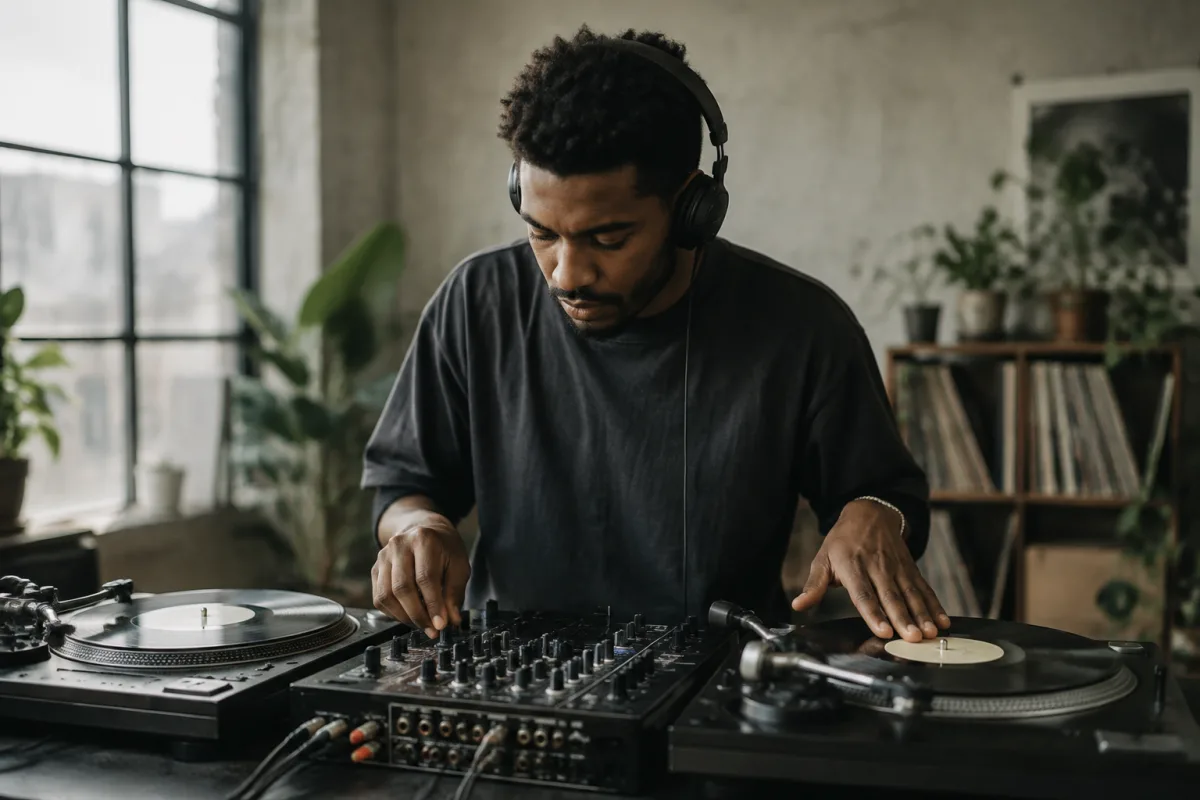
If you're drawn to the tactile, nostalgic appeal of spinning vinyl but want to blend music like a modern DJ, a record player mixer is the bridge between two eras of music culture. Whether you're imagining yourself curating smooth sets at home, creating vinyl-based mixes for social media, or simply exploring what DJing entails without massive investment, understanding how a record player mixer works is your first step. This beginner's guide introduces you to record player mixer fundamentals, essential components, and the foundations of blending music from two turntables.
What Is a Record Player Mixer?
A record player mixer is a compact device that accepts audio inputs from two turntables and blends them together. Imagine having two record players playing simultaneously—without a mixer, you'd hear a cacophony. A record player mixer lets you control the volume from each player independently, smoothly transition from one to the other, and create seamless blends. It's the essential component that transforms two turntables from chaos into controlled musical expression.
For beginners, a record player mixer feels like magic the first time you successfully fade from one track to another. That instant feedback—the ability to control what your audience hears—is addictive and encourages creative exploration.
Understanding Record Player Mixer Components
Most record player mixers share similar architecture. Learning these parts helps you understand what each control does:
Crossfader
The horizontal slider in the centre of a record player mixer. Push it left and you hear turntable 1; push it right and you hear turntable 2. In the middle, both decks play equally. The crossfader is your primary transition tool—the magic wand that creates smooth blends.
Channel Faders
Vertical faders for each turntable (or channel). These control volume independently. A record player mixer typically has two channel faders: one for the left turntable, one for the right. These allow fine-tuning volume balance before using the crossfader.
EQ Controls
Most record player mixers include basic EQ—usually bass, midrange, and treble knobs for each channel. These let you adjust tonal character, which is crucial when blending disparate records with different recording characteristics. A record player mixer's EQ helps you make two very different records sound cohesive.
Headphone Output
An essential component for DJs. The headphone output on a record player mixer lets you hear incoming tracks before the audience hears them—crucial for cueing songs, finding the perfect moment to blend, and avoiding jarring transitions. Beginners often underestimate how important this feature is.
Phono Preamp
Some record player mixers include built-in phono preamps (signal boosters). Turntables produce very weak signals; most need amplification. A record player mixer with an onboard preamp is more convenient than buying external equipment. This feature simplifies beginner setups considerably.
Getting Started: Your First Steps with a Record Player Mixer
Setting up a record player mixer feels daunting, but the process is logical.
1. Connect Your Turntables
Plug each turntable's RCA cables into the corresponding inputs on your record player mixer. Usually marked left and right, these connections carry the audio signals. If your turntables have ground wires, connect those as well—this prevents hum.
2. Connect Your Output
The record player mixer's master output goes to your amplifier, powered speakers, or external sound system. This is what your audience hears. Headphones plug into the dedicated headphone jack.
3. Adjust Channel Levels
Play music from turntable 1, then adjust its channel fader until the volume feels balanced. Repeat for turntable 2. This preliminary step prevents shocking level changes when you use the crossfader.
4. Practice Crossfader Transitions
With both turntables playing (at moderate volume), slowly push the crossfader from left to right. You'll hear turntable 1 fade down whilst turntable 2 fades up. Reverse the crossfader and listen to the transition from turntable 2 back to turntable 1. This fundamental skill—smooth crossfading—is what separates DJing from playing two songs in sequence.
Essential Techniques for Record Player Mixer Beginners
These foundational skills open the door to more advanced mixing:
Beatmatching Basics
The Holy Grail of vinyl DJing: making two records play at the same tempo so they blend seamlessly. This requires adjusting the turntable speed whilst listening through headphones (using the cue feature). It's complex initially but becomes intuitive with practice. Many beginners spend weeks on beatmatching alone—it's the skill that separates casual record player mixer users from actual DJs.
EQ Blending
Use the EQ knobs to make incoming records sonically compatible. If an incoming track feels bass-heavy, reduce its bass slightly on the record player mixer. This creates smoother transitions and maintains mix coherence. EQ is subtle but transformative.
Cueing and Preview
Always use headphones to preview incoming tracks before the audience hears them. This protects the vibe and lets you find the perfect moment to transition. A record player mixer's headphone output is essential for this workflow.
Common Beginner Mistakes with Record Player Mixers
Learning from others' missteps accelerates your development:
- Neglecting to cue in headphones: Cueing prevents awkward silences, false starts, and jarring transitions. Always preview what's coming next.
- Ignoring beatmatching: Two records playing at different tempos sound chaotic. Spend time practising speed adjustment—it's fundamental to good mixing.
- Using the crossfader for every transition: Variety in transition technique keeps sets interesting. Sometimes fade with channel faders instead; sometimes use EQ adjustments. A record player mixer offers many tools—use them creatively.
- Playing records too loud: Excessive volume hides mixing flaws and damages hearing. Start conservatively; you can always turn up later.
- Treating records carelessly: Vinyl is delicate. Handle records by the edges, store them vertically, and clean them regularly. Record player mixer enthusiasm shouldn't sacrifice equipment lifespan.
- Expecting instant mastery: Smooth mixing takes weeks of practice. Your first transitions will be clunky. Embrace the learning curve—every practice session improves your craft.
Choosing Your First Record Player Mixer Setup
As a beginner, you need three components: two turntables, a record player mixer, and an output system (amplifier and speakers). Budget options exist at every level. Entry-level record player mixers (£100–250) are perfectly adequate for learning. Mid-range options (£250–500) offer more robust construction and refined controls. Professional mixers exceed these prices but aren't necessary for beginners.
Prioritise learning over equipment. A basic record player mixer used creatively produces better results than premium equipment in untrained hands.
Building Your Record Player Mixer Practice Routine
Consistency matters more than marathon sessions. Dedicate 30 minutes daily to practising transitions, beatmatching, and EQ blending. Record yourself mixing to hear progress. Join online communities of vinyl DJs for inspiration and feedback. Gradually work your way toward complete sets—imagine mixing a 30-minute set from start to finish without stopping.
A record player mixer is your gateway into a creative community spanning decades. Vinyl DJing connects you to turntablism's rich history whilst letting you forge your own sonic identity. For deeper understanding of record player mixer techniques and equipment options, explore the complete guide to record player mixers.
Your first awkward transition will eventually become smooth muscle memory. Your first shaky beatmatch will transform into effortless synchronisation. Embrace the learning journey, stay curious, and soon you'll be creating sonic blends that move yourself and others.


Comments