


Drum Machine 808 article
Drum Machine 808 for Beginners: A Complete Guide
The 808 drum machine is accessible to beginners yet deep enough for professionals. This guide shows you how to create your first legendary bass sounds.
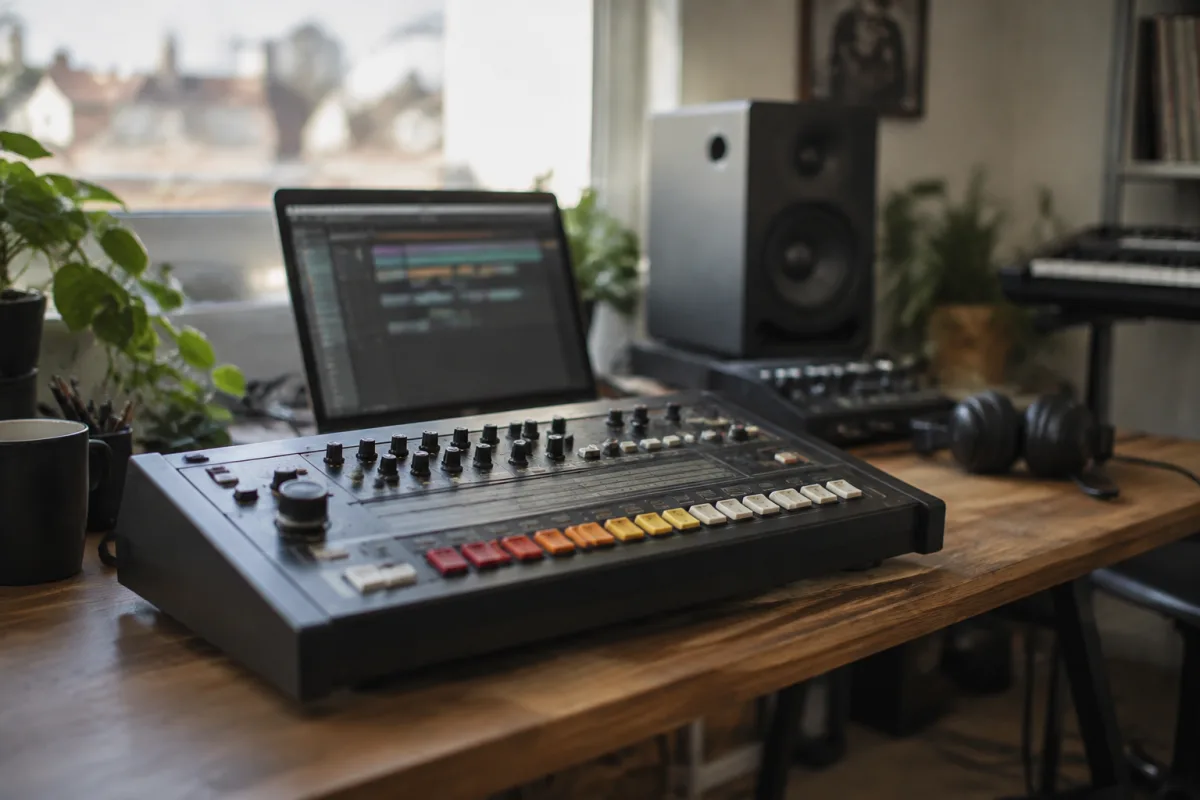
You've heard the 808 bass boom in countless hip-hop tracks. That deep, resonant sub-bass that shakes your chest—that's the 808. Now you're wondering: can I create that sound myself? Do I need expensive gear? Is the 808 drum machine worth learning? This beginner's guide to the 808 drum machine removes the mystery and shows you why this legendary drum machine belongs in your production arsenal.
What Makes the 808 Drum Machine So Special?
The 808 drum machine is essentially a synthesiser disguised as a drum device. Unlike most drum machines playing pre-recorded samples, the 808 generates sound from scratch. This means every 808 drum machine hit is customisable—you shape pitch, decay, and character in real-time.
The original 808 drum machine released in 1980 became legend because of this flexibility. Producers could bend that bass frequency into something that didn't sound like drums at all. The 808 drum machine transformed from a rhythm device into an instrument for melodic basslines.
This explains the 808 drum machine's enduring appeal: it sounds like nothing else. Modern hip-hop, trap, and electronic music all built on 808 drum machine sounds. Learning the 808 drum machine connects you directly to contemporary music production.
Understanding Drum Machine 808 Basics
How does a 808 drum machine actually work? Here's the beginner breakdown:
A 808 drum machine generates bass and drums through voltage-controlled synthesis. When you trigger a 808 drum machine sound, the device starts at a high pitch and quickly decays down to a fundamental bass frequency. This pitch drop creates that distinctive "boom" sound.
A 808 drum machine also offers hi-hats, claps, and cowbells for complete rhythm sections. But honestly, most producers use the 808 drum machine primarily for that legendary bass sound. The other drums serve supporting roles.
For comprehensive technical details about 808 drum machine design and synthesis, explore the complete guide to drum machine 808.
Drum Machine 808: Hardware vs. Software Options
You have two paths to 808 drum machine sounds:
- Hardware 808 drum machine: Physical devices you connect to your studio. The original drum machine 808 costs thousands on vintage markets. Modern 808 drum machine replicas (Electribe, Volca) cost £150-500. These hardware 808 drum machines feel tactile and inspire hands-on creativity.
- Software 808 drum machine: Virtual instruments running inside your DAW. Most DAWs include basic 808 drum machine sounds. Specialised 808 drum machine plugins cost £20-100. Software 808 drum machines offer unlimited experimentation without physical space requirements.
Most beginners start with software 808 drum machine solutions. They're cheaper, more accessible, and flexible for learning. Once you understand 808 drum machine workflow, hardware becomes more appealing.
Beginner-Friendly Drum Machine 808 Approaches
Here's how to access 808 drum machine sounds right now:
- Stock DAW 808 drum machines: Check your DAW's included instruments. Most include drum machines with 808 drum machine sounds built-in. These aren't legendary reproductions, but they work for learning.
- Free 808 drum machine VSTs: Sites like Splice and BeatStars offer free 808 drum machine sound packs. Download loops featuring 808 drum machine bass to study professionally produced samples.
- XO/Electribe mini 808 drum machine: Budget hardware 808 drum machine around £150. Small form factor, USB connectivity, hands-on control. This hardware 808 drum machine sparks creative joy at affordable cost.
- Arturia Mini Brute 2S 808 drum machine: Synthesiser with built-in 808 drum machine sounds plus full synthesis capabilities. More expensive (£250-300) but versatile for production beyond just 808 drum machine exploration.
Beginners find best value starting with DAW 808 drum machine sounds, then upgrading to hardware if hands-on control appeals.
The First Fear: "Will My 808 Drum Machine Sound Like a Professional?"
New producers worry their 808 drum machine sounds amateurish. Here's the encouraging truth: 808 drum machine character shines through regardless of gear quality. A £50 virtual 808 drum machine, when properly mixed, sounds remarkably professional.
The difference between amateur and professional 808 drum machine use isn't the sound itself—it's how you process and mix the 808 drum machine into the track. Compression, EQ, and layering transform basic 808 drum machine into radio-ready productions.
Your 808 drum machine sounds impressive immediately. You're just learning production workflow around the 808 drum machine. That development happens over weeks and months.
Creating Your First Drum Machine 808 Pattern
Here's how to start with your 808 drum machine:
- Select an 808 drum machine sound: Choose the bass option from your 808 drum machine bank. Ignore detailed parameters initially. Just find a sound you like.
- Program a simple pattern: Create a 4-bar loop with kicks on 1 and 3, 808 drum machine bass hits on 2 and the off-beat. Quantise to the grid. Even simple drum machine 808 patterns sound impressive.
- Adjust decay on your 808 drum machine: Longer decay (2-4 seconds) creates melodic 808 drum machine sounds. Shorter decay (200ms) produces percussive hits. Experiment with your 808 drum machine decay to hear the difference.
- Pitch-adjust your 808 drum machine: Many 808 drum machines let you modulate pitch. Dropping pitch slightly from your 808 drum machine start point creates fatter bass. This is where 808 drum machine production magic happens.
- Layer your drum machine 808 with samples: Add drum samples over your 808 drum machine groove. The 808 drum machine provides bass foundation; samples add rhythm texture.
Within an hour of experimenting, you'll understand why the 808 drum machine shaped popular music.
Common Mistakes With Drum Machine 808
Learning from others prevents frustration with your 808 drum machine:
- Leaving 808 drum machine at default settings: The magic lives in tweaking your 808 drum machine. Explore decay, pitch, and filter on your 808 drum machine. Default sounds rarely impress.
- Using only one 808 drum machine sound: Stack multiple 808 drum machine tones at different pitches. Layer your 808 drum machine with samples. This combination creates depth cheap 808 drum machine sounds lack.
- Forgetting compression on your drum machine 808: A compressor tames 808 drum machine dynamics and adds glue to mixes. Every professional track uses compression on the 808 drum machine.
- Programming too many 808 drum machine hits: Simplicity is beautiful on the 808 drum machine. Resist the urge to fill every beat with sound. Space between 808 drum machine notes creates anticipation.
- Ignoring sidechain on the 808 drum machine: Sidechain compression makes your 808 drum machine pump with kick drums. This technique defines modern hip-hop 808 drum machine production.
- Assuming all 808 drum machines sound identical: Vintage 808 drum machines sound distinctly different from modern emulations. Explore different 808 drum machine versions to find your sonic preference.
Your Drum Machine 808 Production Path
The 808 drum machine is both simple and infinitely deep. Your first 808 drum machine groove happens immediately. Mastering 808 drum machine nuance takes years of experimentation.
This progression keeps the 808 drum machine engaging. You're never bored—there's always deeper 808 drum machine tweaking to explore. Every professional producer started where you are, discovering their first 808 drum machine bass sound.
Your 808 drum machine journey connects you to production lineage stretching back decades. Every hip-hop classic uses the 808 drum machine. By learning this instrument, you're learning the language of contemporary music.
Start now. Select your 808 drum machine sound and create. Your next track's foundation awaits.


Comments