


Roland System 8 Buying guide
Roland System 8: A Complete Buyer's Guide
At £2,500+, the Roland System-8 demands careful research. Know what to check, what pitfalls to avoid, and whether it's right for your rig.
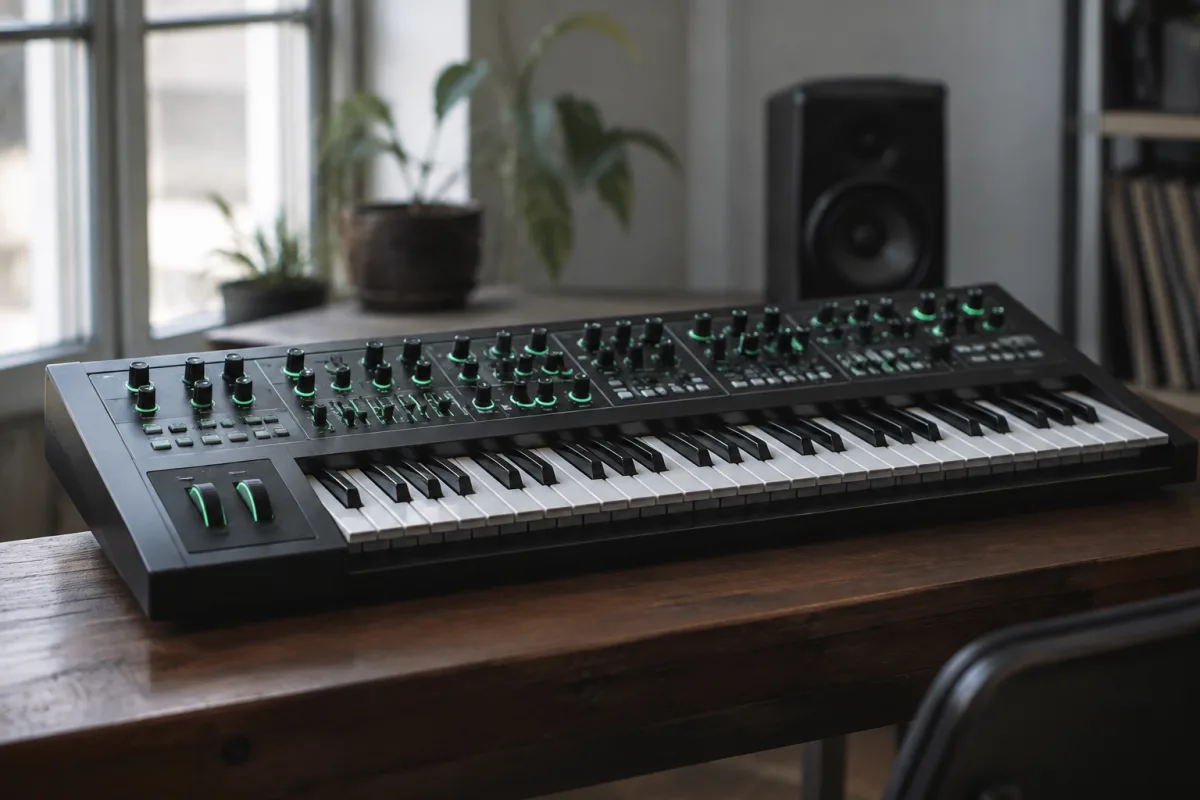
Buying a Roland System-8: What You Need to Know
The Roland System-8 is a serious piece of kit, and pricing sits accordingly. At £2,500–3,000, it's a significant investment. Before you commit, you need to understand what separates a smart buy from buyer's regret. This guide covers the specs that matter, what to check when shopping, and the pitfalls that catch unprepared buyers.
Who Should Buy a Roland System-8?
The System-8 isn't for casual players. It's built for producers who need a standalone synthesizer powerful enough for live performance and studio work. If you're recording electronic music professionally, performing live, or integrating synthesis into a production rig, it's worth considering. If you're just exploring synthesis or on a tight budget, start with VST plugins or a cheaper hardware synth.
Target buyers typically have:
- Experience with synthesis or MIDI workflow
- A dedicated studio or performance rig (it needs space on a desk or stand)
- Professional or semi-professional music production as a primary activity
- Budget to add cases, power conditioning, and cables
- A clear use case: live performance, studio recording, or hybrid production
If you lack any of these, consider what gap the System-8 would fill in your workflow before spending. A middle-ground hardware synth at £800–1,500 might give you 80% of the functionality at half the cost.
Critical Specs to Check
Oscillators and voice count. The System-8 offers multi-timbral performance (playing multiple sounds simultaneously). Check how many separate timbres you can load and voice allocation. More voices means richer polyphony; fewer means you're limited to single sounds or careful layering.
Effects processing. Look at reverb, delay, distortion, and modulation options. The System-8 ships with solid onboard effects; confirm they match your intended use. Some users upgrade to external effect units later—if that's a cost you weren't expecting, factor it in.
MIDI connectivity. Confirm it has MIDI In (to control from a keyboard, sequencer, or DAW), MIDI Out (to sequence external gear), and USB connectivity for computer integration. Not all machines have all three. Know what you need.
Sequencer capabilities. If you're buying the System-8 partly for its sequencer, test that it matches your workflow. Can you record in real-time? Program step-by-step? Loop and layer? Import patterns from other equipment? These vary by model revision.
Panel layout and knob count. The System-8's control surface matters for hands-on tweaking during performance. Count knobs and buttons for the parameters you adjust most. Fewer controls mean more menu diving; that's a workflow tax.
What to Check When Shopping
If buying secondhand, this matters even more. You're buying used electronics; the following checks are non-negotiable:
- Power on. Plug it in and turn it on. Does it boot? Are there any screen glitches or frozen graphics? Listen for cooling fan noise—excessive fan activity suggests age or overuse.
- All buttons and knobs. Press every button. Turn every knob through its full range. Listen for crackles (dirty potentiometers). Stuck buttons or unresponsive controls indicate wear.
- Display quality. Inspect the LCD or LED screen for dead pixels, fading, or partial display. Screen replacement is costly.
- Audio output. Play a sound. Check both stereo outputs (left and right). Distortion or dropout means internal damage. Plug in headphones and listen for crackling.
- MIDI connectivity. Test MIDI In by connecting a keyboard and playing. Test MIDI Out by connecting an external synth and sending a sequence. Test USB if you plan to use it.
- Physical condition. Look for dents, cracked knobs, or damaged input jacks. Minor cosmetic wear is fine; structural damage or broken connectors are expensive.
- Power supply. Confirm the original PSU ships with the unit. Replacement PSUs are specific and costly.
- Warranty and returns. If buying from a retailer, know the return window. Secondhand from private sellers means as-is; get it inspected by a technician if you're unsure.
Common Pitfalls to Avoid
Experienced buyers steer clear of these traps:
- Ignoring the learning curve. The System-8 is powerful; mastering it takes time. Factor in weeks of tweaking before you're efficient. If you need immediate results, buy something simpler first.
- Underestimating accessories. The System-8 alone isn't enough. Budget for: a stand or desk space, decent cables (£30–60), a power conditioner (£80–150 if you're serious), and a hard case if you'll gig (£200+). These easily add £500 to your actual outlay.
- Forgetting MIDI integration costs. If you're buying to integrate with your DAW or live rig, you'll need quality MIDI cables, a controller keyboard, or a mixer to route audio. None of these are cheap.
- Not testing sounds first. The System-8 ships with factory presets. Watch demos. Do those sounds inspire you? Don't buy for a spec list; buy because you love what it does sonically.
- Buying used without inspection. Screen failures, pot crackle, and stuck buttons are hidden costs that balloon after purchase. Always test thoroughly or buy from a retailer with warranty.
- Assuming it's a standalone instrument. The System-8 works best as part of a larger rig—sequencers, controllers, mixers, effects units. If you're building from scratch, expect to spend 3–4x the synth's price to do it properly.
Price Tiers and What You're Paying For
New retail (£2,500–3,000): Full manufacturer warranty, pristine condition, latest firmware, and peace of mind. You pay for support and guarantees.
Secondhand, excellent condition (£1,800–2,200): Fully functional with minor cosmetic wear. Get a full inspection report. Older units may have different firmware or missing original accessories; factor that in.
Secondhand, fair condition (£1,500–1,800): Working but showing age. There might be minor crackles in pots, faint screen wear, or cosmetic dents. A technician checkup is essential (£80–150).
Secondhand, as-is (under £1,500): High risk. You might be fixing electronics or replacing components. Only for buyers comfortable with synth repair or willing to send it to a technician.
The gap between new and secondhand is steep because the System-8 is built to last. Older units still perform well; the premium for new is warranty and certainty, not capability.
Alternatives Worth Considering
Before committing to System-8 money, compare:
- Elektron Analog Rytm (£800–1,000): Powerful drum and bass synth. Less flexible for melodic work but brilliant for rhythmic production.
- Moog Moogerfooger Pedals + DAW (£300–500): Pure analog sound shaping; pairs with your computer for hybrid workflow.
- Used Moogerfooger Synth (Moog Minitaur) (£500–700): Compact analog monophonic synth. Great for leads and basses; not polyphonic.
- Software VST Suite (Spectrasonics, Arturia) (£200–400): Unlimited synthesis on your computer; no hardware investment. Good if you're DAW-centric.
Each fills a different need. Clarify what the System-8 offers that these don't before spending.
The Buying Decision
The Roland System-8 is a worthy investment if you're an electronic music producer ready for a powerful, multi-functional synth. It plays beautifully, integrates smoothly into rigs, and lasts decades. But it's expensive, demands a learning curve, and requires supporting hardware to shine.
Shop carefully. Test it in person if possible. Buy with warranty if you're unsure. The best price means nothing if you buy a unit with failing electronics. And remember: the System-8 is a tool, not magic. It will deliver only what your skill and creativity put into it. Make sure you're ready for that responsibility before you buy.


Comments