


Numark Scratch Buying guide
Numark Scratch: A Complete Buyer's Guide
Scratching deserves proper tools. This buying guide covers Numark Scratch specs, fader feel, what to inspect, and who should actually buy this specialist mixer.
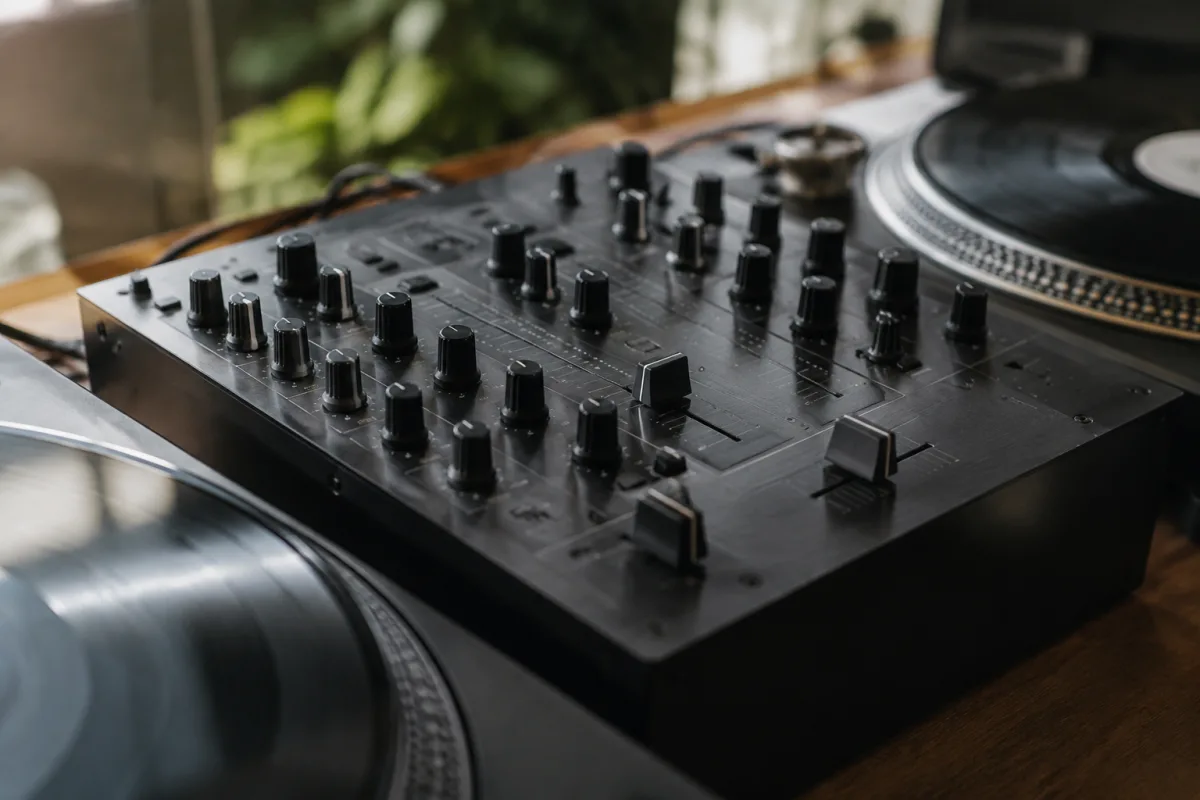
Buying the Numark Scratch: A Complete Buyer's Guide
The Numark Scratch is a purpose-built DJ mixer for turntablism—the art of creative scratching and manipulating vinyl records. At £500–700, it sits in the serious amateur to semi-professional range. Before you commit, you need to know whether it delivers what you need, what specs matter, and what pitfalls catch unprepared buyers.
Who Should Buy the Numark Scratch?
This mixer is designed for DJs who prioritise scratch techniques above all else. You're not buying it for club gigs with a thousand people—you're buying it to perfect cutting, cue-ing, and turntable creativity. The target buyer typically has:
- Two turntables and experience with vinyl
- Interest in hip-hop DJ culture and scratching techniques
- A dedicated DJ space at home or studio
- Budget for quality turntables to pair with it (the mixer alone isn't sufficient)
- Professional or semi-professional intentions within a few years
If you're starting DJing from zero or planning club performances, look elsewhere first. The Scratch is specialist; it assumes you already understand mixing and want to layer scratching on top.
Key Specs That Matter
Channel count. The Scratch typically offers two or four channels. Two channels mean you're mixing two turntables only (no microphone, no auxiliary devices). Four channels add flexibility—turntable one, turntable two, microphone, and auxiliary input (sampler, sequencer, or backup playback device). Check your intended setup before buying.
Fader type and feel. The crossfader and channel faders are everything for scratching. Look for:
- Crossfader responsiveness and curve adjustment (most scratch mixers let you alter the curve for your technique)
- Channel fader feel (smooth, tight, or loose). Scratching requires precision; a cheap fader is a dealbreaker
- Fader length and throw distance (how far you move it). Longer faders give finer control
Always handle the mixer physically before buying if possible. A cheap-feeling fader ruins the experience, no matter what else the mixer offers.
Scratch features. Numark Scratch models may include:
- Dual-channel scratching mode (manipulating both turntables simultaneously)
- Reverse function (spinning records backwards)
- Kill switches (instantly muting frequencies for cutting effects)
- Cue monitoring (hearing the next track in headphones whilst the main speaker plays something else)
Confirm each model includes the features matching your technique. Some budget variants strip these out.
Connectivity. Test MIDI I/O (to trigger samples or sync with drum machines), USB (for backup playback from your computer), phono preamps (built-in preamplification for turntables), and line-level outputs to speakers or interfaces. Missing any of these narrows your options.
What to Check When Shopping
If buying secondhand, this matters enormously. Mixers get heavy use; worn components are expensive to replace.
- Fader function and smoothness. Move every fader through its full range ten times. Listen for grinding, sticking, or uneven resistance. A perfectly smooth fader is the baseline.
- All buttons and knobs. Press every button and toggle switch. Turn every knob. Crackles indicate dirty potentiometers; stuck buttons mean internal damage. This is non-negotiable.
- Display and indicators. Check the LCD screen (if equipped) for dead pixels or fading. Verify all LED indicators light up.
- Audio outputs. Plug in headphones and speakers. Play audio on each channel. Check for crackling, distortion, or dropout. Silence on one channel suggests internal circuit failure.
- Phono inputs if equipped. Connect a turntable and play a record. The signal should be clean and at proper level (not weak or distorted).
- Physical condition. Check for bent corner guards, dents in the chassis, or damaged knobs. Minor cosmetic wear is acceptable; deep damage or cracks are expensive.
- Power supply. Confirm the original PSU ships with it. Replacement PSUs are model-specific and costly (£80–150).
- Warranty and returns. Retail purchases should include warranty (typically 1–2 years). Secondhand from private sellers means as-is risk.
Common Pitfalls for Buyers
Experienced DJs and mixers steer clear of these traps:
- Buying a mixer without turntables to pair it with. A Scratch mixer is worthless alone. You need two quality turntables (budget £300–600 each). Factor the full rig cost into your decision, not just the mixer.
- Underestimating the learning curve. Scratching takes months to years to develop. The mixer doesn't teach you; it enables you. If you're not already playing records, start with technique and a simpler mixer first.
- Ignoring fader feel in person. Every fader is subjective. Buy from a shop where you can touch it, or accept the risk of buying blind online. A fader that feels wrong ruins scratching sessions.
- Assuming newer models are always better. Older Numark Scratch mixers (pre-2015) are sometimes more robust than new budget versions. Check independent reviews and user feedback for specific models.
- Buying secondhand without inspection. Worn faders, crackling pots, and failing circuits cost £200+ to repair. Always inspect or buy from a retailer with warranty.
- Forgetting about headphones and monitoring. You'll need quality headphones for cueing (hearing the next track before dropping it). Budget another £80–150 for decent headphones to go with your mixer.
Price Tiers and Value
New entry-level (£350–500): Basic scratch functionality, two turntable channels, standard faders. Good for learning; features are trimmed.
New mid-range (£500–800): Feature-rich, smooth faders, dedicated cue monitoring, multiple channels. Best value for most scratchers.
New professional (£800+): Top-tier fader feel, advanced scratch features, full connectivity. For working DJs and specialists only.
Secondhand (£300–500): Often mid-range models at secondhand prices. Inspect thoroughly for wear. Older models sometimes offer better fader quality than current budget ranges.
Alternatives Worth Considering
Before committing:
- Pioneer DJM-900 (used) (£400–600): More versatile for club and radio work; less specialized for scratching but more flexible.
- Vestax PMC-05 Pro IV (£400–600): Legendary scratch mixer; fewer modern features but cult status among turntablists.
- Technics SL-1200 + budget mixer combo (£600–900): Separates turntables and mixer; gives you flexibility if scratch interest wanes.
The Buying Decision
The Numark Scratch is excellent if scratching is genuinely your focus and you're ready to pair it with quality turntables. It's overspecialised and overpriced if you're exploring DJing casually. Buy when your technique justifies it, not before. And always inspect faders in person or accept secondhand risk. That single component determines whether you'll enjoy months of scratching or regret the purchase within weeks.


Comments