


Vinyl Record Brush Cleaner Buying guide
Vinyl Record Brush Cleaner: A Complete Buyer's Guide
A quality vinyl record brush cleaner protects your collection from scratches and damage. Learn which bristle materials matter, what to avoid, and how much to spend.
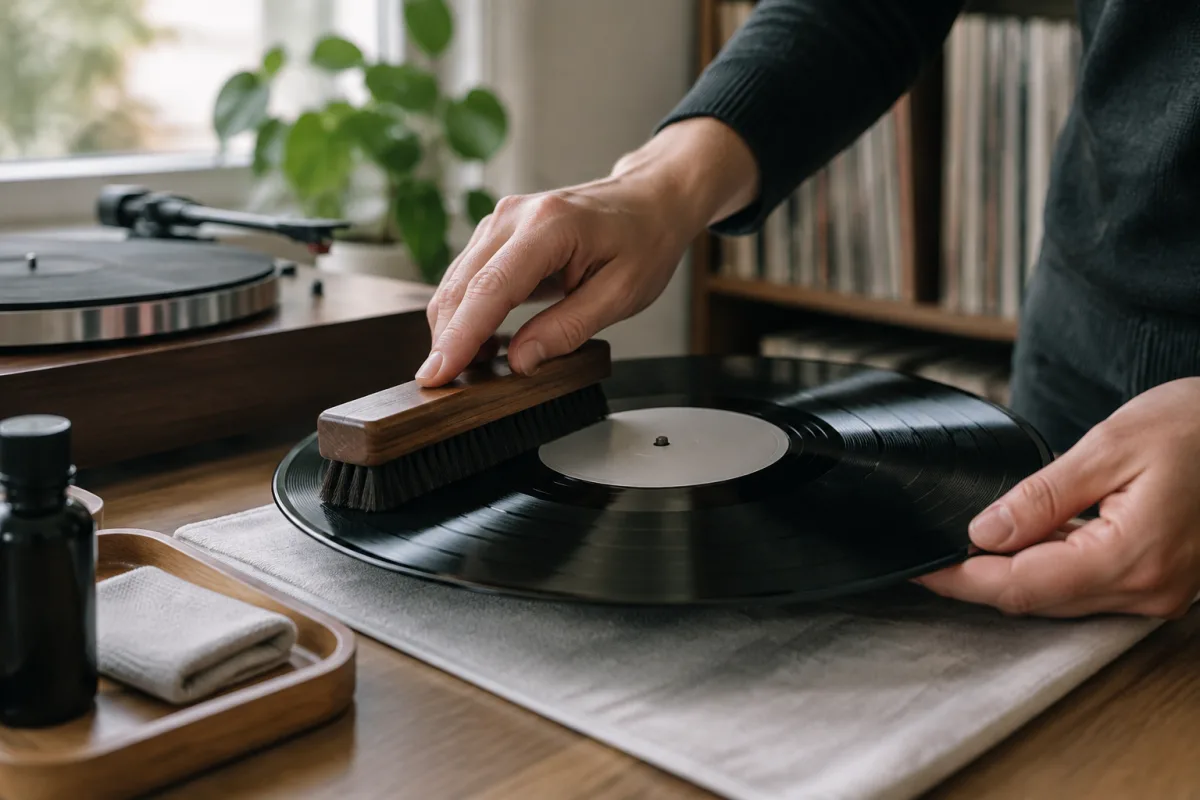
Choosing the right record cleaning brush is one of the most overlooked decisions in vinyl care, yet it's among the most important. A poor brush can damage your records irreparably, scratching the grooves and degrading sound quality, while a quality one extends your collection's lifespan and keeps music sounding crisp and detailed. This buying guide walks you through the types available, what to check before you buy, and how to avoid the false economy of cheap brushes that scratch your precious records.
Why the Right Brush Matters
Vinyl records are fragile. Their grooves are microscopic, and a single pass with a poor-quality brush can gouge them permanently. Most damage goes unnoticed until it's too late — a visible scratch that catches the stylus on every play. The cost of a quality brush (£8–£40) is trivial compared to replacing a damaged £20–£50 record, or worse, a rare collector's item worth hundreds. Before you buy, understand what separates a good brush from a damaging one.
Bristle Materials: The Foundation of Quality
The bristles are everything. Three main materials dominate the market, each with distinct properties:
- Natural horsehair is the gold standard. These bristles are soft, fine and non-abrasive, with a natural structure that grips dust particles without scratching the groove walls. Premium brushes use horsehair exclusively. It's expensive, which is why they cost more, but it will never damage your vinyl.
- Synthetic fibres (nylon, polyester) are cheaper and durable but can be too stiff or have microscopic rough edges that catch and scratch grooves. Cheap brushes often use synthetic bristles because they're easy to mass-produce. Avoid them.
- Goat or sheep hair sits between horsehair and synthetic. It's softer than many synthetics but not as fine as horsehair. Some mid-range brushes use this blend, and it's acceptable if the bristle count is high and the structure is well-made.
The defining factor is bristle fineness and stiffness. Run your finger across a brush in the shop — if it feels scratchy or harsh, it will damage vinyl. A quality brush feels soft and gentle, almost like stroking a cat's fur.
Bristle Density and Brush Configuration
Denser bristles pick up more dust in a single pass, meaning fewer strokes required and less contact time on the record. This is desirable — fewer passes mean lower risk of accidental damage. Look for bristle counts in the range of 200–500 per width; anything fewer and you'll need multiple passes to clean properly.
The width of your brush matters too. Narrow brushes (under 2 cm) give precision on problem areas but require more time to clean a full side. Wide brushes (4–6 cm) cover a full record side in one or two passes but are harder to control on delicate sections. Most serious collectors prefer a brush 3–4 cm wide — a sweet spot between coverage and control.
Brush shape also varies. Flat brushes are standard and versatile; angled or curved brushes are designed to follow the record's contour, though the benefit is marginal if your technique is sound. Don't pay extra for shape alone.
Handle Quality and Usability
You'll hold this tool dozens of times, so comfort matters. A good brush has a handle that sits comfortably in your palm and doesn't require a death grip to control. Wooden handles are traditional, offering warmth and natural grip; plastic handles are cheaper but can feel slippery if your hands are slightly damp.
Check that the bristles are securely glued to the handle. Run your fingernail along the base where bristles meet the handle — any gaps or loose bristles suggest poor manufacturing. Bristles should never shed into your records; even one stray bristle caught in the groove can cause clicks and pops.
Budget Tiers and Value
Budget brushes (under £5) are almost universally bad. They use synthetic bristles, shed easily, and often come from brands with no reputation for vinyl care. Avoid them entirely; the money you save is dwarfed by the risk to your collection.
Mid-range brushes (£8–£20) are where the value lies. These often use natural horsehair or high-quality blends, have decent handle construction, and come from established vinyl care brands. Most collectors find this tier entirely adequate for regular maintenance.
Premium brushes (£20–£60) offer marginal improvements — perhaps slightly finer bristles, luxury hardwood handles, or specialised designs. These are worthwhile if you're managing a large collection (over 500 records) or own valuable pressings, but they're not necessary for the majority of collectors.
Specialised Brush Types
Beyond the standard record cleaning brush, a few variants exist:
- Carbon-fibre brushes use fine, conductive fibres that dissipate static electricity as they clean. These are excellent if you also use a turntable preamp that amplifies noise, but they cost £15–£30 and aren't essential unless static is visibly affecting your records.
- Combination brush-stylus cleaners have bristles on one end and a stylus brush on the other. Convenient for quick maintenance, but the record brush is usually thinner and cheaper than a standalone brush. Best as a travel tool, not your primary brush.
- Velvet brushes use dense velvet pads instead of bristles. They work well for gentle dust removal but can't deep-clean stubborn dirt. Treat these as a supplementary tool, not a replacement for a proper bristle brush.
For most collectors, a single quality bristle brush is all you need. Specialised variants solve niche problems; don't buy these unless you've identified the specific problem first.
Practical Buying Tips
Buy from a retailer with a good return policy — vinyl care tools are personal, and what feels right in your hand matters. Read reviews from collectors who specify what they're cleaning (modern pressings, vintage records, heavily played albums); different user bases have different priorities.
Avoid extremes. The cheapest brushes damage records; the most expensive brushes rarely justify their cost for casual collectors. Mid-range brushes from established brands like Nagaoka, Pro-Ject, or Audio-Technica consistently perform well and offer real value.
If buying online, check that bristles are protected during shipping. Damaged bristles make the brush useless. Some retailers ship in cardboard tubes; others in plastic; the packaging matters more than you'd expect.
Maintenance and Lifespan
A quality brush lasts years if maintained properly. Clean the bristles under warm running water every few weeks, then let them air dry bristles-up. This removes accumulated dust and prevents mildew. Store it bristles-up in a dust-free space — never bristles-down on a shelf, which crushes them.
A well-maintained brush will outlast your patience with it. Most collectors use the same brush for 5–10 years; some for longer. The investment amortises to pennies per record over that span.
Choosing Your Brush
The right record cleaning brush is an invisible investment — you'll never notice its presence, only the absence of clicks, pops and degradation that a poor brush causes. Prioritise natural horsehair bristles, dense construction, and a handle that feels comfortable. For more detailed information on vinyl cleaning techniques and the science behind record care, visit our complete guide to vinyl record brush cleaners. Once you've invested in a quality brush, you'll wonder how you managed without it.


Comments