


Vinyl Cleaner Brush Buying guide
Vinyl Cleaner Brush: A Complete Buyer's Guide
Protecting your vinyl record collection starts with the right vinyl cleaner brush. Here's how to choose between carbon fibre, natural bristles, and synthetics.
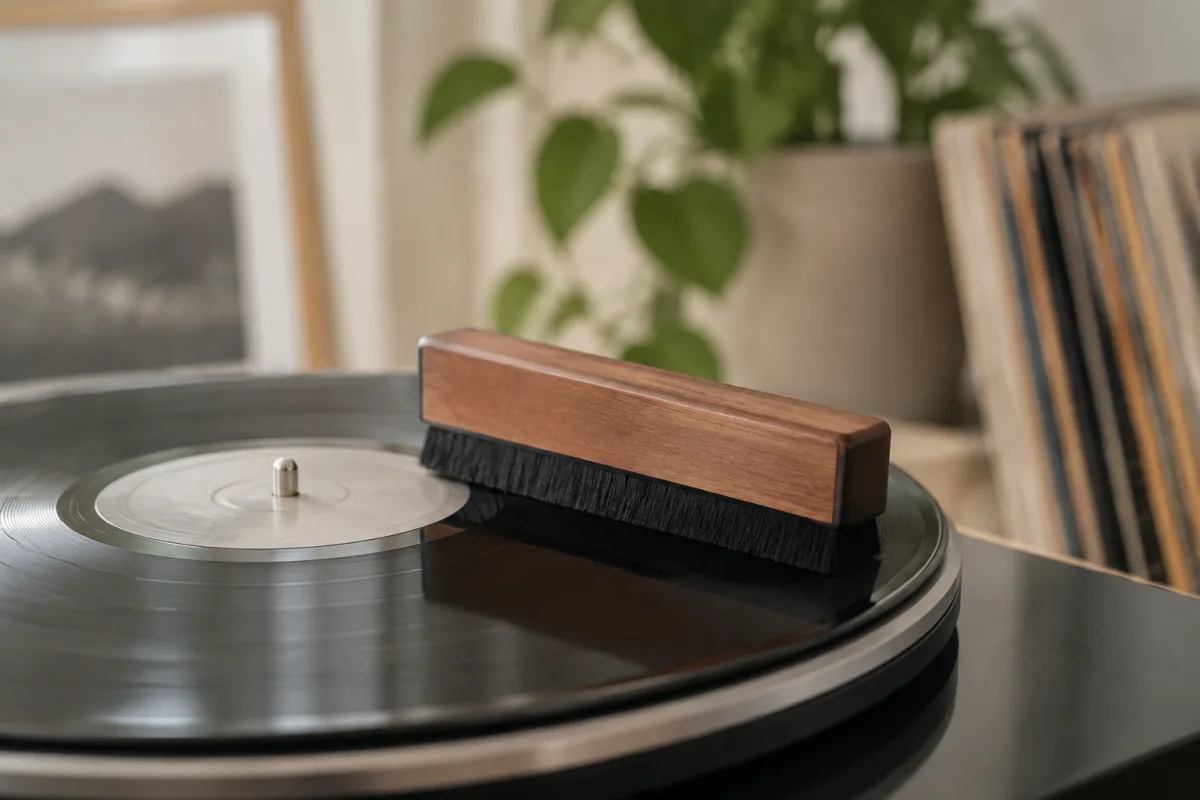
Vinyl records accumulate dust, debris, and static electricity with every play. A good vinyl cleaner brush is essential to protect your collection and ensure clean, distortion-free playback. But not all vinyl cleaner brushes are created equal—choosing wisely will save your records and extend the life of your stylus.
How Vinyl Cleaner Brushes Work
A vinyl cleaner brush is designed to remove surface dust and debris from record grooves without damaging the vinyl. Unlike aggressive scrubbing tools, effective vinyl cleaner brushes gently lift contaminants using soft, conductive bristles that neutralise static charge as they work. The bristle material, density, and design are critical to performance.
The goal is to clean the record between plays and before storage, not to deep-clean neglected records—that requires more involved methods. A good vinyl cleaner brush is a quick maintenance step that prevents buildup and protects your needle.
Bristle Types and Material Quality
The heart of any vinyl cleaner brush is its bristles. Material choice determines effectiveness, durability, and whether the brush will damage your records.
- Carbon fibre bristles: The gold standard for vinyl cleaning. Carbon fibre is conductive, absorbs static charge, and is soft enough to clean grooves without scratching. High-quality carbon fibre brushes cost more (£15–40) but last years and genuinely clean vinyl effectively.
- Natural boar bristles: Soft and gentle on vinyl, boar bristles do a decent job on light dust but are less effective on stubborn debris. They're prone to shedding over time and harbour moisture, which can damage records in humid conditions. Cheaper (£5–15) but less reliable long-term.
- Synthetic nylon bristles: Common on budget brushes, nylon works for light dusting but generates static electricity instead of dissipating it—counterproductive for vinyl. Often too stiff and can scratch records if pressed too firmly. Avoid unless absolutely budget-constrained.
- Horse hair bristles: Effective, gentle, and traditional, but expensive and prone to shedding. Rare on modern vinyl cleaner brushes. If you find one, it's usually quality work.
Carbon fibre is the best choice for most collectors. It cleans effectively, lasts years, and is conductive—meaning it actively reduces the static problem rather than causing it.
Design and Ergonomics
A well-designed vinyl cleaner brush makes regular cleaning easy and safe. Consider these design factors:
- Handle design: Handles should be ergonomic and non-slip. Thin, hard handles get tiring during longer sessions. Look for rubberised grips or wooden handles that feel substantial.
- Bristle pattern: Many good brushes have multiple bristle rows for efficient cleaning across the record's width. Single-row brushes work but require more passes. Wider bristle patterns speed up the job.
- Bristle length: Longer bristles clean deeper into grooves but can be harder to control. Optimal length is around 3–5cm for most vinyl. Too short and you miss debris in the grooves.
- Bristle density: Denser bristles cover more surface area but can be too aggressive. Sparse bristles are gentler but less effective. The sweet spot is medium density that cleans without dragging.
- Size consistency: All bristles should be uniform in length and stiffness. Uneven bristles can catch and scratch the vinyl surface. Premium brushes maintain this precision; budget ones often don't.
The best vinyl cleaner brushes balance reach (cleaning deep into grooves), coverage (wide bristle pattern), and gentleness (soft material, proper density). A comfortable, well-balanced handle makes maintenance feel like a pleasure rather than a chore.
Static Conductivity and Electron Drain
Vinyl records naturally build static charge during play and storage. A conductive vinyl cleaner brush (particularly carbon fibre) dissipates this charge as you brush—essential for protecting your records and stylus.
Non-conductive brushes (cheap nylon, untreated natural bristles) can worsen static buildup, attracting more dust and potentially increasing clicking and popping during playback. If your vinyl cleaner brush isn't conductive, you're actually creating problems rather than solving them.
Check the product description explicitly—conductive vinyl cleaner brushes are marketed as such. If the material isn't mentioned or the bristles aren't carbon fibre or specially treated, assume it's non-conductive and skip it.
Size, Weight, and Handling
Vinyl cleaner brush weight and balance affect how long you can comfortably use it. Most quality brushes weigh 100–250g, enough for control but light enough that hand fatigue isn't an issue during a full collection's maintenance.
Compact brushes (around 20cm overall length) are portable and quick for single records. Wider brushes (10–15cm brush width) work faster on album-sized vinyl. Most collectors appreciate a brush that fits comfortably in one hand and allows gentle, even pressure across the record.
A good test: hold it at arm's length over a record. It should feel balanced, not tip-heavy or awkward. The bristles should make even contact with the record surface when held at a slight angle.
Price Tiers and Value
Vinyl cleaner brush prices vary widely based on bristle material, design quality, and brand reputation.
- Budget (£3–8): Nylon or mixed bristles, lightweight plastic handles, minimal static dissipation. Good for occasional light dusting but poor long-term investment. Expect bristles to shed and soften within 6 months.
- Mid-range (£8–20): Carbon fibre or quality boar bristles, decent handles, reasonable bristle density. Works effectively for regular maintenance. Lasts 2–3 years with proper care. Sweet spot for most collectors.
- Premium (£20–50): High-grade carbon fibre, ergonomic wooden or premium rubberised handles, precise bristle uniformity. Lasts 5–10 years. Brands like Groov-e, Andover Audio, and Ortofon dominate this tier.
- Specialist/Vintage (£50+): Rare natural hair bristles, bespoke handles, often sourced as vintage find or custom-made. Expensive but often unnecessary unless you're a serious collector with unusual requirements.
For most vinyl enthusiasts, spending £10–20 on a quality mid-range vinyl cleaner brush with carbon fibre bristles is the smart choice. You get effective cleaning, durability, and value.
Single Brush vs. Kits
Many sellers offer vinyl cleaning kits that bundle a brush with other tools (anti-static cloths, vacuum cleaners, fluid cleaners). Evaluate kits carefully:
- Kit quality varies: The brush included might be adequate, but the cleaning fluid may be ineffective or even risky. You're often paying bundle pricing for tools you don't need.
- Fluid cleaners are separate: A good vinyl cleaner brush is a dry-maintenance tool. If you need wet cleaning, buy quality fluid separately—don't rely on kit formulas.
- Focus on the core tool: Buy the best standalone brush you can afford, then add other tools individually as needed. This gives you control over quality.
Kits can be value if every component meets your standards, but it's usually better to buy a premium brush alone and supplement with quality standalone tools.
Common Mistakes When Choosing
Avoid these common pitfalls when selecting a vinyl cleaner brush:
- Prioritising price over material. A £3 nylon brush will cost you in record care. Spend the extra £7–15 for carbon fibre and you'll protect your collection far better.
- Ignoring bristle uniformity. Uneven bristles catch and can scratch. Look for bristles that are consistent in length and colour (indicating consistent treatment).
- Assuming boar hair is always good. Boar can shed and absorb moisture. Unless it's clearly premium (rare nowadays), carbon fibre is safer.
- Buying the bundle trap. Just because a kit includes a brush doesn't mean the kit is good value. Compare the brush specs independently.
- Overlooking ergonomics. A brush that's uncomfortable to hold gets used less frequently. Test if possible before buying.
- Forgetting that dirty vinyl cleaner brushes spread contamination. Rinse your brush regularly (gently, under cool water) and let it air dry. A dirty brush transfers old dust to clean records.
Maintenance and Care for Your Vinyl Cleaner Brush
Your brush needs care to remain effective. After every few uses, gently rinse it under cool running water to remove collected dust. Shake out excess water and lay it flat to dry. Never soak or use soap on carbon fibre bristles—it can damage the conductive coating.
Store the brush bristles-up in a clean, dry place. Keep it away from heat sources and moisture. A clean brush lasts longer and cleans better, so maintenance is worth the small effort.
Buying Recommendations by Situation
Your ideal vinyl cleaner brush depends on your collection size and habits:
- Casual player (< 50 records): A mid-range carbon fibre brush (£10–15) is plenty. You won't wear it out and it'll clean effectively.
- Active collector (50–500 records): Invest in a premium brush (£20–35). You'll use it regularly, and durability matters. The cost per use is minimal.
- Serious collector (500+ records): Consider two brushes—a quick daily-use brush and a deeper-clean option. A premium carbon fibre and a natural bristle alternative give you flexibility.
- Shared use (family/shared system): Buy one high-quality brush everyone can use, rather than multiple mediocre ones. Quality tends to encourage better shared ownership.
Conclusion
A good vinyl cleaner brush is a small investment that pays enormous dividends in protecting your collection. Prioritise carbon fibre bristles for conductivity and effectiveness, choose a design that balances cleaning coverage with gentle handling, and spend £10–20 for a mid-range option that will last years. Avoid cheap nylon brushes that generate static and fragile bristles that shed. Regular gentle cleaning with a quality vinyl cleaner brush keeps your records sounding pristine and your stylus happy—and that's worth the modest expense.


Comments